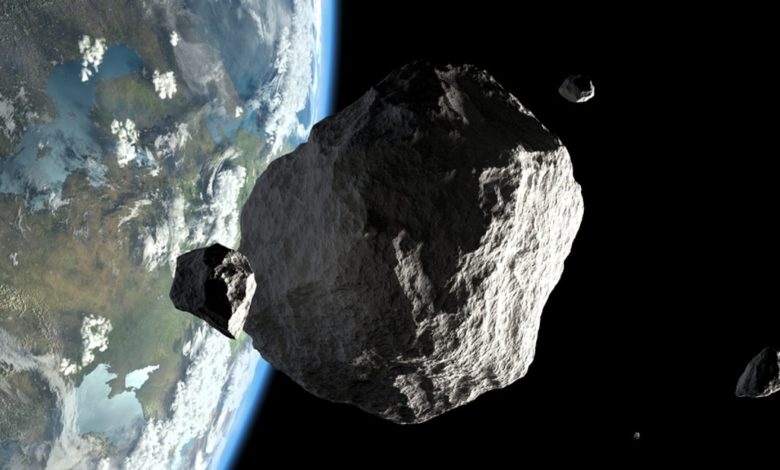
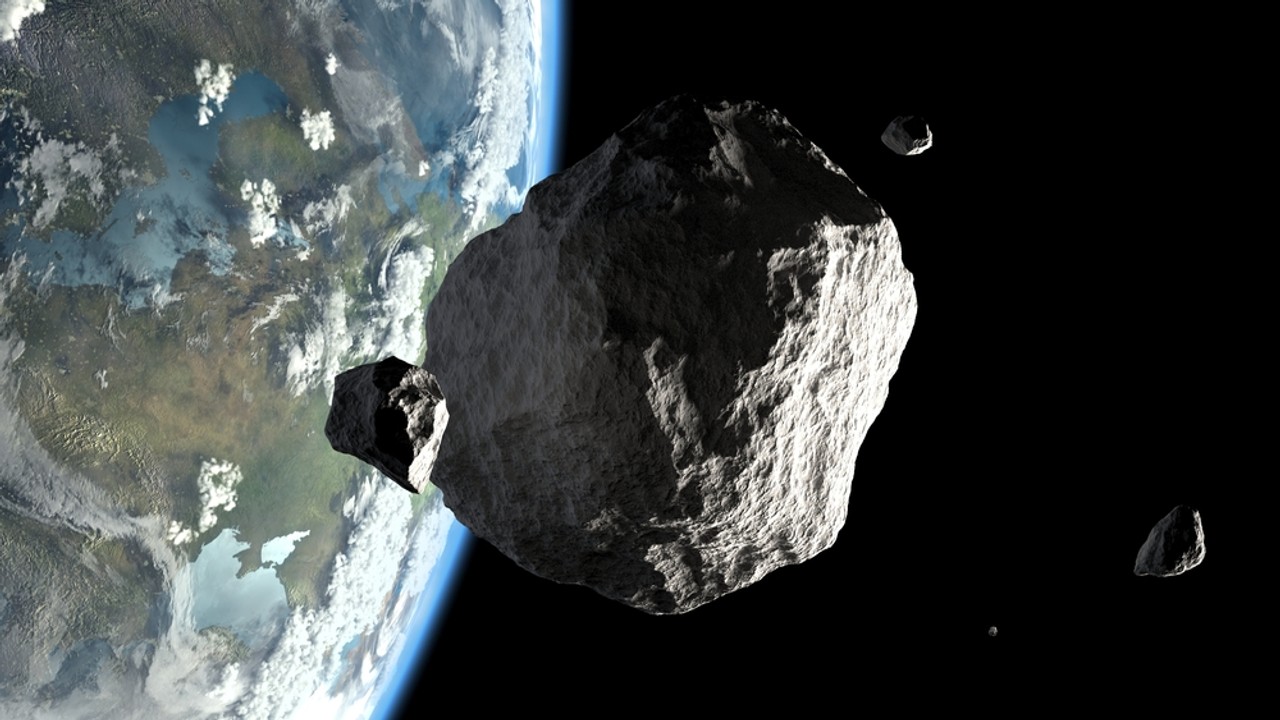
The European Space Agency (ESA) has published explanations about the asteroid, which can potentially collide with the moon in 2032. ESA is preparing in a few years to launch a space telescope that is to help in detecting such threats earlier.
Asteroid 2024 YR4 already had its five minutes in the media headers – when it was announced that the probability of hitting the ground in 2032 was 3 percent. Later observations and calculations have ruled out this risk, but the topic is still interesting, because before the object weakened so much that it ceased to be available for the most powerful telescopes, Estimates indicated a hit in the moon with opportunities 4 percent. On December 22, 2032 This probability can be re -verified when the asteroid returns to the closer area in mid -2028.
The European Space Agency (ESA) has published information explaining the context of the matter and showing how the Neomir space telescope planned by it is to help in such situations.
Planetoid 2024 YR4 was discovered on December 27, 2024, with the help of the Asteroid Terrestria-Iimpact Last Alert System (Atlas) in Rio Hurtado in Chile. It is known that the object is from 53 to 67 meters. His potential fall to the ground would destroy the area of the city or region. In March 2025, astronomers already had enough data to exclude hitting the ground in 2032.
ESA indicates that the 2024 YR4 object was detected only two days after passing a point of the nearest land. For this reason, the question arose why it was not detected before. The Comic Agency explains that the reason was that The planetoid came from a daily side, from the area of the sky illuminated with the sunlight. This is a poor point in detecting dangerous asteroids.
The new space telescope Neomir is to complete this observation gap. ESA plans to launch a telescope at the beginning of the decade 2030-2040. The telescope will be placed at the Lagrange point of the Earth-Słońce system. It will observe infrared and look at the area of the sky much closer to the sun than it is available for ground telescopes. It is to be sensitive to objects with diameters of 20 meters and larger. Neomir will be able to detect dangerous asteroids a month earlier than ground telescopes.
What would be the consequences of the planetoid impact?
ESA also describes what would happen if the 2024 YR4 asteroid hit the moon (currently the probability is estimated at 4 %, more will be known in mid -2028, when you can re -observe the object with ground telescopes, which will allow you to calculate the orbit more precisely). The agency indicates that Impact would be visible from the ground. A new crater would be created on the surface of the moon. It is not known how many matter would be thrown into space or would it reach the ground. Simulations that estimate these factors will probably appear over time.
Such a blow will certainly be particularly important if humanity establishes the base on the moon (NASA has such plans as part of the Artemis program). Even smaller planetoids will pose a threat to such a base and it will be necessary to establish a threat monitoring system.