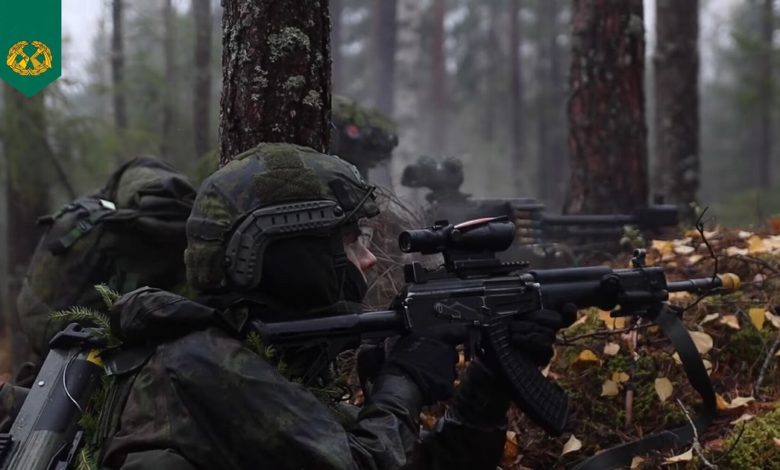
When we think of the Nordic countries, the first impulse is to associate them with calm democrats, clean forests, smoked salmon and a suspicious passion for modular furniture. Not with tanks, military exercises and geopolitical anxieties. And yet, in recent months, the Nordics seem to have discovered the taste for strategy and mobilization again. Not for pleasure, but from a cold, Scandinavian lucidity, writes The Wall Street Journal.
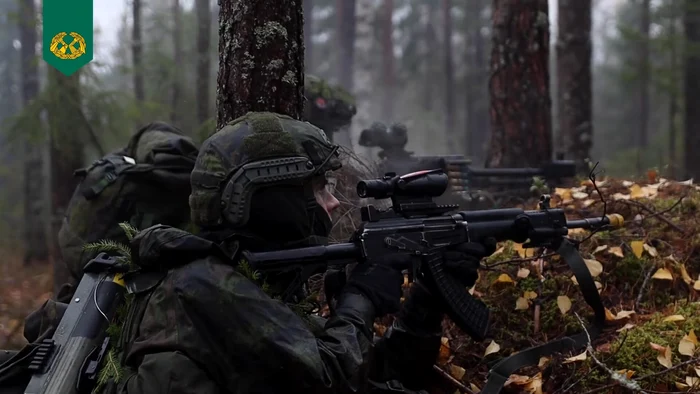
Finnish/photo soldiers: x
After decades in which their armies seemed to do image exercises rather than defense, the four major Nordic countries-Sweden, Finland, Norway and Denmark-began to build together what could be called, without emphasis but with realism, a common modular army. Against the background of threats from Russia and an increasingly capricious America, the Nordics begin to do on their own. Or, more precisely, together.
Only alone, no northern state could cope with a confrontation with Russia. Together, however, they have an economy comparable to that of Mexico – that is, close to the Russian one – and a military force that, put together, covers a broad spectrum: Swedish tanks, Finnish tanks, Norwegian maritime surveillance and special Danish forces, tested in the theaters of exotic war and no northern.
Sweden produces fighter jets and sophisticated armored vehicles, and Finland, with the approximately 1,335 kilometers of border with Russia, has an army that can mobilize 280,000 people in a few weeks and houses the civilian population in underground shelters. Conscript is mandatory and, in the case of Sweden, even a form of national elitism: not all young people are accepted, and recruitment is done on selective criteria, without any trace of nostalgia for the common uniform of Eastern Europe.
Norway, silent in the past, but rich and strategically positioned, recently announced the doubling of support for Ukraine, and Denmark, the country guarding Greenland with almost disarmed ships and dog soldiers, is now open about the possible nuclear weapons on its territory. A historical change, which came not from courage, but from rational fear.
Defense is no longer a moft
All this happens under a new umbrella: a northern cooperation that, according to Jens Stoltenberg, former Secretary General NATO and current Norwegian Minister of Finance, was no longer so coherent in the time of the Kalmar Union (ie at 1400, when Scandinavians sometimes fought with each other and generally did not have a clear idea). Today, they have a clearer idea: defense is no longer a moft.
The Nordics set up a common air command and concrete plans for an integrated defense until 2030. In other words, in the absence of a predictable America, the Nordics decided it was time to try a form of collective autonomy. It is not isolationism, but rather, a form of realistic politeness towards an ally that is becoming less and less as a responsible adult.
A special case is Denmark, which, after donating the entire artillery arsenal of Ukraine, came up with the idea of supporting the Ukrainian defense industry, funding the production of weapons according to the needs on the ground. A solution “Made in Copenhagen”, meant to create not only short -term support, but also sustainable discouragement capacity. For those who still have ears in NATO.
Of course, this northern consensus is not immune to future divisions. Finland, for example, seems less willing to send troops in possible peacekeeping missions to Ukraine, preferring to keep their soldiers at home, near the long and potentially dangerous border with Russia.
But for the moment, the northern block is perhaps the most coherent example of regional military collaboration in Europe. And, as some analysts say, it could be not only a model, but also a spare plan in case NATO is descending under a new wave of trumpism: a kind of plan B, but in Ibsen, notes The Wall Street Journal.