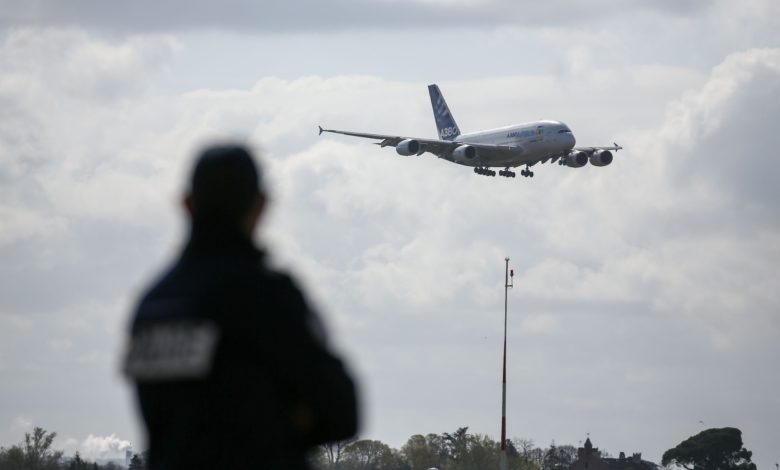
The largest commercial passenger plane in the world, Airbus SE380, has undergone an unexpected return, carrying travelers in maximum numbers with the relaunch of international travel after Pandemic. But keeping the old “superjumbo” in safe flight conditions has become an increasingly expensive headache for airlines, Bloomberg reports.
Two decades after his first flight, the regulatory bulletins that require repairs, inspections or replace some parts for this massive four -engat plane accumulate. Although some are procedural in nature – such as the requirement of periodic equipment checks – others are more serious.
Evacuation slides that lose pressure, cracked gaskets and a broken landing train are among the 95 directives for the A380 issued by the European Union Agency (EASA) since January 2020.
It is almost double the number of directives issued in the same period for large aircraft.
The Airbus A380 plane was a triumph of international collaboration
As the new aircraft, more efficient in terms of fuel consumption, are difficult to find, the airlines that bet on A380 have little to choose: they must continue to use it.
In his youth, the A380 was a triumph of international collaboration, with 4 million pieces of 1,500 companies from all over the world. Now, in old age, the complexity of the plane is testing the already-under—–ol-an an industry supply chains in the post-Covid era.
“A380 is a complex plane, whose size makes it more demanding about maintenance compared to other aircraft,” EASA said in a statement. “It is extremely important, for safety reasons, not to attach any stigma to publishing a navigability directive Safety must receive,” the European Agency stressed.
She said that the directives she issues, which impose measures to make a safe aircraft, “can vary greatly in terms of extent and emergency”/ the volume of waterway directives for different aircraft “is not a good basis for comparisons,” added EASA.
Passengers stuck on airports
However, with a capacity to transport 485 passengers or more, the delays caused by mechanical faults can be expensive and can cause a domino effect on the flight schedules. An A380 Qantas Airways company, on the Sydney-Londra emblematic route, was damaged in Singapore on May 7, due to some problems at the fuel pump. The flight to London was postponed for more than 24 hours, and the passengers were accommodated at hotels.
It was at least the second time that the fuel pump problems have delayed the QF1 flight in Singapore since Qantas has reactivated its A380 fleet. More recently, the Qantas passengers who had to leave Singapore to Sydney on July 14, also with an A380, were blocked for days due to technical problems. The plans to bring them earlier were complicated by the damage of another A380 at Sydney airport, after a boarding bridge hit one of the engines.
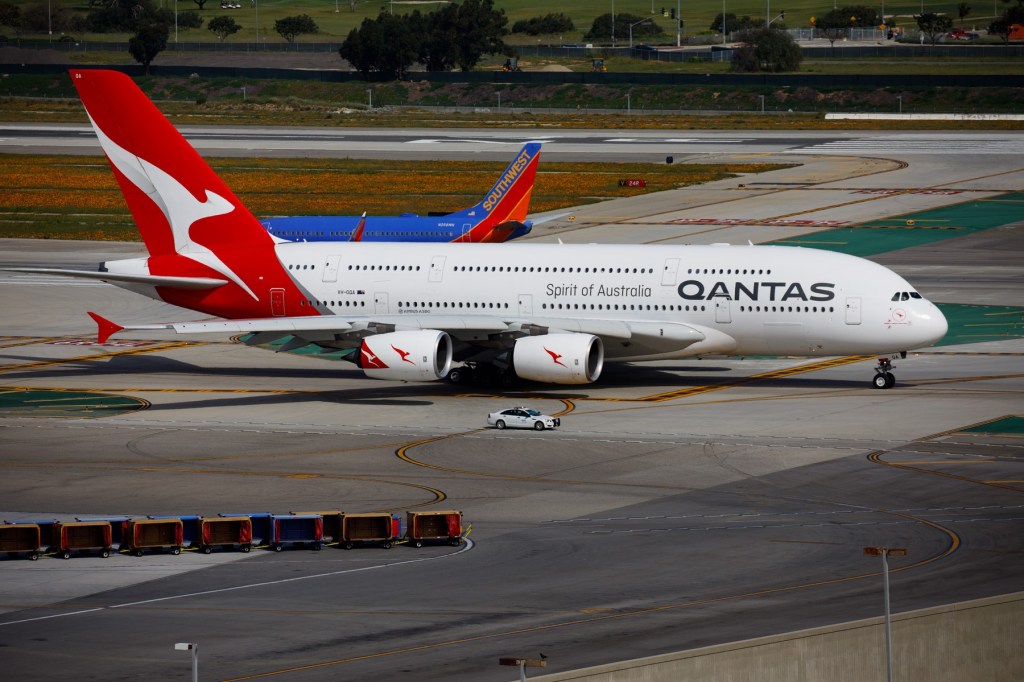
An A380 British Airways, registered G-Xleb, has recently spent over 100 days in Manila. After returning to London Heathrow in mid -June, he only flew 7 days out of the next 30, according to Flightradar24.
However, British Airways will start a program to modernize the interiors of A380 aircraft, including passenger cabins, a sign that it intends to continue using this plane model for many years from now.
Few alternatives for the world's largest passenger plane
For airlines that use A380, high -capacity alternatives are rare. Boeing has been delays for years with the delivery of its new 777x model aircraft, and Airbus cannot produce enough A350 aircraft for long flights. Meanwhile, the operators of A380 remain with a superjumbo out of production, which becomes more and more demanding and expensive to maintain.
On the online forums dedicated to aviation, some races begin to be more and more associated with faults, cancellations or delays overnight.
Airbus has said in a statement that A380 “continues to perform regular flights with a high level of operational reliability, which has been at 99% for the entire global fleet in the last 12 months. Airbus is committed to providing full technical support to its customers to allow them to optimize operations with the A380 fleet,”
Of course, the A380 still has fans. Emirates, who dismantled some of his A380 aircraft for spare parts, intends to use them by the end of the next decade. The president of the company, Tim Clark, compared the plane with a gigantic vacuum cleaner, capable of “swallowing” passengers as no other plane can do it.
Reliability issues are just the latest chapter in the history of a Superjumbo that has always been controversial. Passengers still love its spacious interiors and its impressive dimensions. The airlines, however, face its logistical needs – from longer tracks to oversized hangars – and mechanical problems.
The difficult conditions in the supply chains have increased prices for spare parts, maintenance and repair services to all major types of aircraft, says Eddy Pietiazek, consulting director at Ishka.
“Given the size A380 and the fact that it has four engines, this maintenance costs are even more visible,” he told Bloomberg.