Poland with the worst quality in bathing water in the Union. We are haunted by cyanobacteria

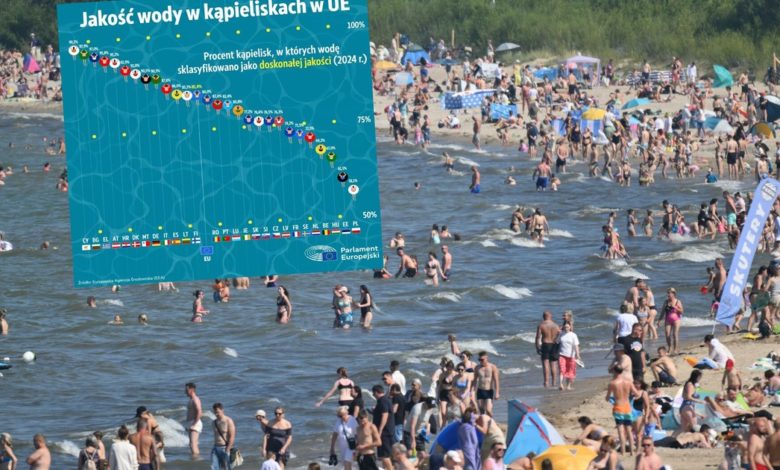
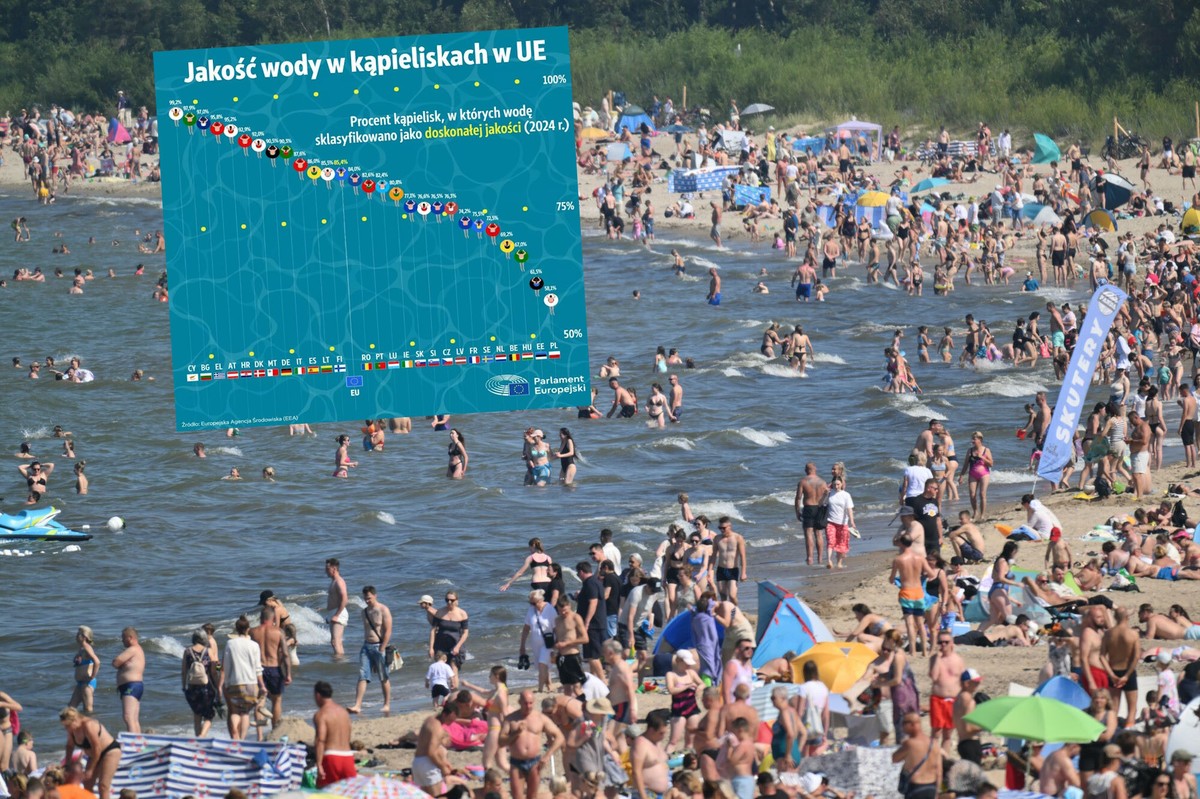
According to the authors of the report prepared by the European Environment Agency, The leader in terms of the quality of the bathing areas is Cyprus, where as many as 99.2 percent of the water obtained the highest rating. Bulgaria, Greece, Austria and Croatia also noted high results. Poland, with a result of 58.1 percent, took the lowest position among all the analyzed countries. Estonia, Hungary and Belgium were also among the low -quality water countries.
Professor Krzysztof Lejcuś from the University of Life Sciences in Wrocław explains to the euronews that the poor quality of Polish bathing areas results from the general state of water in the country. He points out that bathing areas are part of larger tanks, such as the sea, lakes or rivers, and if the water is contaminated there, then the bathing areas cannot be safe. According to the scientist, the situation will persist until Over 99 percent of Polish waters do not meet the required standards.
Bashings are closing the cylinders
Red flags prohibiting entrances to the water hang on Saturday in twelve bathing in the Pomeranian and West Pomeranian voivodships – according to data and published by the Chief Sanitary Inspectorate. The reason is cyanobacteria.
Read also: Shocking data: Holidays in Poland getting more and more expensive. Where is it worth going so as not to spend your property?
In the province Pomeranian Battles bans apply On three bathing areas: in Jastarnia (Seaside-Place, Zdrojowa and Leśna), at the bathing beach in Pozkinie and seven bathing in Rowy (East Słowińskie I, Słowińskie II east, central west, West Apator, West Słoneczko, West Radomsko and West Summer Houses).
In turn, in the province West Pomeranian Red flag due to the blooming of cyanobacteria He is still fluttering at the swimming pool in Trzebież on the Szczecin Lagoon.
Cyanobacteria (cyanobacteria) are classified as the oldest organisms on Earth. They show great adaptability to various environmental conditions. They occur in salt and inland waters.
Bathing in contaminated cyanobacteria can cause adverse reactions of the body – From rash to conjunctival redness. After drinking, digestive system ailments may occur, including diarrhea, vomiting and abdominal pain.
Sanitary services call for bathing prohibitions, because contact with contaminated water can lead to serious health problems, such as skin rashes, conjunctival redness or gastrointestinal complaints, including abdominal pain, vomiting and diarrhea.
Causes of poor quality water
The seasonality of mass blooms of cyanobacteria is a natural phenomenon found in nature. However, the factors that affect the appearance of cyanobacical blooms of water are, among others high water temperature, presence of biological salts (especially phosphates), Poor wind and lack of rainfall.
Read also: Baltic under the magnifying glass of the European Commission. Improving the sea condition by priority
Experts indicate that many pollutants are sent to Polish waters, including biogenic compounds such as nitrogen and phosphorus from agriculture, not fully cleaned municipal sewagesurface rafting and fertilizers. These substances contribute to the bloom of algae in the Baltic Sea, which makes bathing in the sea dangerous to health.
Professor Lejcuś emphasizes that improving the situation requires a large -scale actions, not just point interventions. He points out that it is necessary to limit the amount of pollutants reaching rivers and lakes throughout the area of the catchment, because pollution from small rivers goes to larger ones, and ultimately to the Baltic – writes Euronews.
Differences between swimsuits and assessment methods
The report reveals that the quality of coastal waters is higher than inland – as much as 89 percent of seaside bathing areas received a perfect grade, while in the case of lakes and rivers it was 78 percent. The assessment of water quality is mainly based on the presence of E. coli and enterococci bacteria, which are indicators of fecal pollution and may pose a health threat.
Although the EU directive does not include detailed monitoring of toxic blocks of cyanobacteria, they often lead to the introduction of bathing prohibitions. Chemical impurities are also detected in the waters, which are subject to separate regulations.
Most bathing are the standards, but the problem remains
Despite the disturbing result of Poland, as much as 96 percent of all bathing areas in the EU, including Polish, meet the basic security standards specified in EU regulations. This means that bathing in these places does not pose a health threat. Only 1.5 percent of bathing areas throughout the European Union were rated as a place with poor water quality, where previous activities did not bring the expected results.
Over the past four decades, the quality of bathing water in Europe has improved significantly. The authors of the report emphasize that this is the result of systematic monitoring, investment in sewage treatment plants, modernization of sewage networks and limiting discharges of uncleaned municipal sewage. Thanks to these changes, bathing in urban waters has become safer.
Professor Lejcuś points out that the problem with water quality does not apply only to Poland, but also to most European countries, except for the Scandinavian countries. He reminds that even during the Paris Olympics, despite the Seine Cleaning Program for several years, the water quality indicators were on the security limit, and the competitors reported health problems. In his opinion, many countries have dealt with basic problems, but the full solution to the issue of water purity in Europe has still not been achieved.