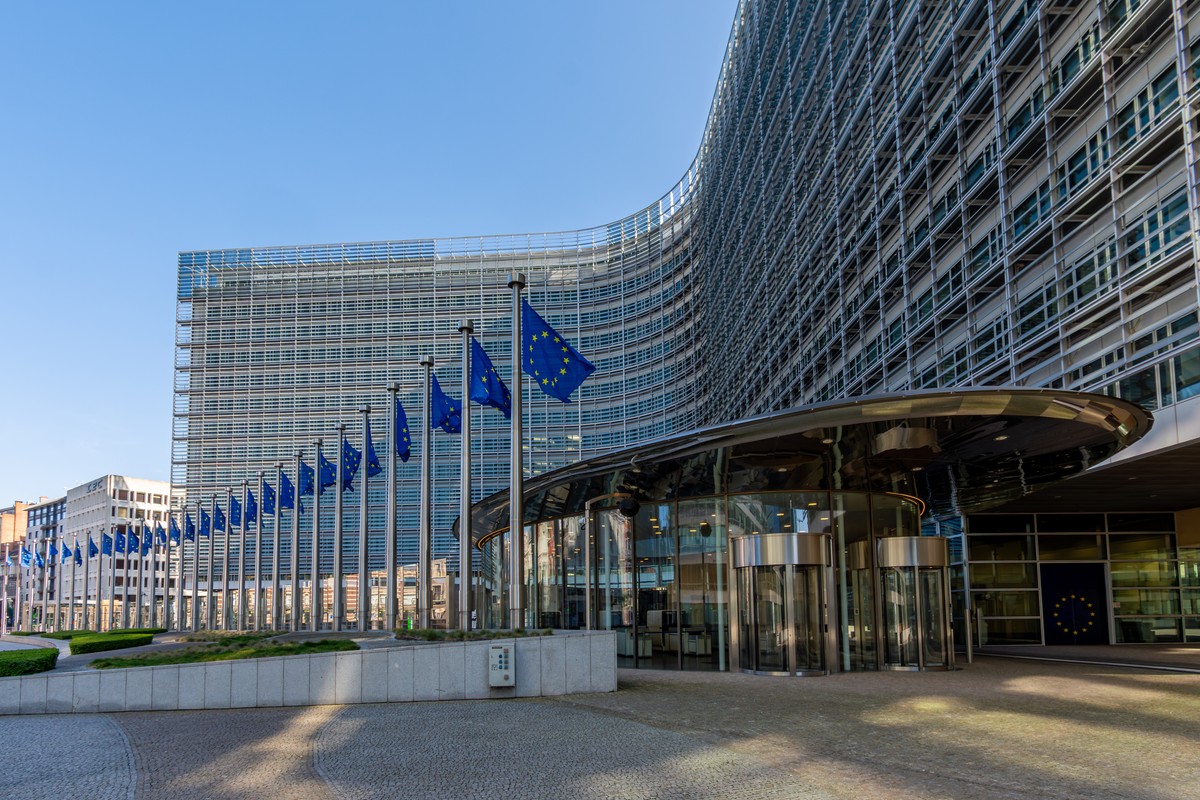
“The main goal of Brussels remains to reach an agreement by negotiations” – pointed out the spokesman for the European Commission, Olof Gill, in a statement sent to the Polish Press Agency. He added that the EU trade commissioner Maroš Šefčovič is to have a conversation with the American Secretary of Trade Howard Lutnick on the same day. After its completion, the EC intends to inform EU ambassadors about the current state of talks.
At the same time, the Commission continues to work on the preparation of potential retaliation. The plan assumes a combination of two previously developed tariff packages – worth EUR 21 billion and 72 billion, respectively – in one common set. It will be transferred to Member States for approval. According to Gill, retaliation would not enter into force earlier than August 7.
Until now, the Union has not introduced any retaliation duties in practice – the first package was approved in April, but its implementation was immediately suspended.
Duties as a pressure tool and reaction to Trump threats
The first package was created in response to the 25 % duties on steel and aluminum introduced by the administration of Donald Trump. He assumed the EU -21 billion euros with EU tariffs of EUR 21 billion – the list included Agricultural products (such as poultry, fruit, nuts, soy), as well as motorcycles and yachts.
Although the American duties were not abolished – they were even increased in June to 50 percent. Brussels abstained with the reaction, giving time to dialogue regarding the so -called mutual duties. These were announced by Trump at 20 % and then suspended. The base rate of 10 percent is currently in force.
The breakthrough came in July, when the US President published on the Truth Social List platform addressed to the chairman of the EC Ursula von der Leyen, announcing the raising of “mutual duties” to the level of 30 percent. from August 1. Trump also threatened that “in the case of EU retorts, the tariff may be even more increased.”
The second package of EU tariffs, worth EUR 72 billion, includes, among others Tobacco, alcohol (wine, beer, strong drinks), steel, aluminum, cars and aircraft. It deliberately includes goods important for US industrial states, which are Trump's political facilities.
Possible other means
Actions other than customs are also considered in the EU. Brussels can reach for a new mechanism for counteracting economic coercion (ACI), which allows you to limit access to EU public procurement to companies from countries using economic pressure towards the community.
The use of this instrument is demanded by French President Emmanuel Macron, who calls for faster activities from the EU. Ursula von der Leyen, however, stated that “we are not at this stage yet” and reminded that ACI was created for “extraordinary situations”.
The use of ACI in relation to services, especially digital and financial, where the US – unlike trade in goods – has a clear surplus in relations with the Union.