In politics, silence is never a simple personal gesture. It is a public act, with public consequences. Can be a gesture of caution or a power strategy. But it can also be a form of abandonment or cowardice. And in Romania for recent years, silence has become, too many times, not the expression of balance, but of complicity.
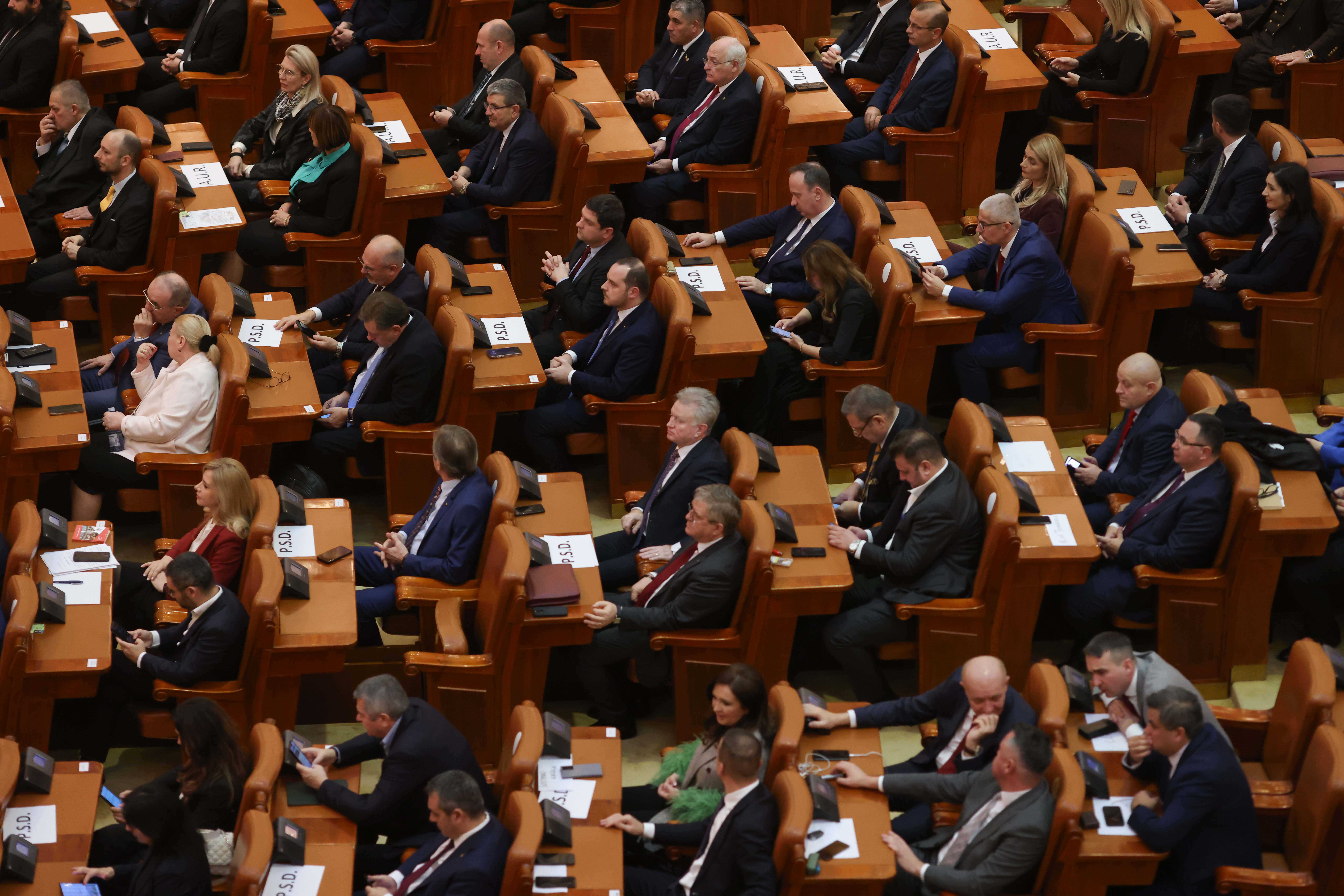
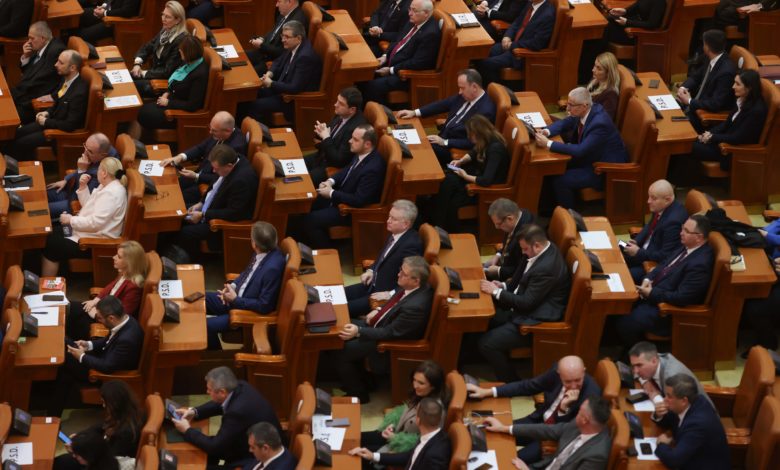
Meeting in the Chamber of Photo Deputies Inquam Photos / George Călin
Silence communicates. Especially when the absence of a word becomes impossible to ignore.
Not to answer when the society is waiting for a position does not just mean avoidance, it means to deliberately leave the public space available to those who speak anyway – often without responsibility. To shut up in times when extremism grows means, indirectly, to let it grow.
Silence thus becomes a form of decision. Even if those who shut up refuse to recognize it.
Max Weber said that power involves taking responsibility, including the word spoken in difficult times. And in this logic, silence in front of the crisis is an act of abdication.
Unfortunately, Romania for recent years offers a sad lesson: Silence has not only belonged to political leaders. Many of the public intellectuals were silent. In key moments, when the discourse of hatred, the symbolic rehabilitation of the legionary movement or the ascension of some extremist parties imposed a reaction, their voices were missing. With rare exceptions, intellectuals preferred a comfortable silence instead of taking on a clear public discourse.
More serious, perhaps, was institutional silence. In the face of the challenges to the democratic values, institutions with symbolic authority – the Romanian Academy, the National Council of Rectors, Universities, Academic Associations, Scientific Communities – have kept silence. At times when their voice would have mattered, they were not heard. When Romania needed clear landmarks, these institutions were missing. With very few exceptions, they chose the comfort of silence, instead of taking on a public message.
This institutional silence cannot be explained by caution. It is, in fact, a form of abandonment. It has thus abdicated from the function and pedagogical responsibility not only the public intellectual, but also the institution that should have been moral and intellectual.
Let us only mention the ascent of parties with radical, intolerant, violent speech. Let's look at the way in which the figure of a declared admirer of the Legionary Movement was designed as an alternative. In all these moments, the voices of intellectuals and academic institutions were almost completely missing.
This was not a mere silence. It was perhaps the worst form of public silence.
Because when extremism grows and you shut up, it means that you choose to let the danger become normal.
Silence cannot be explained neither by convenience, nor by “academic neutrality”. Democracy is not only defended with abstract principles, but with clear, firm, assumed voices.
In a fragile democracy, shut up in the face of danger is not just a weakness. Becomes a form of missed historical responsibility.
Silence is no longer just absence. In Romania today, it has become a symptom of the degradation of public space. A symptom that betrays fear, lack of solidarity and loss of civic reflex. Let's ask ourselves, so: how did we get here?
Maybe the intellectuals have tired. Perhaps the institutions have become too bureaucratized to react. But in democracy, fatigue and procedures are not excuses. They are, in the best case, incomplete explanations. Because the role of a public intellectual is not to be silent. And the role of a university is not limited to teaching courses or granting diplomas. They have a public mission: to form critical thinking, to defend the fundamental values of democracy, to react when society slides towards skidding.
You cannot suspend your vocation as an intellectual or the mission of academic institution when democracy is discussed.
The silence of intellectuals and institutions is therefore a form of teaching land. Land that, inevitably, will be occupied by those who speak – even if what I say is lie, hatred or propaganda.
Finally, let us remember a simple but essential truth: in the public space, nothing remains empty.
What the intellectuals and academic institutions refuse to say, others will say, but in their own logic, without guarantee respect for the truth and the public interest.
What the Democratic leaders hesitate to defend, will claim the populists.
Silence is no longer a personal option. It is a public act, with public consequences.
Politicians, intellectuals, universities – each plays a public role, and its absence is observed. And sometimes historically sanctioned.
Because, in Romania today, silence no longer protects anyone. Silence defines.
And whoever is silent in the face of extremism becomes, even without wanting, part of the problem he refuses to denounce.