In 2018, DSR units, i.e. the audience industry declaring the possibility of reducing their energy consumption at the behest of Polish electricity networks (PSE), with the possibility of reducing by at least 200 kW, contracted the power on the market in total 2167 MW for 2021-2023. In subsequent auctions for deliveries in 2024, 2025 and 2026, contracts were concluded respectively 1029 MW, 949 MW and 1504 MW. In 2027 it will be 1549 MW – 6 percent total potential of all market participants.
The role of restriction of demand as another remedy at the risk of power deficiencies is clearly growing, and with the arrival of further weather -dependent renewable sources will probably grow further. The case in the joint report “Active recipient has just published. How DSR changes Polish energy” is watched by the Insight and Enel X Polska policy, a company providing DSR aggregator services.
Read also: Operation on an open heart. The energy transformation is about a few things at once
Network stabilization, additional revenues
Lowering the power demand reduces the load on the network, allows you to optimize the costs of its operation through less use of more expensive peak sources, increases power reserves, and also limits the needs of investment in infrastructure – in word, improves the operation of the entire system and dismisses the threat of blackout.
As for the benefits of companies, DSR is an additional source of revenues – as part of the main instrument of using the service, i.e. the power market, business receives remuneration for readiness to reduce energy consumption. By reducing the purchase of energy from the network at low -generation renewable energy moments, companies also reduce their carbon trace.
As we read in the report, PSE commands (so -called recalls on the market) have happened so far only twice – September 23, 2022 and November 6, 2024, when low production from renewable energy, failures or repairs of power plants and limited possibilities of importing energy from abroad led to the lack of safe power reserves.
“In both periods of recall, DSR played an important role (…)” – writes the author of the report, Dominik Brodacki, head of the energy department of Polityka Insight. The first time reduction of demand helped in raising power reserves to over 33 percent above the minimumafter the second, however, the intervention of the demand side allowed to reduce the demand by OK. 5 percent.
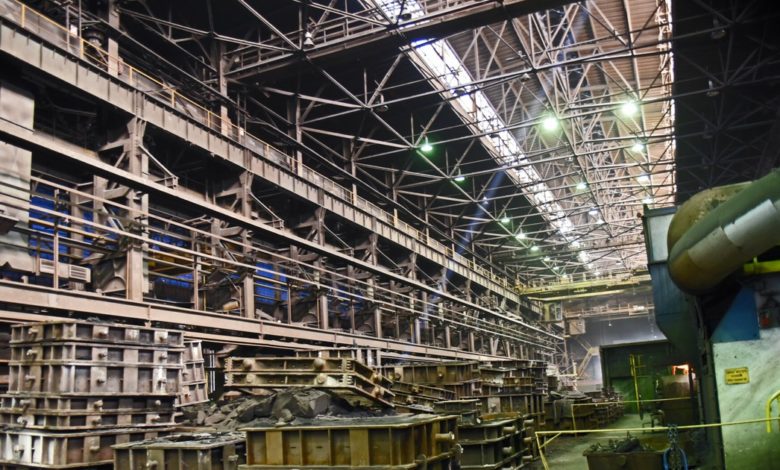
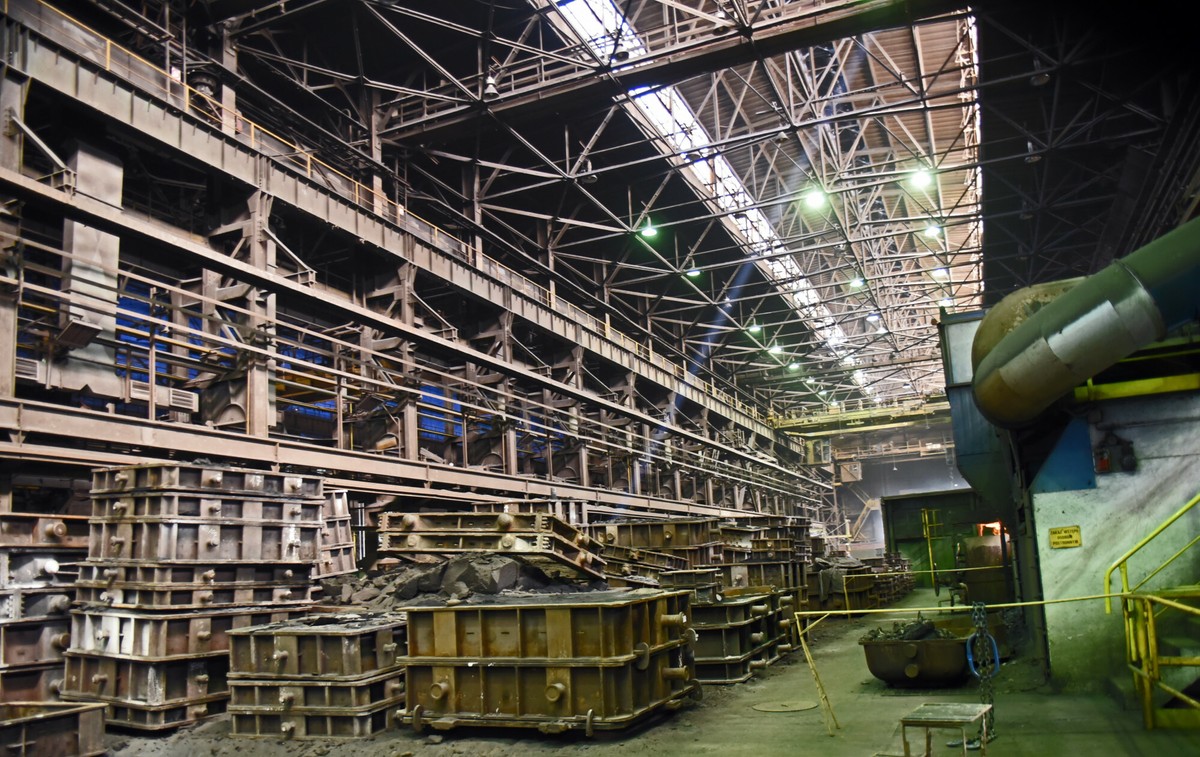
DSR services are primarily provided by large energy -consuming industrial plants, from the metallurgical, chemical, mining, paper, food or waste industries (an example of the latter's participation are recycling Remondis. Potential also has such energy -consuming facilities as shopping centers, office buildings and data centers.
Not only the power market
The very performance of the reduction service may consist in e.g. shifting the work of the production line to other hours, turning off parts of the devices or turning on your own power generators instead of power supply from the network. However, this type of internal sources in the power market are covered by the CO2 emission limit (not counting the supplementary auctions from the second half of 2025e to 2028, which was created especially for emission coal power plants).
There are important intermediaries – DSR aggregators who combine the reduction capabilities of individual entities between services and the operator. – “Virtually almost 100 percent recipients participate in the power market through aggregators, because it is much simpler and does not involve the risk of penalties” – writes Dominik Brodacki.
Aggregators can flexibly manage power in their wallets and transfer the performance of a reduction obligation between their clients. They also deal with formalities related to, for example, certification or determination of reduction potential. During the accompanying the premiere of the expert debate report, Jacek Misiejuk, president of Enel X Polska, cited data showing the scale of aggregators' involvement in DSR services. The company has 595 MW contracted for the current year of delivery; Next, it will be 573 MW, in 2027. 721 MW.
In addition to the power market, DSR units can also participate in a smaller scale in the balance market (although their potential limits technical requirements there), where short -term system stabilization is carried out. From September 2024, PSE also offers so -called “Inverted DSR” – intervention increasing power consumption when its surplus occurs.
The service separately from the power market and the balancing market is also at stake, but the remuneration in it is only entitled to the reduction and not readiness. Aggregators on the energy market, about which we wrote more in the article below, allow the industry to enter this segment.
Read also: How does aggregation on the energy market work? This is also a chance for solar owners
What can you change?
According to PSE forecasts cited in the report, the significance of DSR for the system will grow; In the following years, we are to expect a growing number of hours with a power deficit. Consumption reduction services will also count at the local level, where they will help in balancing the distribution networks.
Brodacki also predicts more and more use of digital technologies, including artificial intelligenceto improve the efficiency of energy consumption management. At the level of individual recipients, in addition to DSR services, Sticto's sense, demand flexibility can increase dynamic tariffs to some extent.
Can the conditions for DSR service providers be improved? The industry postulate, which Jacek Misiujuk talked about and which also resounds in the report, concerns the guarantee of the possibility of repeating the test period in the quarterly demonstration (PSE reserves the right to conduct the test every quarter). In the assessment of market participants, The current rules are too restrictivebecause PSE may not repeat the test, which results in the loss of quarterly salary.
In the context of the reform of the principles in the Power market, Brodacki also writes about simpler and shorter procedures for reporting recipients to replace planned units of reduction of demand. Further recommendations relate to, among others, the introduction of independent meters, which will allow you to use some technology to reduce demand where the others cannot use the power market (e.g. due to other public assistance or too high emission). Industrial recipients can also be facilitated by the share in the balance sheet and the energy market (e.g. by simplifying technical requirements).
Without stable sources
As we wrote, the demand for temporary reduction of demand in response to power deficiencies is a direct consequence of the growing role of renewable energy. The paradigm of the flexible and distributed power system assumes the flexibility of recipients and their active market share. Does this approach have its limits?
Juliusz Kowalczyk, an expert from the Energy Transformation Center of the University of Warsaw, indicates that elasticizing demand is part of the energy transformation direction preferred at EU level (with the leading role of weather sources), business possibilities in this area are not infinite.
– Inside the industry there is a gigantic differentiation of the actual potential of flexibility; Both in terms of technology and economic account. Some branches of the chemical industry or the paper industry actually have a lot of freedom to manipulate their production processes or move them in time and are suitable for providing services such as DSR. However, the situation is completely different, even in the production of fertilizers, cement or glass, where turning on and off the installation takes a long time, and sudden changes can cause dangerous failures – explains our interlocutor. Business factors, such as adaptation of production to orders and work schedules, are not less influenced by – The flexibility and shifting of energy consumption in time simply do not always pay off.
Kowalczyk does not undermine the role of DSR services (or “inverted DSR”, i.e. increasing consumption at the time of surplus of energy generation from renewable energy), but he points out that they should not be considered a universal solution, which participation in the system balancing can be raised “infinity”. To avoid this, however, an indispensable element of the puzzle is to supplement the energy mix with stable and controlled sources.
– If the system was based solely on weather sources, we would actually have to consistently assume that energy reception must be fully flexible. Energy warehouses as the main available source will not come from nowhere and need even a significant amount of raw materials. To maintain the stability of industrial production, which is crucial for the economy, but also securitywe also need stable and uninterrupted energy supply – sums up the expert.