The alarm signals of the Russian economy. The Strategic and International Studies Center warns of the risk of a systemic banking crisis

After two years of sustained growth, artificially fueled by unprecedented military expenses, Russia's economy begins to show visible signs of fatigue. The economic indicators of the last months suggest that the “miracle” of the war economy of Moscow shows its limits. With high inflation, decreases in industry, retreat consumption and a persistent budget deficit, Russia approaches a much harder economic reality, writes the Wall Street Journal.
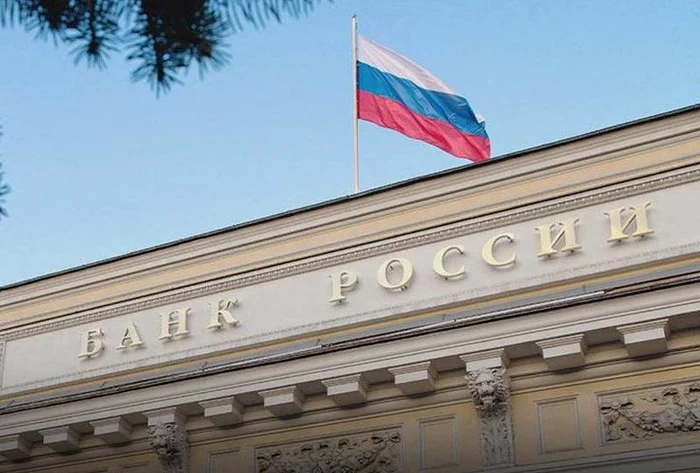
Russia's Central Bank/Photo: Archive
Although the Kremlin refuses to directly recognize the cumulative impact of Western sanctions, even Russian government officials are talking more and more openly about the possibility of a recession. The Minister of Economy, Maxim Resetnikov, recently warned that Russia is “on the edge of a recession”, while his counterpart from Finance, Anton Siluanov, described the context as “perfect storm”.
Against the background of these tensions, the central bank has suggested a possible reduction of the reference interest this month – a change of tuna that comes after a series of aggressive increases, meant to keep under control the galloping inflation caused by military expenses.
A forced and unsustainable economic model
The remarkable economic growth of Russia in 2023 and the beginning of 2024 – one of the fastest among the great economies – was the result of an artificial model, supported by the defense budget and by the redirected energy exports to China and India. Almost 40% of the government expenses are allocated to the military and security sector, a level comparable only to the peak period of the Soviet Union.
But, according to analysts, this formula of economic survival during the war comes with systemic costs: high inflation, cost of credit for civil enterprises, reducing private investments and structural imbalances that accumulate. “The growth model based exclusively on military expenses is broken by reality,” says Janis Kluge, an expert in Russian economy at the German Institute for International Affairs and Security. “In order to support the war machine, the civil economy has to contract, and this is not sustainable.”
Signs of slowing become clear
The official data show a clear decrease in the growth rate: in the first quarter of 2025, the GDP increased by only 1.4% compared to the previous year, compared with 4.5% in the last quarter of 2024. Industrial production registered the most accentuated contraction in the last three years, and sales of new cars have decreased by almost 30% in June.
Large industrial companies begin to sound alarm. Rostselmaș, the main Russian producer of agricultural equipment, announced production and investment cuts, as well as the anticipated sending of the 15,000 employees. In Siberia, the operator of the Rosseti Sibir electric network reported a quasi-insolvency situation, invoking a dangerous level of debt and requesting rates for industrial consumers.
Hidden fragility in the banking system
Another vulnerable point is the banking system. Following the invasion of 2022, the state forced banks to grant preferential loans to companies involved in the war effort. In the current context of high interest, the risk that these loans will no longer be returned, and the losses can be transferred, ultimately, to the state budget.
A recent report of the Center for Strategic and International Studies (CSIS) warns of the risk of a systemic banking crisis from 2026, against the background of accumulated imbalances. Although some local analyzes say that banks are still well capitalized, the Macroeconomic Macroeconomic Analysis Center speaks of a “moderate and growing” probability of a systemic crisis.
An oil dependent and vulnerable on sanctions
Energy income is another third of Russia's budget. But in June, oil and gas receipts reached the lowest level of January 2023. The reason: Russian oil prices remained below the estimated level in budget construction, and sanctions-although partially avoided by redirecting exports-begin to show their corners.
In this context, any additional decrease in the price of the barrel or tightening of the western sanctions regime would put a direct pressure on Moscow's ability to finance the war.
“A decrease in oil income, combined with new sanctions, will be felt much more acute at this stage”warns Alexandra Prokopenko, a former official of the Central Bank of Russia, currently a researcher at Carnsia Russia Eurasia Center.
Political consequences and strategic limits
For Vladimir Putin, however, these signals do not seem to represent a serious hindrance in his military plans. Priority remains the neutralization of Ukraine, regardless of economic costs. In fact, he recently ironized the warnings about the economy, saying that “rumors about her death are exaggerated.” However, he added that “the recession or stagphination should not be allowed, in no case.”
But the data outlines another image: Russia's budget is in permanent deficit from the beginning of the war, and the government forecasts indicate the same trend for the next two years. In parallel, the popular support for the war could erode, if the economic effects are increasingly affecting the standard of living.
An opportunity for the west?
For the West, this slowdown could be a window of strategic opportunity, provided more strict coordination in the application of new sanctions or in imposing more efficient ceilings on Russian energy exports.
The Russian economy, although short -term resilient, is increasingly showing that it cannot endure a model based on militarization, internal repression and international insulation. And if this model begins to give up, the stake moves from the battlefield to the sustainability of the Kremlin regime.