Who is the Dalai Lama and why he lives in exile. Claims that his successor will be born in the “Free World” outside China

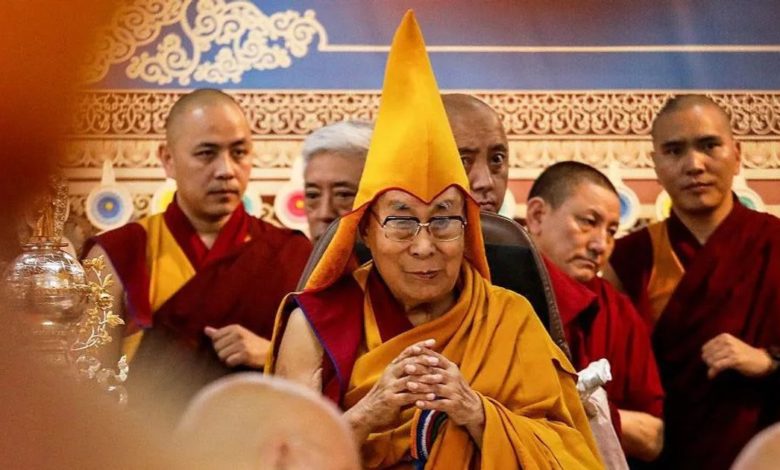
In March 1959, while the Chinese troops crushed an attempt to revolt in Tibet, Tenzin Gyatso, the 14th Dalai Lama, fled to India. Beijing continues to consider him a dangerous separatist, although he has stated that his goal is Tibetan autonomy rather than independence.
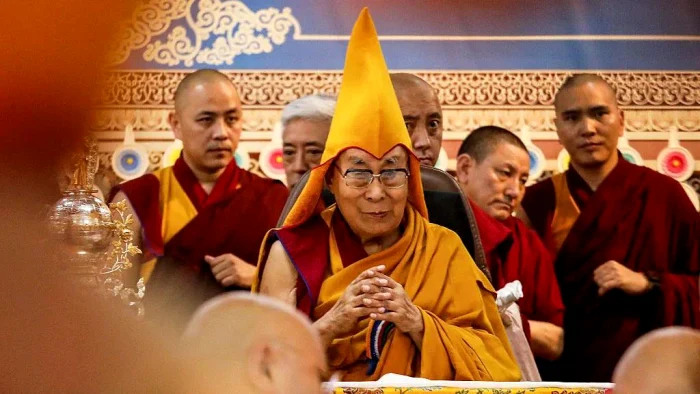
Dalai Lama PHOTO: Getty Images
With few countries ready to react to China's actions, he faced a difficult task of protecting them on Tibetans and their traditions. However, despite the decades spent in exile, his influence extended far beyond his community. He is not only the spiritual leader of the Tibetans and a living symbol of their hopes to regain their homeland, but also a symbol of peace worldwide and one of the most important religious figures, according to yahoo.com.
He received the Nobel Peace Prize in 1989 for his consistent opposition to the use of violence in his attempt to achieve Tibetan autonomy.
Beijing continues to consider him a dangerous separatist, although he has stated that his goal is Tibetan autonomy rather than independence.
Now, after a life spent in the center of China's tense relationships with Tibet, the Dalai Lama focuses on the future.
At the age of 90, in June 2025, he confirmed that there will be a successor after his death, ending the doubts about the continuation of the 600 -year -old Buddhist institution.
The child leader
The 14th Dalai Lama was born on July 6, 1935, in a small village right outside the current borders of Tibet. His parents, who called him Lhamo Dhondub, were farmers with a few other children.
At the age of two, a search team made up of Buddhist officials recognized as the reincarnation of the 13 Dalai Lama and was enthusiastic before turning four years. I was given the name Monahal Tenzin Gyatso.
He was educated at a monastery and obtained the diploma Geshe Lharampa, a doctorate in Buddhist philosophy. But in 1950, when he was 15, the troops of the new Chinese communist government marched in Tibet.
While the soldiers spilled into Tibet, the Dalai Lama assumed his full power as head of state.
In May 1951, China drafted an agreement in 17 points that legitimized the incorporation of Tibet in China. Then, on March 10, 1959, a Chinese general in the guest of the Dalai Lama to participate in a show of a Chinese dance band. But the Tibetans were afraid that it was a trap meant to kidnap the Dalai Lama and many began to gather at his palace to protect it.
This action has turned into protests against the presence of Chinese troops on the Tibetan territory. The popular liberation army has launched a brutal repression and it is said that thousands of people have died.
A few days later, the Dalai Lama fled the palace, a decision that he said was based on divine order from his personal oracle. He disguised himself in the soldier and slipped into the crowd in one night.
Together with an entourage, he reached the Indian border after a 15 -day tiring hiking through the Himalayas. The Indian government granted asylum and finally settled in Dharamshala, in northern India, which became the headquarters of the Tibetan government in exile.
The Dalai Lama was followed in an exile of about 80,000 Tibetans, most of whom settled in the same area.
“The middle way”
In exile, the Dalai Lama began to try to keep the culture of the Tibetan people and to make known its difficult situation on the world scene.
He appealed to the United Nations and convinced the General Assembly to adopt resolutions in 1959, 1961 and 1965, requesting the protection of the Tibetan people.
The Dalai Lama pleaded for a “middle path” to solve the status of Tibet – a real autonomy of Tibet in China.
In 1987, against the background of Lhasa protests against the large -scale relocation of the Chinese Han in Tibet, the Dalai Lama proposed a five -point plan, in which he appealed to the creation of Tibet as a peace zone.
The Dalai Lama never gave up its peaceful resistance position and, in 1989, received the Nobel Peace Prize. The Commission praised its non-violence policy, which it called “all the more remarkable as it is considered in relation to the sufferings caused to the Tibetan people.”
Over the decades, he has met many political and religious leaders around the world. He visited him on several occasions on the late Pope John Paul II and was a co-author of a book with Archbishop Desmond Tutu. Over time, he has attracted the support of Hollywood celebrities like Richard Gere, Martin Scorsese and Lady Gaga.
But the non-violent philosophy that brought to Dalai Lama the recognition of the international community was a source of frustration for some Tibetans, who I think was too gentle with Beijing.
In 2008, deadly riots broke out in Lhasa and other parts of Tibet due to the treatment applied by the Chinese government to the Tibetans. Beijing said about 20 people were killed in confrontations with the police, although human rights groups estimate that the actual number of the dead was much higher.
The Dalai Lama was also sometimes the subject of international controversies, especially in 2023, when a video showed him by telling a child to suck his tongue. His office said that the spiritual leader often teased people in a “playful mode ”and Dalai Lama apologized for the incident.
His office apologized in 2019, after telling for the BBC that any future woman Dalai Lama should be “Attractive”.
The problem of succession
From a historical point of view, the Dalai Lama acts both as a political and spiritual leader of the Tibetans. However, in March 2011, the current Dalai Lama gave up his political authority in favor of a government in a democratically chosen.
In recent years, as he has aged and confronted with minor health problems, there have been increasing concerns about the problem of succession and, by extension, the cause of the exiled Tibetans to claim their homeland.
These concerns increased when the Dalai Lama suggested that there may be no reincarnated successor and that the decision belongs to the Tibetan people. But when he turned 90, he solved the problem once and for all.
In a statement he said that after receiving many requests and reactions, “The Dalai Lama institution will continue.”
Some experts have interpreted his words as a signal to Beijing that his legitimacy is based on consent, in contrast to the annexation of the Tibetan territory by China.
He also said that only his office has the authority to recognize the future reincarnation and that “No one else has the authority to intervene in this matter”a clear reprimand to China, who insisted that only she has a say in the succession.
Beijing replied, reiterating that Dalai Lama's successor will have to be approved by China.
Dalai Lama previously stated that his successor will be born in “Free World” from outside China. However, who will be this person remains unknown.