Investigators have new suspicions for Air India accident. The hypothesis taken into account after a pilots simulation

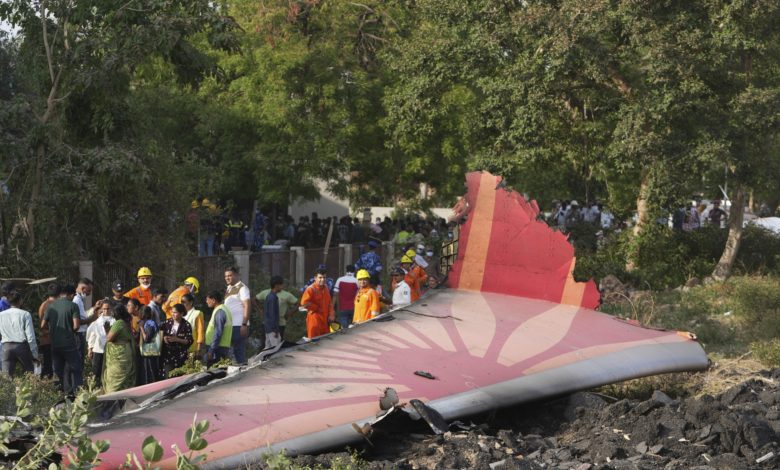
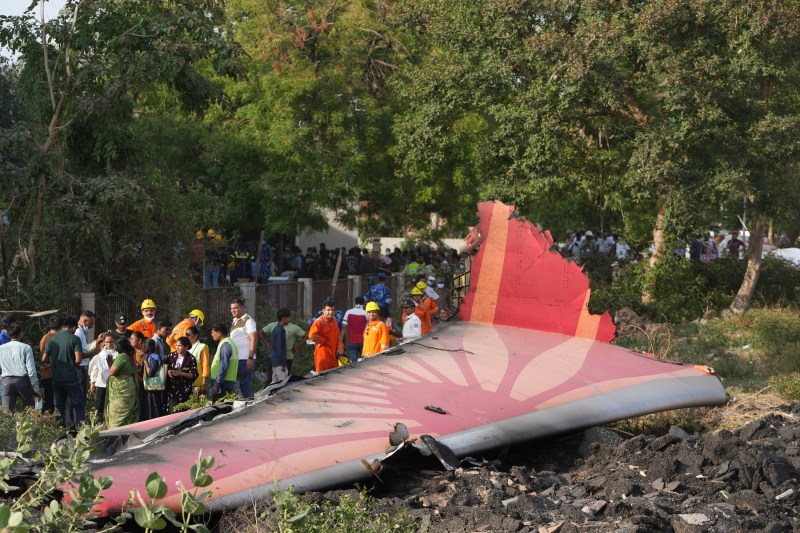
The place where Air India flight collapsed, in Ahmedabad, India, June 12, 2025. Photo: Ajit Solanki / AP / Profimedia
The investigation explores a series of scenarios, with an emphasis on the technical aspects, and will look for additional indications from the two flight recorders, whose data were extracted and are being analyzed.
Three weeks after the tragic collapse of the aircraft belonging to the airline Air India, in which 241 of the 242 people on board were lost, investigators are increasingly taking the hypothesis of a major technical failure.
A possible simultaneous transfer of both engines of the Boeing 787 Dreamliner aircraft is now taken into account, according to Bloomberg, quoted by the Indian press.
Air India flight, recreated in the simulator
In an attempt to understand what happened, Air India pilots recreated the flight in the simulator, using the same registered parameters before the collapse: the landing train and the withdrawn flaps, reports NDTV.
The preliminary conclusion shows that these settings, some alone, would not have led to an aviation catastrophe. After the simulator test, made separately by the official investigation carried out by the Air Croach Investigation Bureau (AAIB), strengthened the suspicion that a technical failure would have been the basis of the tragedy.
Boeing did not comment on the incident, redirecting the questions to AAIB, and General Electric, the engine manufacturer, said he did not rule on an ongoing investigation.
The Boeing 787 Dreamliner aircraft was equipped with two General Electric engines and collapsed on June 12, immediately after taking off from Ahmedabad.
The data of the black boxes, analyzed
Video recordings showed how the plane is struggling to take altitude, then suddenly loses height and explodes on the ground.
Investigators are currently analyzing the data extracted from the two black boxes, which could reveal whether the engines have yielded simultaneously and why.
A suspicious detail observed in the images of the accident is that the wheels of the plane seemed to have already been in withdrawal, but the traps of the landing train had not been completely opened, a possible indication of a voltage drop or a hydraulic failure.
Another important piece of puzzle: the RAT (ram turbine), a small generator that automatically comes out of the fuselage was activated in case of total electricity loss. RAT can support the operation of essential systems, but it is insufficient to keep the plane in the air.
15 seconds
The wreck analysis shows that the flaps and volumes, components of the wings, used to increase the portance at take -off, were in the correct position. However, the only 15 seconds of the Emergency Sign (Mayday) and the impact with the soil did not leave any saving chance.
The tragedy is considered the worst civilian accident in India in recent decades and marks the first total loss of a Boeing 787 Dreamliner.
Teams from Boeing and the National Council for US Transport Safety support the field investigation.
It is not clear when the full data of the flight recorders will be published, but the investigation is increasingly concentrated on a possible critical defect of the engines.