Crosses raised in memory of the victims of the plague, discovered in a forest in Buzau curvature. What the locals tell

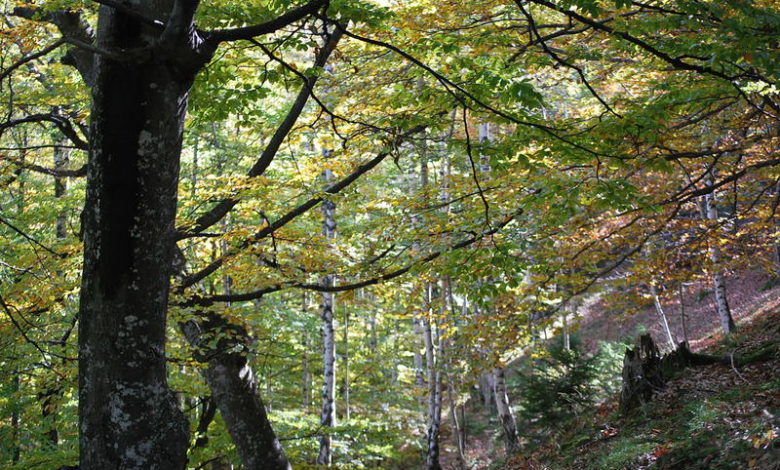
Three crosses that would have been erected towards the commemoration of some victims of the plague, most likely during the eighteenth centuries-XIX, two of oak wood and one of the limestone, were discovered in a forest in Colţi commune and could be included in a larger tourist route, the area being assigned important attractions from Buzău county.
At the border of Colţi and Bozioru communes, in a thick deciduous forest, three crosses have fascinated in recent years the locals, a dramatic tab in history, the plague period. Recently, one of the villagers rediscovered the place where around the 1900s would have lived in isolation a few patients who would have self-expanded by communities. On one of the crosses there are 12 names.
“Constantin, Elena, Radu, Maria, Alecsandra. Write here the year 1900. There is a two-sided cross. On one side five people and on the back-Mihaiu, Ana, Gheorghe, Lina, Ileanca, Ioana and Ana, seven. There are two oak wood crosses. I first saw them from 2001. by the “Cruce of the plague”, that it is said here. I asked the elders, they told me that somewhere the plague sick lived here. After the year on the cross, it would be about Caragea's plague. They said that here were self -explicing or exiled the plague sick in the neighboring villages, and stood in the brothel dug in the ground. The relatives came and left food on the road, came out of there and took their food. I understand that they put their food in a hair not to come into contact. The crosses believe that they are to the memory of those who died, generally they were at the roads, but here is a peak road. It is a limestone cross, and the oak crosses were much taller, I think they had two meters. I looked for them about 3-4 months ago and I gave them recently, ”said a resident of Colţi commune, Ciprian Ionuţ Chiriac.
The plague was one of the epidemics that frightened the medieval world, both in the West and in the East, given that the causes were very little known, as did the treatments and the disease expanded quickly.
“The disease is attested on the Romanian territory until 1830, but the most popular plague epidemic struck the Romanian Country and Moldova in the years 1813-1814 and entered the current speech with the name of Caragea (….) A less valued source in studying the impact of the plague on the territory from Curbura Information on the victims but also of the survivors of the plague in the Buzau area is not limited to the notes on the books. Specified when it begins and when an epidemic ends, because after moments of calm it strikes again in different areas “, means Dr. Daniela Lupu in the book” Hair with Priceştanie “-notes on books and other testimonies about the plague in Buzău county (1719-1828), text published in the Annals of Buza VI-2014.
“The food was pushed with a fry. They had borders made as in times”
The elders of the villages learned about the place where the patients would have been, in turn, from the ancestors. They dared in their youth to climb the wooded ridges from the Carpathian curvature to see them, but now they have given them forgetfulness.
“I live in the corners, I am 86 years old. Before, my grandmother told me that they were giving them food with the fry, it was a kind of disease, she said the plague. Pushing their food with the fry, in a place on the border with Bozioru. I was little when I told me about 4-5 years. At times.
Buzau, along with other cities in the country and the capital were more serious affected by the epidemic, compared to the rural areas and more isolated by the main traffic routes.
The three crosses discovered in the forested area are part of the history of the places, which is why the local administration of Colţi commune would like to enhance them by arranging a place with information panels. Colţi commune is sprinkled with tourist attractions well known by the public, from the church in Aluniş, the Tatar Cave, being near the Rupesti and Babele vestiges from Ulmet-Comuna Bozioru. At the same time, Colţi is known for the amber museum collection, the only one in Romania.