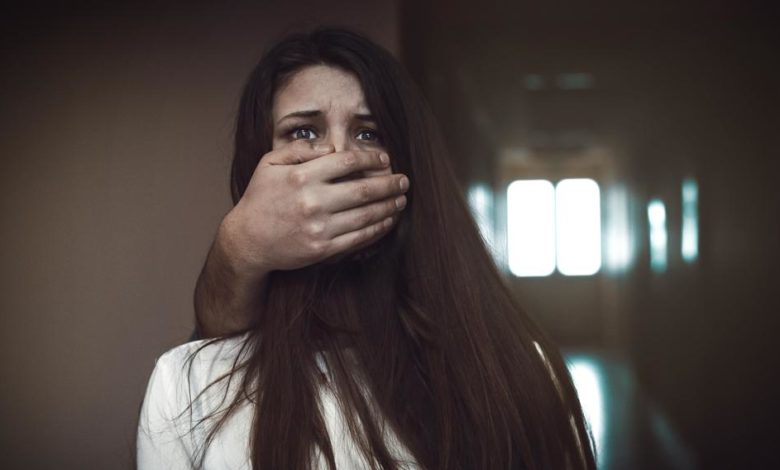
There is a lack of systematized data on the scale of the problem, which is women's – indicates the organization of Femicide in Poland. At the source of the problem lies the lack of consumption of databases conducted by individual state authorities. The organization is working on tools that will allow them to accumulate in one place and make them available in the form of an interactive map. Its representative also points to other fundamental areas to improve. This is in particular the enforcement of existing law and intensification of education activities.
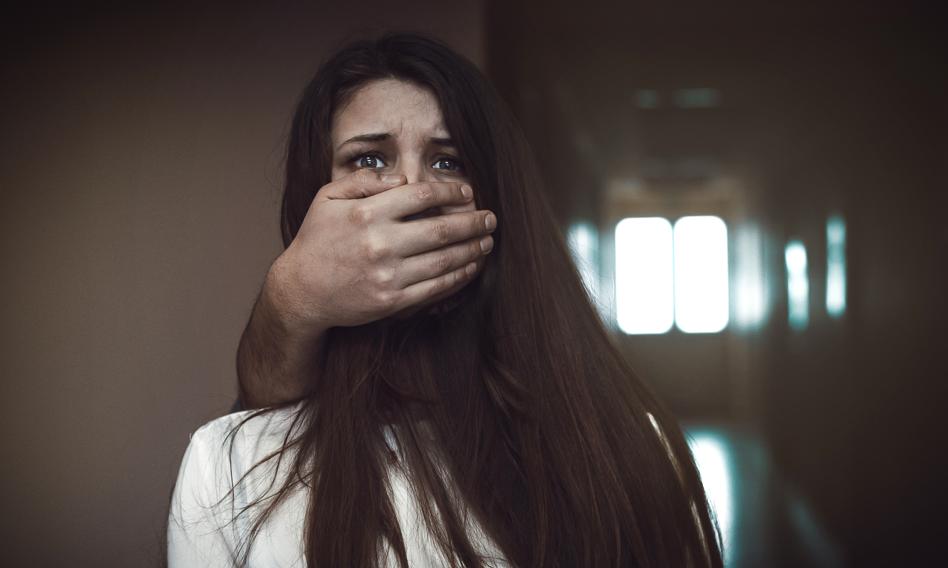
The term for women means murder of a woman because of her sex. Examples of premises that may indicate an event of this nature are, among others: the existing emotional relationship of the victim with the perpetrator, the kinship of the perpetrator and the victim, prior use of violence against the victim or the reluctance of the perpetrator to women. Although the phenomenon has always existed, and the term women was used for the first time in 1801, it turns out that there are no consistent statistics in Poland that would even determine the scale of this phenomenon.
– We do not currently have data that would say how many women take place in our countrydespite the fact that Poland has committed to the provision of such data and that since 2015 we have been applying to the Istanbul Convention of the Council of Europe. When I collected information to the report “10 questions about women's” and addressed Polish justice bodies, it turned out that each organ conducts its separate databases and there is no systemic solution that would be consumed – says Newseria agency Alicja Serafin from the Think Tanko Femicide in Poland. – When it comes to data from the Polish map of women, collected as part of monitoring in 2017-2023, one can talk about the scale of crime from 100 to 200 women per year.
The Femicide in Poland project aims to fill the gap in data on the one hand, and on the other – an indication of the need for changes in the field of counteracting violence against women.
– artificial intelligence and modern technologies implemented under human control could support the actions of the organs and facilitate their collection of information and building databases sensitive to this type of crime – indicates Alicja Serafin.
As part of Femicide in Poland, it is to be created, among others A public and current database on the number of women committed in Poland. The form of its presentation will be the Virtual Polish Map of Womenicide covering the period from 2017 to the present. The organization will also identify regulations, politicians and reactions (or their absence) social or state for this type of crime.
– Before we start introducing legal changes and create new bills in this respect, we should start applying this law that already exists with us, for example Article 11 of the Istanbul Convention, which obliges Poland to collect data. So the rules are, but they just don't use them – emphasizes Alicja Serafin.
The expert indicates that one of the solutions that will facilitate the authorities of precise reporting of the problem data is to be the typing of women's, i.e. an indication in the statutory description of the crime of features that will allow them to be clearly qualified.
– Spanish and Belgium have already taken such steps, which devoted the entire law to women's crime, also Malta, Cyprus and Croatia. On the right track, to pass such a law, prepared by the Giorgia Meloni government, there are Italians – he indicates. – Typization of women is one of the solutions that can show this crime to the authorities so that they are more sensitive to collecting data. They also make them easier for us to counteract this type of crime, because we have thanks to the awareness in what conditions women die, which is a trigger in this type of crimes, which are the most common reasons. It is very often a breakup.
According to UN Women and UNODC data, in 2023, 140 women and girls in the world died a day at the hands of a relative or partner. This means that one woman died every ten minutes. In Europe in 64 percent cases of women's perpetrator is the victim's partner.
– The most dangerous place for women is still home space, in which we should feel safe. There is a space between women's violence and women's violence in which we can counteract the latter act. This is also important in terms of data analysis: we can find these factors and we can use security measures in advance, which will make women not occur – emphasizes Alicja Serafin.
The data published by the Foundation of the Women's Rights Foundation shows that every 40 seconds a woman in Poland falls victim to violence. Every fifth Polish woman experienced violence from the current or former partner, and in many cases children are children. According to the expert, you need to increase awareness of the scale of this phenomenon and to sensitize society.
– The word “women's” is not an exotic, it is something that happens around us, but it is not said, it is not called womenicide, but very often trivializes and romanticizes. Very often, unfortunately, in the tabloid press you can find headers without sensitivity, referring to families or victims, and these are real events that take place, and real people, this is not a crime story or a novel nor a podcast. These are situations that in my opinion still need to sensitize the language and the way of speaking. It is very often the case that we forget about it and treat it as separated incidents, not as system violence. Other countries, even Spain, Italy or France, are more sensitive and when we have such a criminal event, they can properly provide this information in such a way that the recipient understands its context, that he understands what these killings are, and that he does not pigeonhole as a sensational event of a madman, just as a crime that needs to be counted – adds a representative of Femicide in Poland.