Poles who heat their homes with gas or coal must prepare for increased costs. The reason is the introduction of a new CO2 emission charging system – ETS2. The new tax will also affect prices at distributors.
The ETS2 system, i.e. the extension of the EU emissions trading system to the construction and transport sectors, is an element of the EU's climate policy. The introduction of this mechanism involves additional costs for households and enterprises.
ETS2 and fuel and energy prices
According to ING Bank Śląski analysts, with the price of allowances at PLN 200 per tonne of CO2 (approximately EUR 45), fuel and energy prices will increase as follows:
— E95 petrol: +46 cents per liter,
— Diesel fuel: +54 groszy per liter,
— Gas: + PLN 90 per MWh (current tariff for households is PLN 239),
— Coal: +PLN 400 per tonne.
It is clear that emissions charges will translate into higher fuel bills. According to a Bloomberg analysis published in September, in the years 2027-2030 we can expect an average price of EUR 99 per tonne, and in 2030 already EUR 122.
According to data from the Central Emission Register of Buildings (CEEB), gas remains the most frequently chosen heating source in Poland. More than 17 million households use this fuel. For these users, the introduction of ETS2 poses particular financial challenges.
As we wrote in Business Insider, Poland will be particularly affected by ETS2. People with low incomes are most at risk.
ETS2 and EC forecasts
The European Commission emphasized in the autumn economic forecast presented on Monday that inflation in Poland is expected to decline in the coming months. EU officials lowered its forecast for 2025 to 3.4%. (in spring they estimated 3.6%).
In turn, in 2026, inflation is expected to be 2.9%, but in 2027 it will increase to 3.7%, among others. as a result of the entry into force of the ETS2 system which – according to the EC – will increase energy prices. However, the EC forecast does not take into account the recently announced postponement of the entry into force of the ETS2 system by one year – from 2027 to 2028.
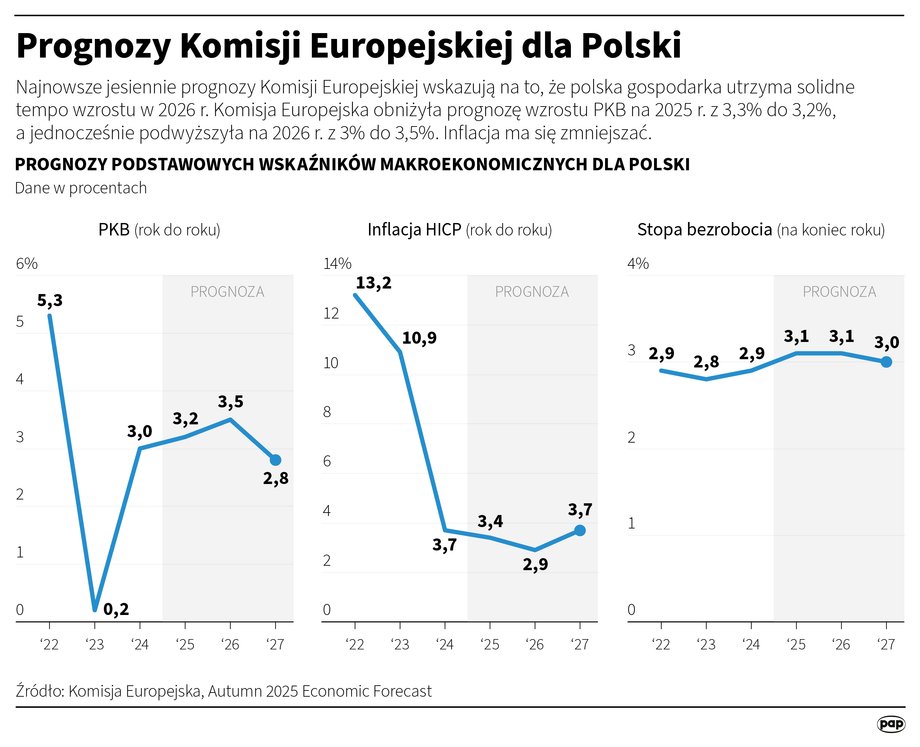
ETS2 will increase inflation in Poland
|
Michał Czernek / PAP / photos
See also: Poland is not giving up on ETS2. “The revision of the ECJ directive will be a key moment”
ETS2 – when will the new tax start?
While Poland was in favor of postponing the introduction of ETS2 to 2030, the European Parliament decided that the system would come into force as early as 2028. Previously, the European Commission proposed the date of 2027, but the Council of the European Union postponed it by a year. Currently, there is no institution in the EU that would seek further delay.
The European Parliament's decision is part of broader negotiations with the EU Council regarding EU climate policy. On the issue of ETS2, both institutions seem to agree, which increases the likelihood of a faster introduction of the system.
Poland still insists that the system of charging emissions in construction and transport, i.e. ETS2, will come into force in 2030. As Krzysztof Bolesta, deputy minister of climate, responsible for negotiations on this matter, says in an interview with Business Insider Polska, the revision of the EU ETS directive will be an opportunity to push for this goal. We write more in this text.
Not only ETS. Social Climate Fund – support for the poorest
Together with ETS2, the European Union plans to launch a Social Climate Fund. Its aim is to support people affected by energy poverty by financing investments in low-emission technologies in transport and buildings. Member States will be able to use these funds to mitigate the financial impact of the new regulations on their citizens.
See also: Poland will be particularly affected by ETS2. People with low incomes are most at risk