
“Nuclear hurricane”. Expert: A new arms race in the world has begun

The underground hall in the capital of Pakistan, Islamabad, is lined with white silk fabrics. Women are wearing dazzling robes woven with golden threads. This is the greatest wedding of the year – two great families of the country connect their children. Prime ministers and bosses of general staffs came to the ceremony. Suddenly the music and conversations quiet, everyone turns towards the entrance, the national anthem resounds.
A tall, gray man enters the room. The powerful of this world applaud him, people grab his hands when he extends them towards the crowd. He is not a general or a politician. He is a metallurgist engineer. This is AQ Khan – father of the Pakistani atomic bomb, North Korean bomb, as well as the Iranian nuclear program. One of the most dangerous people in the world. – Why is he dangerous? – asks the bride of the bride. – No man is dangerous. The world is dangerous – one of the guests replies.
Today, A Q. Khan is already dead, and after the attack by Trump on Iran, international public opinion stares like hypnotized in satellite photos of Iranian nuclear objects. How serious are the damage? How far is the regime from the possibility of building a weapon of mass destruction?
In fact, the problem is much greater. There is a risk that nuclear weapon proliferation will become a global phenomenon.
This has a lot in common with the highly competition of global powers – the USA, Russia and China. But also with the heritage of the died in 2021 a Q. Khana. The Iranian nuclear program is only part of it.
Nuclear chaos
– Khan's creation of nuclear weapon technology by Khan in the 1980s and 1990s certainly had ideological foundations – says David Albright, director of the Institute of International Science and Security in Washington and one of the leading independent researchers of the Iranian nuclear program. – He had an anti -member idea that also Muslim and Asian countries should have atomic bombs. And he built an international business on it – he adds.
After studying in Pakistan and West Berlin, Khan found a job at the Dutch factory enriching Uranus. When Pakistan began to develop an atomic weapon, Khan was a member of this team. He bought construction plans and technologies for enriching uranium around the world, and after in the mid -1980s Pakistan became an atomic power, he himself sold knowledge and devices to other countries.
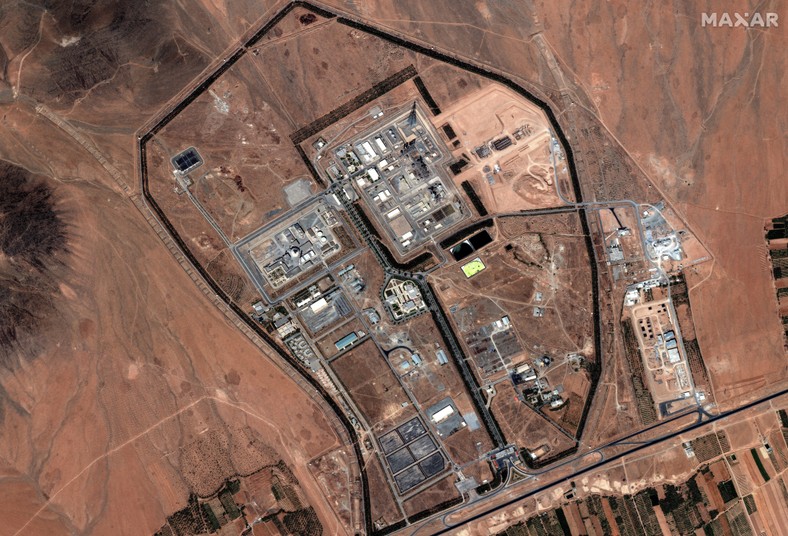
Satellite photo showing the destruction of the Arak nuclear complex in Iran, June 19, 2025.
His clients included, among others: Libya, North Korea and Iran. “A lot depends on the future of the Iranian nuclear program,” says Albright. – If Tehran manages nuclear weapons, many other countries will follow in his footsteps. The world is threatened with nuclear chaos – he adds.
In fact, many countries are preparing for the construction of nuclear weapons – they plan to do it if the need arises. The only misery is that nobody does it as openly as Iran. Many countries “protect” themselves – gradually and in accordance with international law acquire the elements needed to build nuclear weapons.
For this you need many elements – nuclear testing centers, uranium enrichment plants, in which you can produce both fuel for nuclear power plants, as well as nuclear weapons, medium and long range rockets, which can carry conventional heads, but also nuclear, submarines that can shoot subsequent nuclear rockets as a retractable weapon. Only acquiring these all the elements of the puzzle results in the creation of a nuclear program.
Many countries have all these elements, but they do not use them to build atomic bombs – this is the case, for example, in the case of Germany. Experts call this “nuclear latage”. Other countries strive to build or acquire these centers or weapons, apparently preparing for the nuclear arms race. This happens not only, but above all in the Middle East – and it has a lot to do with Iran ..
Not only Iran
In January, Saudi Arabia announced that with the support of China it would start the first attempts to enrich uranium. To this end, he also intends to extract his domestic deposits. With small amounts and a low degree of enrichment of uranium, this does not violate the Treaty on Nuclear weapons. However, it is not said that this will always be the case.
“Saudi Arabia does not want to have a nuclear bomb,” said Prince Mohammed Bin Salman in 2018 in the American television program “60 minutes”. “But if Iran develops an atomic bomb, we will follow in his footsteps as soon as possible,” he added. Saudi Arabia already has medium -range rockets – Chinese production, because the United States has long refused to deliver such weapons. According to the logic of balance with Iran, other entities in the region also operate.
The United Arab Emirates concluded an agreement on nuclear energy with the United States and recognized the enrichment of uranium on their territory as illegal. In the US Congress committees, American diplomats stated, however, that their interlocutors from the Emirates They warned that they would also follow in the footsteps of Iran if he won the nuclear weapon. Recently, Emirates have been cooperating with China, among others in the field of research on nuclear fuels.
Egypt, in turn, works closely with Russia in the field of nuclear energy. According to experts, the nuclear complex over the Nile is the largest in the region. So far, the Egyptian program is considered peaceful, but also in Cairo a nuclear weapon may be issued if Tehran won it. The Egyptians could use some elements of the Iranian program.
They began work for the construction of nuclear weapons in the 1960s and 70s. Although they cooperated quite closely with the International Atomic Energy Agency (Maea), ambiguities and suspicious finds in Egypt appeared more than once. The country already has a medium -range rocket program.
A similar situation occurs in Turkey. In close cooperation with Moscow, Ankara is already exploiting nuclear reactors and – like Tehran – he claims that, according to the Treaty on Nuclear Weapons, he has the right to enrich uranium in his own country. So far, Türkiye has been experimenting only with enriching uranium. He not only imports his raw ore from Africa, but as part of a joint project with Russia, he also brings low -enriched uranium, which can be enriched.
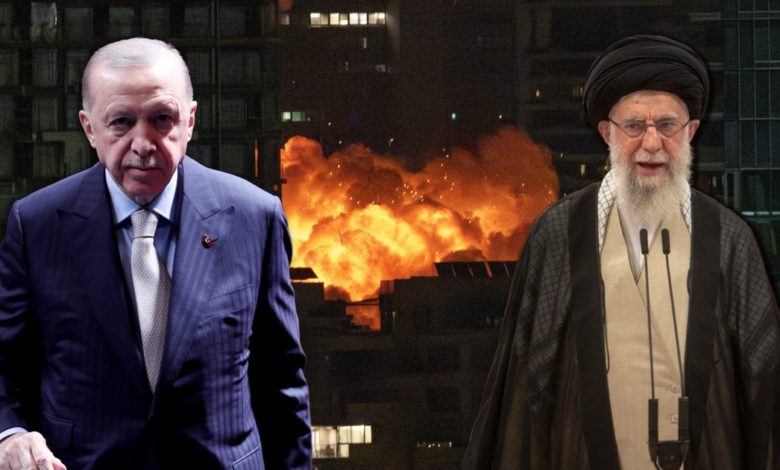
Türkiye also has medium -range rockets. Finally, the confident president Recep Tayyip Erdogan competes with Saudis and Iranians for the role of Muslim power. Many experts think that if the Iranians had nuclear weapons, he would also like to have it.
Not only the Middle East
– Saudi Arabia, Egypt and Türkiye are arousing our greatest fears in the Middle East [pod kątem prac nad budową broni jądrowej] – says Albright. Also in other parts of the world, however, there are countries that could begin to develop military nuclear programs.
– Argentina and Brazil are able to enrich uranium, and Brazilians even want to buy atomic submarines. However, both countries have little reason to strive to have nuclear weapons, “says Albright. After all, Argentina and Brazil had not waged war for almost 200 years. The situation in Asia looks different. There, at least two western -oriented countries are in the face of nuclear threat from North Korea – They are Japan and South Korea.
– Japan does not raise my concerns. Although politicians often raise the topic of nuclear weapons, after the experience of the bombing of Hiroshima and Nagasaki, the majority of society is against it, “says Albright.
South Korea will start more likely that work on nuclear weapons. Albright believes that Koreans from the South need a few years to develop it. “Leading politicians speak very seriously about nuclear weapons,” he notes. Already the previous Prime Minister of South Korea Yoon Suk-Weeol warned that his country would need such a weapon if North Korea would continue nuclear reinforcement. Ok 70 percent Society is in favor of this solution.
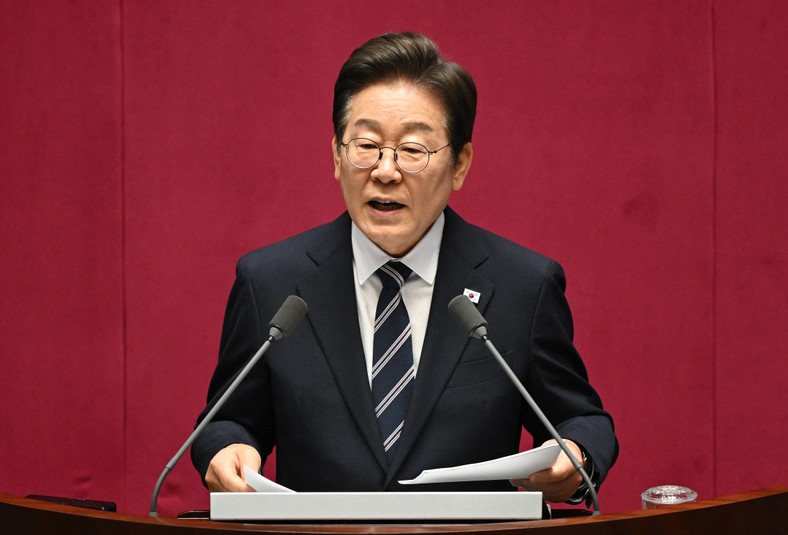
President of South Korea Lee Jae Myung in the National Assembly in Seoul, June 26, 2025.
– However, if South Korea begins to produce its own nuclear weapon, Washington will almost certainly throw it out from under the American nuclear umbrella. And this does not want most of the inhabitants of South Korea, 'says Albright. Specialists in this country are considering obtaining nuclear weapons, recognizing it as an alternative to the weakening US protection. And not only they approach this topic.
The threat of escalation of nuclear arms is primarily a weakening of the influence of superpowers. Like the Koreans, they are afraid that the US will not provide Asian allies with sufficient nuclear protection, so the states of the Persian Gulf are considering creating nuclear weapons arsenals because they see the weakening involvement of Washington in the region.
In the growing competition with the West Moscow and Beijing willingly offer potential allies in the Middle East cooperation in the field of nuclear testingand with her-the know-how, which they never released from their hands during the Cold War. The multiply world order increases the threat of extermination. He also leads to a change in the way of thinking on the American East Coast.
VIPIN NARANG currently lectures at the elite University of MIT, previously he was the secretary of state in the Pentagon responsible for nuclear weapons and missile defense. He once wrote a loud book about the strategies of winning nuclear weapons entitled “Seeking the bomb”. At that time he reassured readers – he claimed that most of the Western -oriented countries, which think over their own nuclear weapons programs, want, above all, to force the USA stronger military support.
Today Narang recommends the administration of Donald Trump's strengthening and modernization of nuclear arms – also to reduce the proliferation of this weapon in the world. “The rapid fall of nuclear protection and diplomatic architecture, which for decades limited the spread of nuclear weapons and ensured the safety of dozens of countries under the US protective umbrella, makes it Some Asian and European allies are now considering acquiring it” – Narang wrote in an article for the magazine” Foreign Affairs “.
“Nuclear hurricane”
He added that this is why Washington must modernize his nuclear weapon arsenal – that allies would not be scared to their own hands. Because this, combined with the growing reinforcement of China and Russia, threatens “nuclear hurricane”.
– The more entities have a nuclear weapon, the greater the risk. This is not only due to the growing number of weapons, but also from greater uncertainty, “notes Albright. As long as the world was divided into two camps, both sides knew who they had to observe and who they could talk. If the nuclear threat came from many sides, the risk would be more difficult to estimate, and the risk of making a mistake would also increase.


