The north of Europe does not intend to kneel before Putin. The Kremlin will break its teeth on the Nordic defense. “We are not afraid”


The sounds of maneuvers can be heard in the fjords, military exercises are taking place in Lapland. Young Norwegians, Finns and Swedes compete for a place in the army, treating service as a distinction.
While in other parts of the continent people prefer not to think about war, Scandinavia decided to be ready.
Three heavy armored personnel carriers grind to a halt just before the fjord. Haakon and his friends jump out of the vehicle. They are surrounded by modern weapon systems – a demonstration of the capabilities of the Norwegian Nomads system, a mobile short-range air defense system presented early this summer.
That day, 20-year-old Haakon takes part in NATO exercises in the Arctic Circle as a soldier of the Norwegian army. These are the largest integrated air and missile defense exercises in the history of the alliance. All 32 Member States participate. Haakon is also among the elite in his country. In his country, Haakon is also part of the elite – he belongs to about 15 percent. young people his age who were awarded the honor of completing military service.
Military obligation is also very popular in the other Nordic countries. Every year, thousands of young women and men volunteer there for military training. There are many reasons – but each of them clearly shows that other European countries have a lot of catching up to do when it comes to readiness to defend their country.
First of all, there is continuity. In Finland, Norway and Denmark, compulsory military service was never suspended, and the number of recruits was only temporarily limited. After a short break, Sweden reintroduced conscription in 2018. Moreover, in the north – Finland is an exception – women are also obliged to appear before a military commission. This makes the army firmly rooted in society and perceived as its integral part.
Military service is almost an element of our culture. Virtually all of my friends have already served.
explains Christian, a Finnish recruit.
Former Finnish president Sauli Niinisto recently emphasized in Helsinki that this community of experience is as important as the military skills themselves. — A boy from Lapland and a boy from Helsinki have little in common. But when they serve together, they learn to trust each other.
Niinisto's statement reflects the core values typical of the Nordic countries – solidarity and community. Defense of the homeland is perceived there as the task of the entire society. In Norway, even Princess Ingrid Alexandra completed 15 months of military training in an engineering battalion this year, and Sweden's heir to the throne, Princess Victoria, has been undergoing officer training since last year.
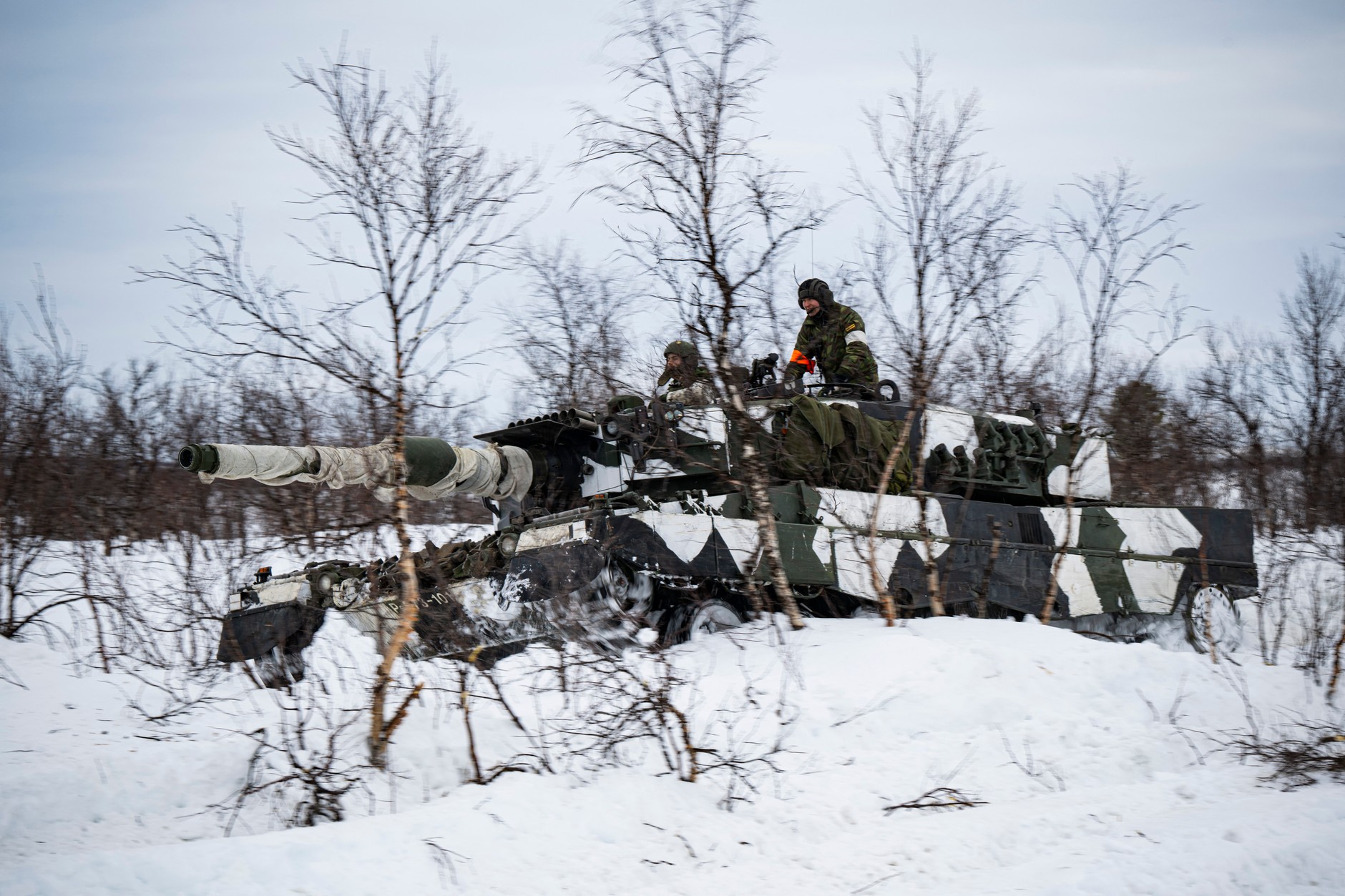
Soldiers from Finland and Sweden train together during NATO exercises. Kivilompolo, Norway, March 9, 2024Jonathan Nackstrand / AFP
Defense is not just about soldiers – it is a way of thinking
The concept of “total defense” includes not only the military and politicians, but also companies and ordinary citizens. In Sweden, in addition to the obligation to military service, there is also the so-called a universal duty to serve that assigns each citizen a specific role in the event of various crisis scenarios.
For us, it's actually obvious: if the country is at risk, everyone will have their own task to do
– says Swedish ambassador to Germany Veronika Wand-Danielsson.
Recruitment systems differ. In Denmark, all young men go through a qualification and – if deemed fit to serve – draw a lot to determine who will actually join the army if there are no volunteers. In Sweden and Norway, only a portion of a given age group, selected on the basis of a questionnaire, is invited to qualify.
The duration of service also varies, from as little as four months in Denmark to as long as 19 months in some cases in Norway. Regardless of the country, each candidate undergoes fitness tests, medical examinations, and psychological and intellectual tests.
Those who successfully pass the qualifications gain confirmation that they are among the most fit and disciplined young people of their generation. — Military service looks good on a CV, says Swedish ambassador Wand-Danielsson. “It shows that the person is disciplined, can work in a team and has a good education.”
Universities and employers in Scandinavia know perfectly well that military experience translates into greater responsibility and readiness for action.
— During service, a person matures. At the very beginning they sent over on an expedition. It was really hard, several days without sleep or food. We couldn't complain, we just had to move on, says Haakon and adds:
It teaches you how much you can achieve if you really want to
The popularity of military service has led the Prime Minister of Norway, Jonas Gahr Store, to announce an increase in the number of recruits from 9,000. up to 13.6 thousand in 2036. Denmark and Sweden have similar plans. “It's about combat capability,” explains Kenneth Strom, head of Denmark's conscription program. – We are in a situation where we need to increase our armed forces faster than ever before – he adds, referring to Russian aggression against Ukraine.
The article continues below the video
A story that doesn't let you sleep well
In the north, Euroy Moscow is perceived as a major threat to the West. This is partly a matter of geography: Norway shares almost 200 km of common border with Russia, and Finland has over 1,300 km. But also history – Sweden and Finland fought wars with Tsarist Russia or its predecessors several times, which still affects national consciousness to this day.
Therefore, incidents such as airspace violations by Russian fighter jets or hybrid attacks on infrastructure are monitored very closely. According to surveys, as many as 35 percent Today, Norwegians are afraid of the outbreak of war. Haakon does not share these concerns:
We are not afraid, but at the same time we want to be completely ready in case something happens.
Finnish recruit Christian also says with confidence: We know what it takes to defend our country. Since World War II We prepare for every possible scenario.
“We currently have no recruitment problems,” explains Wand-Danielsson. Currently, there are even more applicants than places. This is also because training has become more attractive in recent years – for example, thanks to higher salaries and better equipment for recruits. “We need to provide appropriate conditions,” says the ambassador.
All this is reflected in society's defense readiness. In Finland, over 80 percent respondents regularly declare in surveys that, if necessary, they are ready to defend their country with weapons in their hands. For Danes, Swedes and Norwegians, the percentage is slightly lower, but still well over 50%.