I also wrote about the projects of Minister David regarding the reform of Romanian education. (Here) they resume because 10 major reforms have appeared that will support the transformation, for good we hope, of education in Romania.
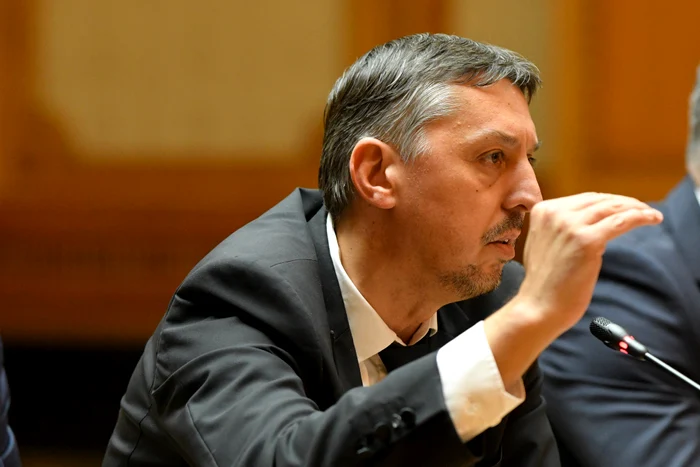
Minister of Education, Daniel David Photo Mediafax
The preamble is said very well what is the target of reforms.
The target of the reforms – must prepare and transfer through education the eight key skills, through which graduates become good specialists, good citizens and people with good quality of life. Graduates must be able to integrate efficiently in the labor market (level 3 qualification after the 11th grade, respectively level 4 after graduating from the high school) and/or continue their studies at post-secondary and/university level.
Very good in theory, but in practice?
Reform 1- curriculum and associated items
The framework plans for high school are about the same as those 50 years ago.
Of the eight key skills, agreed in the EU, four are the following:
(5) life skills (personal/social/to learn to learn);
(6) civic competences;
(7) Entrepreneurial skills.
(8) Cultural expression and sensitivity competences.
I still asked, without receiving the answer, to what disciplines and in how many hours these competences are formed and strengthened. In the curricular area “man and society” in the real profile, the specialization of mathematics-information, in which we should find the disciplines that convey the 4 competences, we find: history (including the history of communism and the history of Jews, the Holocaust), Geography, Socio-Human Discipline, Religion. The socio-human discipline was taught, in high school: logic, psychology, economy, sociology, philosophy, from the 9th grade to the 12th grade, one hour a week for one of the disciplines, but a discipline is made in a year of studies. Those who did the high school know that the disciplines logic, psychology, economy, philosophy have no great connection with the 4 skills quoted above, because it has been in the school curriculum for 50 years. And sociology, even if it were adapted to skills, means one hour a week, in a school year. That is 35 hours throughout high school, for four skills, half of the total number of skills!
I proposed and resumed a variant of discipline “education for society”, from class VA to the 12th grade, at least one hour a week, which will include mandatory and optional modules like:
-Romanian legislation, Constitution of Romania, comparative international legislation;
-rights, freedoms but also the obligations of children and adults;
-financial education;
-the code of good manners;
-intercultural education;
-entrepreneurial education, how to initiate and develop a business;
-Gestion of professional career owner.
Another problem raised in previous articles, remaining unanswered, refers to the combination of vocational school and the technological chain of high schools. Until the eleventh grade, the students are going through a professional school curriculum, and those who want and can, continues in the 12th grade and learns everything they did not learn in three years of the curriculum required at the technical and economic faculties. The famous economic high schools, sought and with great prestige, turn into vocational schools! And technological high schools with zero promotion at the baccalaureate are still kept in activity, instead of becoming vocational schools, which no longer exist! What is logic?
If these framework plans are summarized and what they learn in high school, what would be the professional training of the students in the theoretical chain? Where can the students who finish the theoretical chain, the profiles of philology, mathematics-information, the sciences of nature, if they do not want to go to college? To the question of the employers, what you know how to do, they answer: integral, derivatives, quantum physics, literary theory, to which employers send them home!
Another error of the proposed framework plans refers to the fact that the school does not fold on the inclinations, talents, aspirations of the students. In the 9th-X classes, there are 15 disciplines in the common trunk, and at CDEOș (curriculum available to the students of the school) 1-3 hours. In Western countries, at the head of Pisa rankings, there are only 5-6 disciplines in the common trunk, the rest at choosing students.
Reform 2, evaluation in education
The correct and objective evaluation depends on the decision to accept or reject the projects and objectives assumed in education.
At Pisa tests we are in the last places in Europe, the “shame” of Europe! In 2012, the first year in which Minister Funeriu was introduced by video surveillance at Baccalaureate, the percentage of promotion collapsed from 90% to 45%. The proof that hypocrisy, mystification, lie, self -assessment made the evaluation in education in Romania. And today there are cases in which the differences from the averages of classes V-VIII and those from the National Assessment, salt of 3-4-6 points. That is, students with grade 9 in mathematics in grades V-VIII take note 3 at the National Assessment. What does all these observations mean? That the scoring of the students by the teachers is extremely subjective, for various reasons. We need a standardized evaluation system, unitary at the country level, based on the measurement of the students' school progress, with the help of computer applications, without the intervention of the teachers, described here.
What does Minister David tell us about evaluation?
-Elaboration of the evaluation/testing bargains for primary and secondary education -January 2026
-Elaboration of evaluation/test standards for high school -November 2025
-Recreation of national assessments -the proposal and debate of new models in the autumn of 2025
– evaluating the individual performances (of the actors in the education ecosystem) and institutional – the proposal and debate of new models in the autumn of 2025.
Let us hope that it will take into account the opinions of those who have spent their professional life in school.
Reform 3 – Reorganization of the architecture of the pre -university school system
-communication/restructuring of school units, with the purpose of increasing the quality of the educational act and of the administrative efficiency -starting with September 2025.
-Reorganization of the school system, carefully to the rural area (including in the logic of merits, rural campuses, hybrid model in the mentor-mentor school, etc.), with the purpose of increasing the quality of the educational act and of the administrative efficiency-with completion in September 2026
-the development of the school infrastructure, in a strategic employee partnership with the local authorities -the strategic partnership employed from September 2025; continuous implementation.
Motions. The 9th grade, now in high school, should be passed at the gymnasium and thus end the period of general culture, sufficient for the entry of students into social and professional life. The X-XII classes, to become a pre-professionalization stage for the students who have already chosen a road in professional life, and vocational training for those who want to hire after the high school is completed.
A school is good if it responds to the requirements and needs of society at a stage of its evolution. This has to make the management of education in Romania, to respond to the needs of society.
Reform 4 – Statute of teachers
Essential is the connection of the pay of the performance teachers, measured by the school progress of the students. (here)
If this objective is not achieved, the teachers will be paid from “respect”, we come to the conclusion of a teacher who wants to be pay depending on their own performances, not those of his students! What are those, unlucky by students?
In the era of the Internet it is possible to selfform the teachers, if there was salary motivation. A very strong reason for binding the wage to the students' school progress.
The fact that Minister David has no experience in pre -university education leads him to conclusions that do not take into account the realities in schools. This is why they should retain and the opinions of those who spent their professional life in school.