June 27, the day when the master Temistocle Popa was born, the composer called the “Slag Factory” of Romania

On June 27, Temistocle Popa, the great Romanian composer, the creators of dozens of shakes were born. Bishop Ioan Suciu died in the prison in Sighet on June 27, 1953. On a day of June 27, Romania declared war on Bulgaria, entering the second Balkan war.
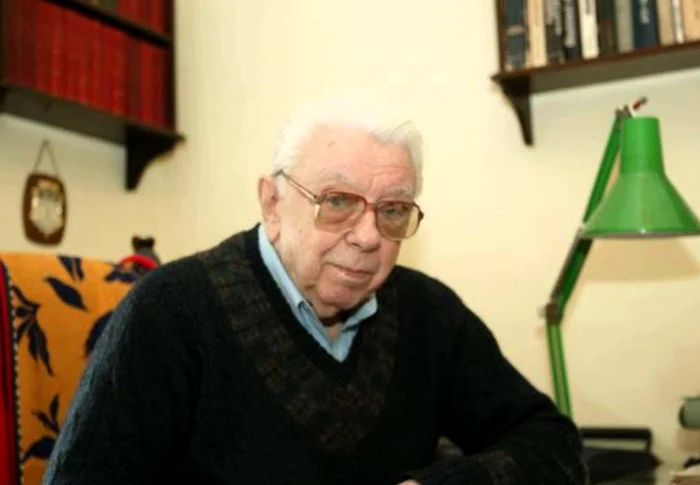
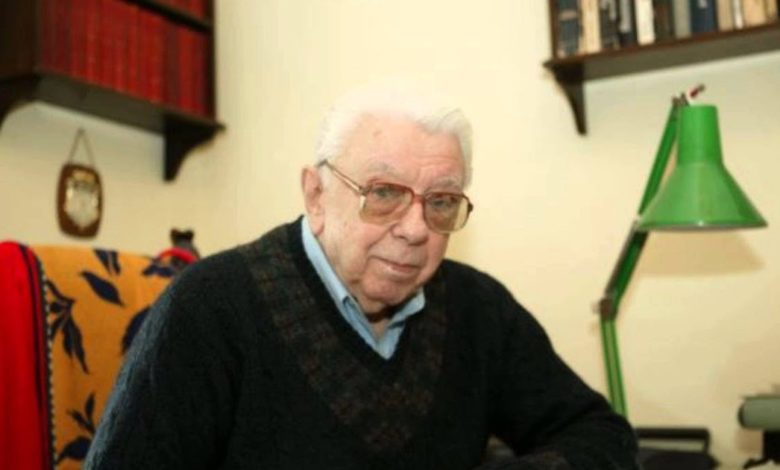
Composer Temistocle Popa Photo: Captura YouTube
1913: Romania declared war on Bulgaria, entering the second Balkan war, along with Greece, Serbia, Montenegro and Turkey
The second Balkan war took place in 1913 between Bulgaria on the one hand and mainly Greece and Serbia on the other. Fearing the appearance of a large, powerful Bulgarian at its southern borders and the possible territorial claims against the North Dobrogea obtained in 1878, Romania also intervened against Bulgaria.
At the same time, the Ottoman Empire took advantage of the conflict to regain some lost territories. When the Romanian troops invaded the northern Bulgaria and approached the capital Sofia, Bulgaria demanded the armistice. Through the Treaty of Bucharest, Bulgaria was forced to give up a good part of the territories obtained after the first Balkan war to Serbia, Greece and the Ottoman Empire and to make concessions to Romania in exchange for preserving the rest of the territory previously obtained.
The result was made by Russia, Serbia, an important regional power, thus alarming Austro-Hungary and thus being an important cause of the First World War.
1921: Temistocle Popa, Romanian composer was born
Temistocle Popa was a composer, instrumentalist (flute, saxophone) and Romanian film actor.
Laureate with the Prize of the Mamaia Festival and the Acin Prize for film music (a guest at dinner). In 2004 he received the National Order of the Faithful Service, with the rank of knight. He made his debut with the song “Vântule from Zarea-blue”. “Gabriela”, “In the four row”, “guitars”, “in the Fair of Moșilor”, “always singing a serenade” and “passing the military band”, “Lalele, Lale”, are some of its best known compositions.
He is not Romanian who does not know the song “Pass the military band”. Interpreted by Dan Spătaru, the song was composed by the great Temistocle Popa. Born in Galaţi, he remained in the memory of the Golden Generation for his contribution in Romanian music.
He was distinguished with the Union of Composers Prize 12 times, between 1963 and 1985, he won six prizes at the Mamaia Festival, but also the “Golden Pound” at the International Competition in Bratislava, in 1985. It was countless times of the juries of light music, both in the country and abroad.
He created theater music, symphonic music, film music, choral music, children's music, light music.
He is the creator of music for the films “Veronica”, “Veronica returns”, “mother”, “trahir” and others.
Composer Temistocle Popa died on November 26, 2013, at the age of 92,
1926: The doctor Nicolae Simionescu, founder of the Romanian School of Cell Biology was born.
The doctor Nicolae Simionescu is the founder of the Romanian School of Cell Biology, a full member and vice -president of the Romanian Academy. He died on February 6, 1995.
1940: a second Soviet ultimatum
A second Soviet ultimatum (June 27/28) demanded the evacuation of the Romanian administration and army in Bessarabia and northern Bukovina within four days, and the Romanian Government's response on June 28 was that “to avoid the serious consequences that the resort to force and openness of the hostages in this part of Europe would be forced to receive the condition,”
1953: Ioan Suciu, a united Romanian bishop died, a political prisoner
Ioan Suciu was a united Romanian bishop, arrested by the communist authorities in 1948 and deceased in prison. It was drunk by Pope Francis in 2019.
Ioan Suciu died in the prison in Sighet on June 27, 1953. He was the first Greek-Catholic bishop arrested by the communists on the night of the Romanian “long knives” in which the united Romanian Church with Rome began. He was a guilty culprit, closed for the courage to have fought openly and with virulence against the Sovietization of the country.
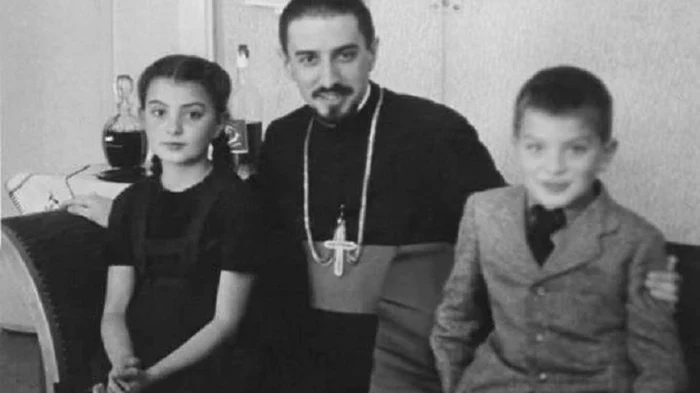
Ioan Suciu, Bishop and Romanian PHOTO: Archive
The graceful blow was given on the night of October 28 to 29, 1948, when Ioan Suciu, along with all the other Greek-Catholic bishops, was arrested. Everyone, one night. He, the first. He went through a long way: first, he arrived in the cellars of the Ministry of Interior of Bucharest, then was taken to the villa in the Patriarchate of Dragoslavele, where Justinian Marina himself appeared to convince to accept “the return to Orthodoxy” in exchange for freedom.
He refused categorically. They followed: the monastery from Căldăruşani, transformed into a camp, again in the cellars of the ministry, where he was investigated and tortured, Văcăreşti prison and, in October 1950, the prison in Sighetu-Marmatiei. At Sighet all were gathered
One night, Ioan Suciu, already seriously ill and moved to cell 44, along with other bishops, began to shout “Our Father” and “Birth”. The colleagues of the cell, suddenly awakened from sleep, were trying to calm him down, for fear that the guard could hear him. Bishop Iuliu Hossu went to his bed, gave him the sacramental release. The others watched him, until 00.40 of June 27, 1953, when he gave his last breath.
1954: The first nuclear power plant was inaugurated at Obninsk, near Moscow, the Soviet Union.
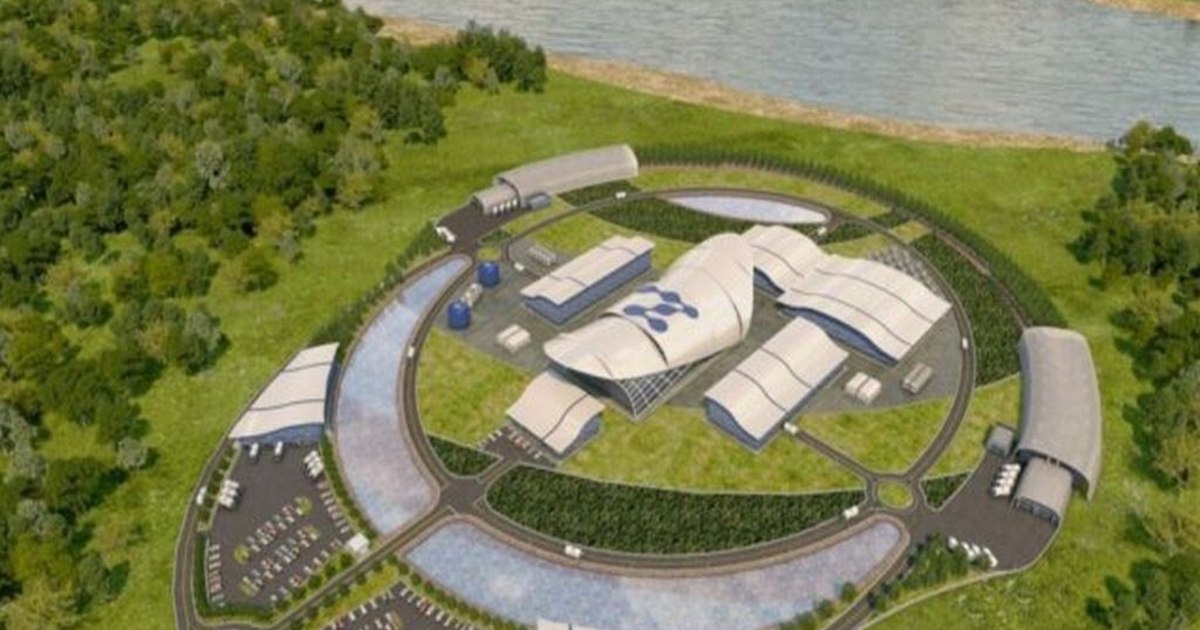
In 1954, the first nuclear power plant in the world, intended for the production of electricity for civil use, was inaugurated in Obninsk, near Moscow, the Soviet Union. This marked the beginning of the Civil Nuclear Energy era. The boiler, called AM-1, worked until 2002. Later, it was transformed into a museum.
2007: Tony Blair, Prime Minister of the United Kingdom, withdraws after ten years of office
Anthony Charles Lynton Blair is a British politician, who from 1997 to June 27, 2007 has been prime minister of the United Kingdom.
In the beginning, his policy focuses on initiating a social reform (“new labour”) and opening to the European Union.
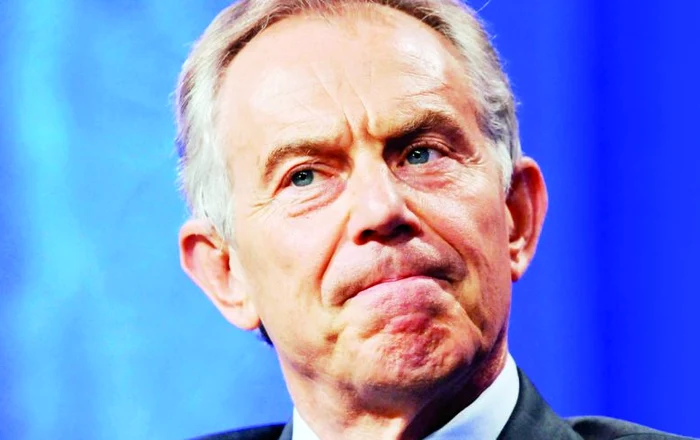
Tony Blair Photo: Reuters
After being chosen for the second time, he entered, like other European heads of state, under the influence of the international economic crisis. This gathered the unsatisfactory reasons (after some British local elected) for the beginning of the Iraq war in 2003, which did to lose many sympathies from the people and which brought to a block of members of his office.
After the death of David Kelly (Armament expert and counselor of British government), on July 17, 2003 controversies intensified in their own ranks and opposition. Blair surpassed Clement Attlee's record on August 2, 2003, as the longest Labor Prime Minister.
On May 10, 2007, during the speech at the Trimdon Labor Club in Sedgefield Blair, he announced that he will resign in June both as president of the Labor Party and from the position of prime minister. On June 24, he handed over the presidency of the Labor Party to Gordon Brown, at a special conference of the party held in Manchester.
Blair handed him the resignation from the position of prime minister of the United Kingdom on June 27, 2007, his successor, Gordon Brown taking over the function right in the same afternoon. He also announced his resignation from the Chamber of Commons, in the traditional way of accepting the management position of Chiltern Hundreds, designated by Gordon Brown through one of his decisions as Chancellor of the Exchequer (it is impossible to resign from the Parliament of the United
The elections that followed for Sedgefield were then won by the Labor candidate, Phil Wilson.
2020: Dumitru Comănescu died, the oldest man in the world
Dumitru Comănescu was declared the oldest man in life in the world before his death, in June 2020, at the age of 111 and 219 days. He came from Provița de Jos commune, Prahova.