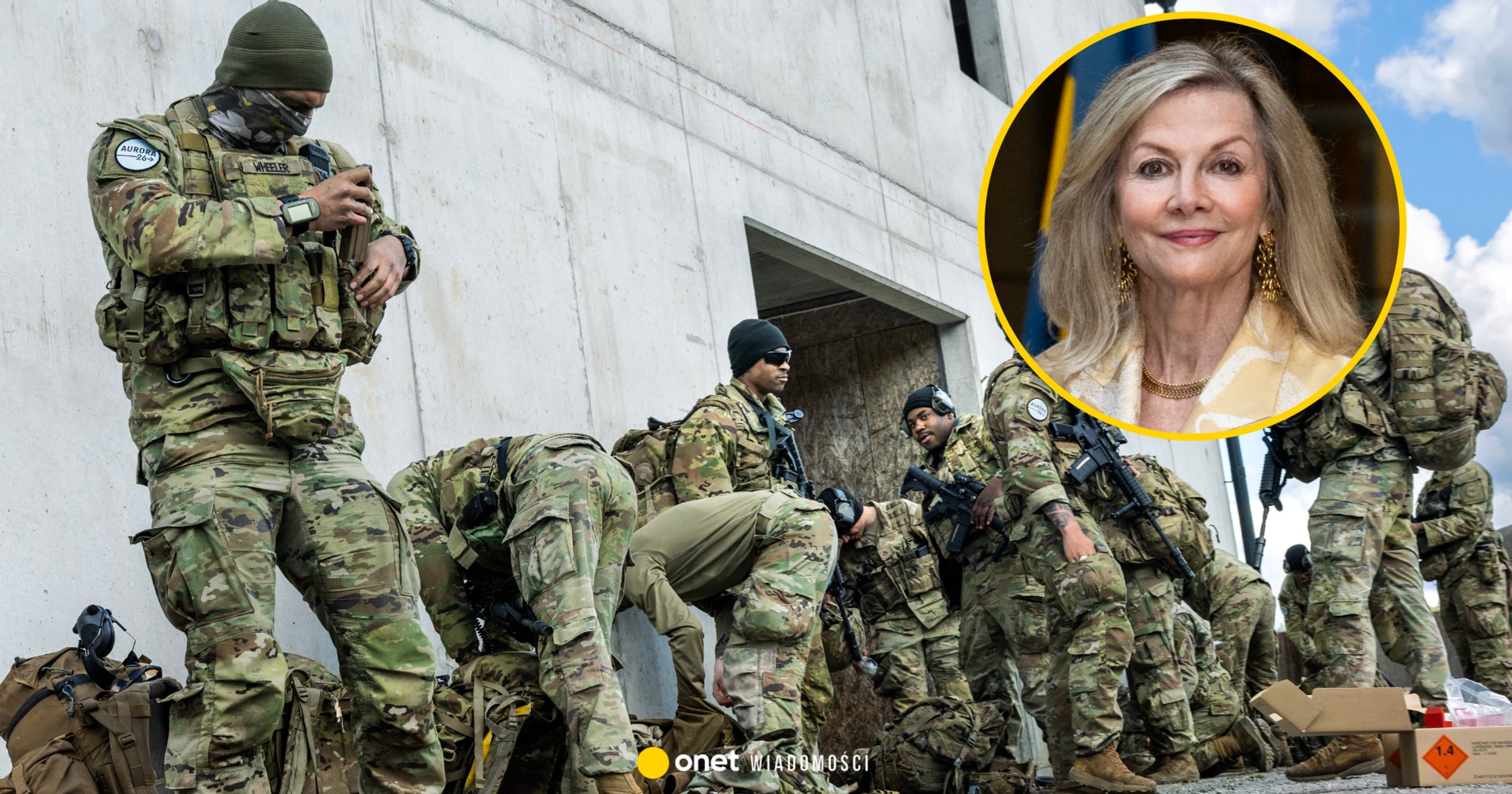
Since September 27, 2023, Veronika Wand-Danielsson has been the ambassador of Sweden to Germany. The diplomat speaks five languages, is married and has two children. On her desk in Berlin is a model of the famous German Taurus cruise missile.
WELT: In 2024, after more than 200 years of remaining outside the alliances, Sweden joined NATO. Was this the right step, despite the growing tensions between Europe and the United States?
Veronika Wand-Danielsson: Yes, definitely. Although Sweden remained outside the alliances, it was always closely linked to NATO. We participated in Alliance missions in the Balkans, Afghanistan and Libya, even without being members. I myself served as an ambassador to NATO for seven years. Close political cooperation as a Nordic NATO partner country was of course very important, but military interoperability was also crucial for us, especially in the context of our defense industry: NATO sets the standard.
Since 2008, after the events in Georgia, and especially since the illegal annexation of Crimea in 2014 and the Russian invasion of Ukraine, it has been clear to us: Russia is a threat. We have resumed military conscription, reorganized national defense and, step by step, adapted our security policy to the new threat situation. Joining NATO was therefore not a break with the past, but the last logical step in a long process of development. Today, our armed forces are fully integrated with NATO structures.
However, NATO is different today, the United States wants to limit its involvement in Europe. Can this be compensated?
In the short term no, in the medium term we have to fill the emerging capability gaps ourselves. This will take several years and may require adjustments to NATO's defense plans. There are American demands for Europe. Nevertheless, the transatlantic pillar remains crucial. Europe needs to do much more, this is nothing new, Americans have been talking about it for years. Former US Secretary of Defense Robert Gates warned already in 2008 that the new generation of Americans would no longer accept paying such large sums for Europe's security.
Sweden has tripled its defense budget from 2022, we are heading towards 3.5%. GDP. In addition, there is support for Ukraine, both military and civilian. Sweden is one of the largest donors, which enjoys as strong public support as anywhere else in Europe. For us, the front is close. Our citizens know who the enemy is. You could ask a farmer from the deepest province about this. He will answer: “Russia” – and this is confirmed by daily Russian attacks on Ukraine.
Do you understand the German red lines regarding arms supplies to Ukraine, for example in the case of Taurus missiles? [których Berlin od początku wojny odmawia Kijowowi, tłumacząc to m.in. obawami o eskalację konfliktu]?
Please look at the model on my desk: it is Taurus, a cruise missile developed by Swedish and German companies. Unlike Germany or Spain, we did not buy it at that time, other weapon systems were the priority. Now we're catching up. But we don't have it yet. The answer to your question is this: we in Sweden do not have red lines, we trust Ukraine. We also concluded an agreement regarding the Saab combat aircraft. Our experience with the government, armed forces and businesses there has been very good: what has been agreed is respected. But each country has to make its own decisions, I don't give any advice on this.
On the one hand, Ukraine is a recipient of European aid. On the other hand, it has the largest and most experienced army on the continent. How can this be used in the future European security architecture?
We are already learning from Ukraine. Currently, we are training Ukrainians, but we are also learning from them – during exercises we use Ukrainian experience from the battlefield. As of last week, Swedish Major General Laura Swaan Wrede took command of the European training mission EUMAM in Germany for the first time as deputy chief. If Europe wants to strengthen its defense capacity, Ukraine should become a member of the EU and NATO in the long term.
How do you evaluate Russian President Vladimir Putin's statement that the war in Ukraine is “coming to an end”?
We hope that it will end – but on Ukrainian terms. The war could have ended yesterday if Putin stopped his attacks and withdrew from the occupied territories.
Should Europe appoint a mediator in the war in Ukraine?
We support everything that Ukraine finds useful. The key is that any initiative must be agreed with Kiev. It must also be coordinated with the United States. We have seen that Putin does not keep his agreements. Therefore, coherence and unity remain crucial.
Putin proposed [na negocjatora z Ukrainą] former Chancellor Gerhard Schroeder…
EU foreign policy chief Kaja Kallas does not see this as the most obvious solution. But as I have already said: it is important for us that Ukraine supports all possible initiatives.
Americans are currently very focused on the war with Iran. Should Europeans become more diplomatically active in the conflict in Ukraine?
Coherence is key, with continued strong support for Ukraine and strong pressure on Russia. The political position must be very clear and explicit: we have a common line in the EU, with the United States, in NATO. Possible E3 initiatives from France, Germany and the UK are welcome, but it would be important for us to involve the Scandinavian and Baltic countries as well as Poland. We have very direct experience with Russia.
Germany is talking about from 2022 Zeitenwende (German: epochal turning point). How do you assess the pace of these changes?
Speech [ówczesnego kanclerza Niemiec] Olaf Scholz from that time was impressive. The current government has continued and deepened these activities, which we welcome. But of course I follow the German debate and understand that implementing these changes in practice is difficult. Sweden has a different story. Russia has always been perceived as a threat in our country, regardless of whether we have a right-wing or left-wing government. In Germany, the war experience, the division of the country, the peace movement and the slogan “No more war” have a much stronger influence. I have respect and humility for this.
The article continues below the video
The leader of the Green Party, Franziska Brantner, has just given a speech in Oxford in which she said that in some European countries, given the strength [nacjonalistycznej niemieckiej partii] An alternative for Germany, there are also fears of German rearmament. Are they present in Sweden?
No, in Sweden there is no fear of German armament. On the contrary: we consider them urgently needed. We are not afraid of the expansion of the German armed forces. This is done to defend Europe. In Stockholm, we especially see the need and possibility of cooperation in the Baltic Sea, on the northern and eastern wings of NATO.
The German government's coalition agreement states that when introducing a new military service, Germany wants to follow the Swedish model. Does voluntary military service, which has existed since the beginning of the year, have anything to do with this?
I will say this: Sweden was an inspiration. But the fundamental difference is that in our country there is no voluntariness, there is an obligation. Young people should understand: you have a responsibility to your country. Our approach aims to promote young people's high readiness as well as a sense of duty – civil or military. They may not all be equally enthusiastic, but they do it. We have more applications than training places. Military service is also highly valued on a CV, it is almost like half a master's degree. This applies to both women and men. Either we have equality or we don't.
How important is civil defense?
Extremely important. In addition to the Minister of Defense, we have a separate Minister for Civil Defense – this is not a whim, but resilience. In Sweden, all residents are included in the concept of general defense. I also know my tasks in a crisis situation very precisely. Military service, civil service, civic guard, crisis functions – all this builds cohesion. You get out of your bubble and meet people you would never meet otherwise. It also strengthens morale and trust in the state.
Why is the awareness of the threat from Russia higher in Sweden than in Germany?
This is also, but not only, due to the geographical location. The threat situation can also be assessed well from a greater distance. It doesn't take a genius to see that since 2008, Russia has charted a clear course: increasingly authoritarian in domestic policy, increasingly aggressive in foreign policy. Germany has long clung to the idea of change through trade. Nord Stream 1 and 2 were a sensitive issue from the point of view of security policy. In Sweden, there has always been a clear, cross-party position towards Russia. This is crucial. The political language aimed at German citizens was probably more reassuring.
I’m Ashley Davis as an editor, I’m committed to upholding the highest standards of integrity and accuracy in every piece we publish. My work is driven by curiosity, a passion for truth, and a belief that journalism plays a crucial role in shaping public discourse. I strive to tell stories that not only inform but also inspire action and conversation.