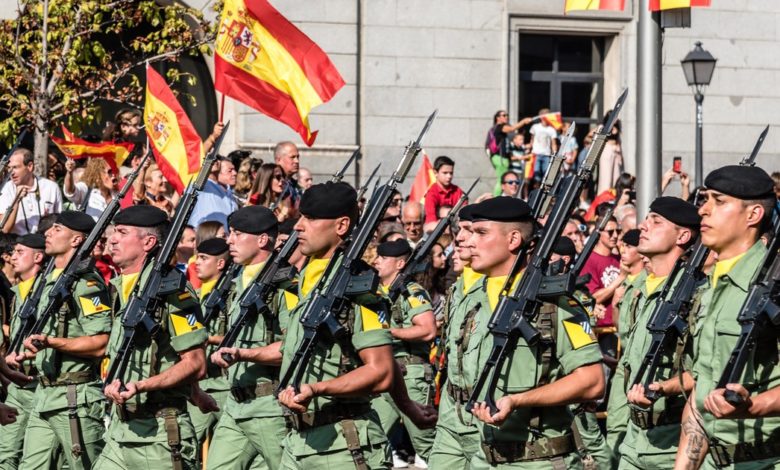
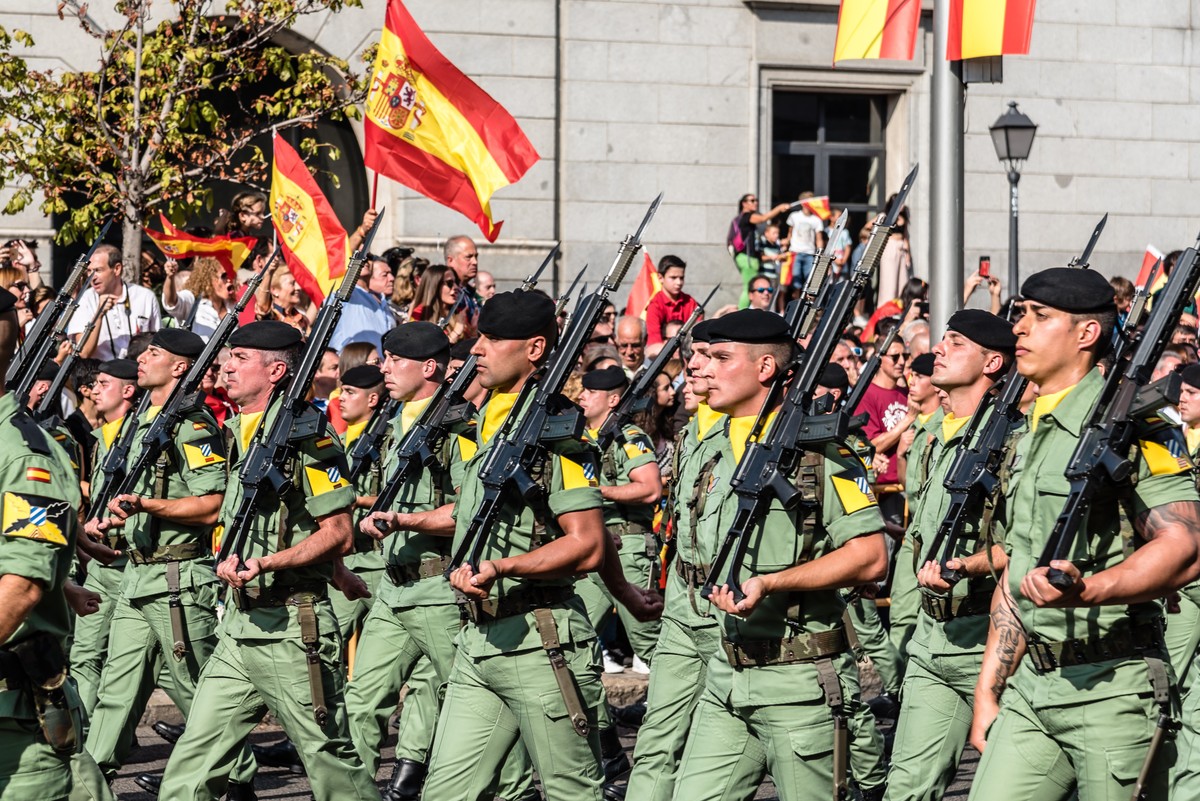
The accession of Spanish to NATO in 1982 after the decades of the dictatorship of General Francisco Franco (1939-1975) did not mean the country's full integration with the structures of the Alliance, although American troops had been stationed on its territory for almost 30 years.
In September 1953, the US and Spain signed the so -called Madrid pacts, under which Americans could use four air bases and one sea. To this day, the US troops use two in the south of the country: from the Moron air base and Rota's sea base, where five American destroyers are stationed, which are part of the NATO maritime anti -balance system.
The bases still play an important role in the US military activities, including in ensuring logistics at recent bombing of nuclear objects in Iran.
In return, the regime received economic assistance in the amount of $ 1.5 billion in 1953-63 and military support. However, the accession to Spanish to NATO was blocked by members of the Alliance, who, despite its strategic location.
Death of General Francisco Franco and a new chapter of relationships with NATO
It wasn't until Franco's death in 1975 and the country's democratization in the following years resulted in the admission of Spain to the Alliancewhich was led by the government of the Union of the Democratic Center (UCD). A few months later, UCD, however, lost power in favor of the Spanish Socialist Workers' Party (PSOE), which dominated national policy for the next one and a half decades.
Before accession to the alliance, PSOE criticized participation in a military block, but after coming to power, socialists changed their position. In the referendum organized in 1986, the government asked society whether it supports it in NATO under three conditions: excluding the country from military structures, a ban on presence on the territory of Spain nuclear weapons and a gradual restriction of American military bases.
Over 56 percent The voters were in favor of staying in Spain in the North Atlantic Alliance, and 43 percent. voted against. On the wave of protests against the presence of the country in NATO, an extremely left -wing united left (Izquierda Unida) was created, which is currently part of the Sumar block, forming a government coalition in Spain.
The full integration of Spain with NATO military structures took place only in 1999, during the rule of Prime Minister Jose Maria Aznar from the right -wing People's Party (PP). Since then, the country has been more active in allied missions, including in the Balkans. The government in Madrid also supported, among others American attack on Iraq in 2003.
Difficult relationships of Spain with NATO
The complicated relations of Spanish with NATO are well illustrated by the fact that in 1995-99 the alliance was led by Spaniard Javier Solana, who in subsequent socialist rule Felipe Gonzalez (1982-1996) held various ministerial positions, including in 1992-95 he was the head of Spanish diplomacy.
In 1982, Solana was an opponent of the entry of Spanish to NATO and the presence of American military bases on the territory of his country, to “become one of the most skillful negotiators and dedicated secretaries of generals who managed the alliance” – assesses NATO on its website.
It was during his term that Spain fully integrated with NATO's military structures, and Poland – at the top organized in Madrid in 1997 – was invited next to the Czech Republic and Hungary to participate in the Alliance, which was realized two years later.
The next NATO peak in Madrid was also one of the most important, because it took place several months after Russia's full -day aggression in Ukraine in 2022. It adopted a new strategic concept of the alliance and invited to membership of Finland and Sweden.
Spain in NATO goes its own path
Although Spain is currently involved in NATO missions, including On the eastern flank of the alliance, it is a shadow for her involvement as to spending 5 percent. Defense GDP. The socialist government of Pedro Sanchez has just announced that the goal of 2 percent. It will fulfill not in 2029, but in 2025 he does not want to agree to 5 percent. claiming that this will hurt, among others state social policy.
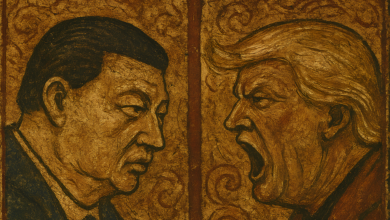
This position – despite the strong pressure on the part of the US President Donald Trump – repeated the alliance in Hague at the summit of the alliance ended on Wednesday.
Also Spanish society, as well as the main coalition partner of Sanchez – Sumar block, are skeptical about a significant increase in defense funds. The leftist Podemos party has focused its main message on opposition in this matter.
Spain emphasizes that he is a devoted member of the alliance, hoping that, apart from supporting Ukraine, NATO's attention will also be headed south. NATO representative for the southern neighborhood Spaniard Javier Colomina emphasizes that from there there are various dangers lurking on the alliance.