“Prices change every week.” A spiral of the crisis is filmed in Russia. “It's madness”

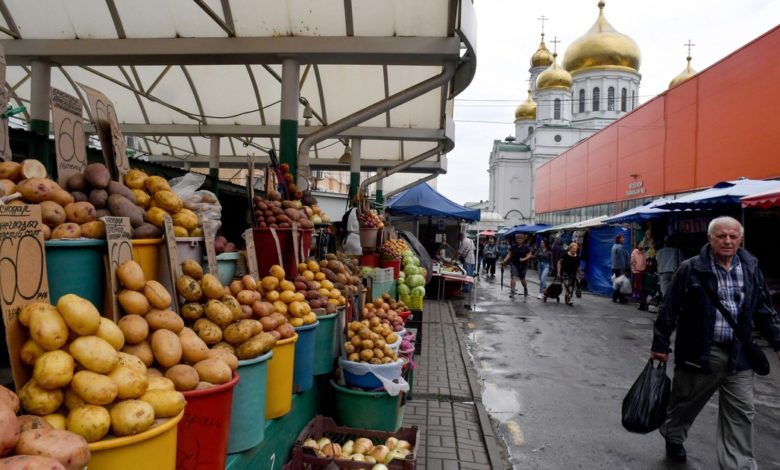
“It's madness. Potatoes that always cost pennies … I won't buy for this price,” says a 67-year-old Tamara pensioner in a conversation with Reuters.
Food products, which constitute about 40 percent. The Russian consumer basket is even faster than the general inflation would indicate.
Since the indexation of Russian pensioners' benefits does not keep up with inflation, and the prices of basic products are rising rapidly, people are forced to limit consumption or switch to inferior quality goods, which negatively affects their standard of living.
The potato crisis is not the first with which the Russian president has been struggling with the beginning of the “special military operation” [tak Rosjanie nazywają inwazję na Ukrainę]. In 2023, Putin had to apologize for the rapid increase in the prices of eggs and chickens, and in last year the Russians recorded a significant increase in the prices of dairy products.
The so -called “inflation among the poor” [ceny podstawowych produktów oraz usług, takich jak leki, żywność i transport publiczny] Regularly calculates the Kremlin Macroeconomic Analysis Center and short -term forecasts (CMACP). According to this analytical center, the increase in the “inflation among the poor” indicator in April exceeded 20 percent. With the official overall level of inflation, which is still about 10 percent.
CMACP estimates show that “inflation among the poor” almost reached a record level from March-April 2022, when after Moscow began the invasion of Ukraine and the introduction of sanctions by the West, Russia experienced a rapid increase in consumer prices.
Experts include in the basket of low -income people a minimum set of food products (without animal fats, alcoholic beverages and some other types of food), drugs, synthetic cleaning products, municipal services and transport.
“The persistent rapid increase in food prices has led to a significant increase in the prices of the consumer basket of low -income population in relation to the overall inflation rate,” notes CMACP experts.
As a result, the real amount of pensions – the dynamics indicator of the prosperity of low -income population – taking into account the increase in prices for this social group, has been much lower for almost a year than last year's level. According to CMACP experts, the difference between the real amount of the pension, calculated on the basis of “inflation for the poor” and the official (calculated according to the average inflation) reached the highest values historically.
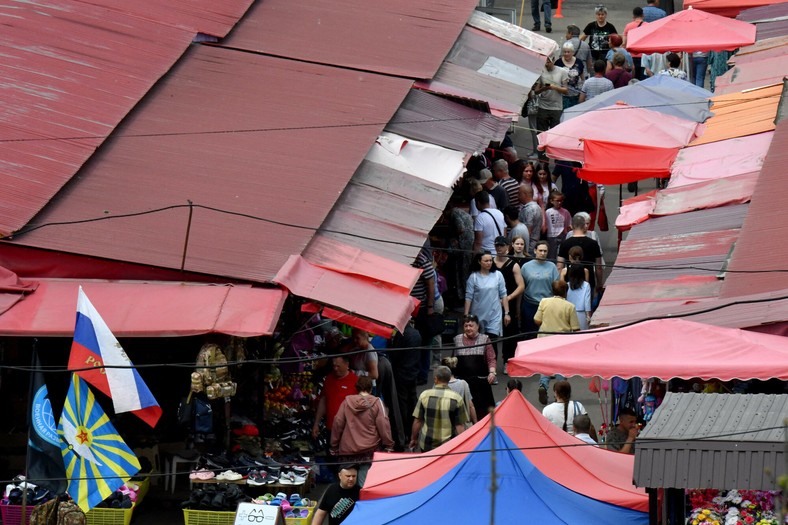
Market in Belgorod (illustrative photos)
“Prices change every week”
According to Rosstat (Russian Federal State Statistics Service, equivalent of the Central Statistical Office), the real amount of Russian pensions increased in March by 1.1 percent. in terms of year to year. Meanwhile, however, as CMACP calculated, after taking into account “inflation for the poor”, it turns out that real benefits for seniors fell by 6 percent.
At the beginning of the year, there were 41.2 million pensioners in Russia, or over 28 percent. the population, and the average pension in March was 23,000. 238 rubles (approx. 1000 PLN 85 PLN, counting at the current exchange rate).
Considering the employees of the budget sector, a significant part of which has low salaries, for example nurses, it can be safely said that at least a third of the population is low -income people (the situation does not look better in the enterprise sector).
Despite the fact that almost two -thirds of Russian households (65 percent) have been recorded in the last two years of a significant increase in real income, in a quarter households real income has dropped.
According to data from the national research of households in the field of consumer finance (conducted by the Russian Central Bank) in the case of most respondents (almost 20 %), this decrease amounted to over 10 percent. In this way Every fifth family goes to the group of “losers” as a result of the restructuring of the economy.
At the same time, in response to the question about how the financial situation of households changed, 22 percent. respondents stated that she had worsened, and 56 percent – That it has not changed.
“If in spring in Auchan, 4000-5000 rubles seemed on food products and hygiene products (about PLN 187 to PLN 233), then it is not possible to spend less than 7000-8000 (PLN 327-383). Prices change every week”-said 70-year-old pensioner Larisa from Moscow.