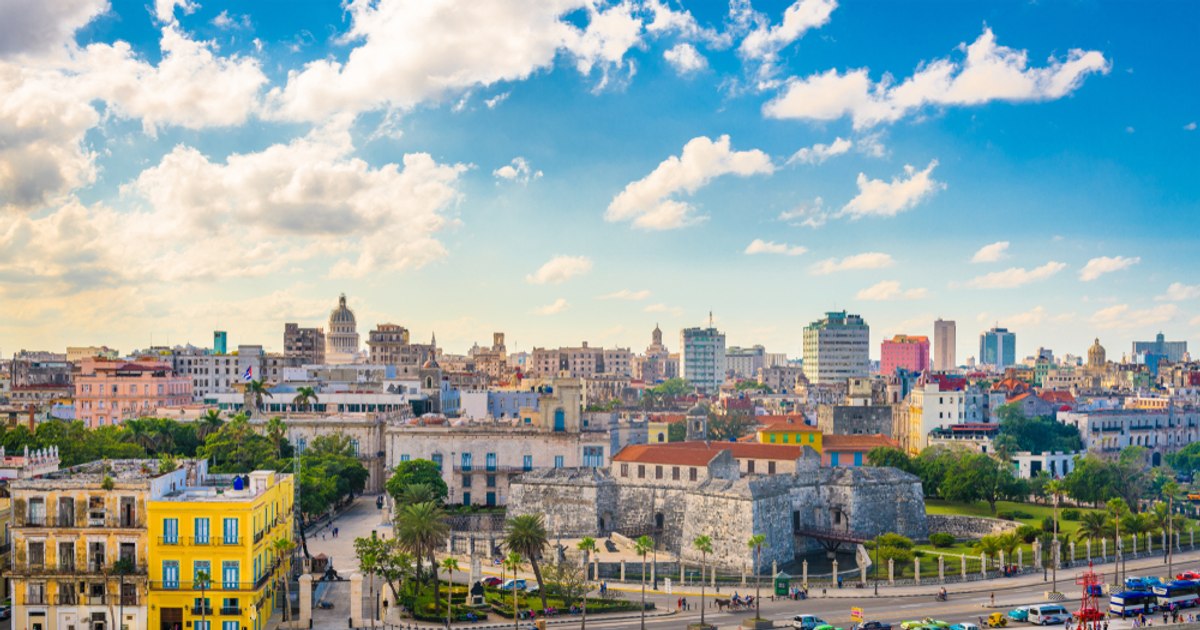
Mandy Pruna fondly remembers the American tourists she drove around in her bright red 1957 Chevrolet. A decade ago, that engine barely had time to cool down. Currently, economic activity in the island of nearly 10 million inhabitants has almost paralyzed, reports CNN.
SHUTTERSTOCK PHOTO
Pruna remembers 2015 like others remember a first love. When former US President Barack Obama restored diplomatic relations with Cuba, American tourists flooded the island in numbers not seen in generations. Havana's faded facades became perfect photo backdrops. Jazz clubs filled up. Private restaurants appeared overnight. And Pruna, behind the wheel of his vintage car, became one of the unexpected faces of the thaw between two countries separated for half a century.
The car was chosen to appear in the background at the flag-raising ceremony at the US Embassy in Havana — a symbol of reconciliation. Soon after, celebrities like Will Smith, Rihanna and Kim Kardashian climbed into the back seat, paying hefty sums — at least by Cuban standards — for a ride through history.
“All sectors of society benefited then,” recalls Pruna. “You'd see people painting their houses, opening new businesses. For me it was fantastic. It was the best time for tourism in Cuba.”
Today, the streets tell a different story.
Where tourists once lined up for a dose of nostalgia on four wheels, trash piles up on the sidewalks. Hotels are half empty or closed. Flights from Russia and Canada were canceled due to a lack of jet fuel. Schools suspend classes to save energy. Hospitals are reducing services. At night, Havana falls into almost total darkness, and the stars shine brighter than the lanterns.
Cuba, an island of nearly 10 million people accustomed to shortages, is facing one of the deepest economic crises in decades, perhaps even in its modern history.
At the heart of the economic crisis, the fuel shortage
Through pressure on Venezuela and threats of tariffs on Mexico, the Trump administration has effectively blocked the flow of oil to Cuba in an attempt to force major political and economic reforms from the communist government. With traditional allies either unwilling or unable to step in to provide the indispensable fuel for the economy as reserves dwindle, Havana finds itself in a desperate situation.
“There's no oil, there's no money, there's nothing,” US President Donald Trump told reporters as Secretary of State Marco Rubio — himself a Cuban-American and a longtime critic of the Cuban government — leads the negotiating effort. Rubio said the only topic he wants to discuss with the leadership in Havana is when it will relinquish power.
For the first time in decades, Cuba finds itself without help from anywhere. The Soviet Union once supported its economy. Later, Hugo Chávez's Venezuela offered subsidized oil. Now, those lifelines are gone, Rubio said.
The consequences are felt in every aspect of daily life.
On nearly every street corner in Havana, conversations revolve around power outages—when they will start and how long they will last. State employees are sent on forced leave. The annual Habanos cigar festival, which brought the country millions of dollars, has been canceled. A major mining company has suspended its nickel and cobalt operations. Even garbage collection is affected by the lack of diesel.
For Pruna, the equation is simple and stark: no gas, no tourists, no income.
“I need gas to work, I need tourists to work,” he says.
The collapse of tourism amplifies the crisis. The United Kingdom and Canada have warned their citizens to avoid non-essential travel to Cuba. Some Cuban-American politicians are calling for a total shutdown: no tourism, no remittances, no financial mechanisms that could support the government.
Suffering is no longer an abstract idea
Cuba imports most of the food it consumes, a vulnerability stemming from decades of failed agricultural policies. Now, this fragile supply chain is also faltering. Some private companies importing food from the US have suspended operations, unable to keep products refrigerated during daily power outages.
In Havana's agricultural markets, where the little produce grown on the island is sold, vendors speak of rising costs and dwindling stocks.
“We pay two, three times more to restock,” says Anayasi, a vendor who does not want to give her full name. “There is no food. The impact will be terrible. We will have nothing left.”
Cuban President Miguel Díaz-Canel called on citizens to “resist creatively” and adopt a war mentality. “We will eat what we can produce in each place,” he said in a televised speech, acknowledging that without fuel, food can no longer be easily transported from rural areas to cities.
For many, resistance begins to resemble exhaustion.
After 20 years of making good money walking tourists through Havana's decadent charm, Pruna is considering an option she once rejected: emigration. In Spain, where he and his family could start over.
“Everything is uncertain at the moment,” he says. “There is no fuel. We don't know if there will be any more and how we will pay for it. If I have to pay for gas in dollars, how do I get my money back if there is no tourism?”
That morning, he suspended his driver's license for classic car tours. The red Chevrolet remains parked, immaculate but motionless—a relic not just of 1957 America, but of a brief era when Cuba believed the future would open wide.
Now, the tank is almost empty and the future is uncertain.