Krasnoyarstsev was warned against the purchase of June watermelons / News of the Society of Krasnoyarsk and the Krasnoyarsk Territory / Newslab.ru


Specialists of the Federal Center for Safety Assessment and Quality of Products of the Agro -Industrial Complex told the Krasnoyarsk residents about the danger of June watermelons.
The first watermelons of the season can be dangerous due to high concentration of nitrates and pathogenic microorganisms. Excessive humidity helps to accumulate harmful substances, and insufficient amount of sunlight prevents plants from processing them. In addition, the illiterate use of nitrogen -containing fertilizers and specific soil characteristics leads to the increased content of dangerous compounds in the fruits.
Materials on the topic
Nitrates themselves do not pose a serious threat until they reach the intestines. There, under the influence of microflora, they are transformed first into nitrites, and then into nitrosamines – dangerous carcinogenic compounds that can cause intoxication of the body. They are particularly dangerous for children and elderly people, as well as those suffering from problems with the cardiovascular and respiratory systems, dysbiosis or anemia.
Nitrites cause iron oxidation in hemoglobin, which leads to a violation of oxygen transport in the body and subsequent oxygen starvation. In addition to oxygen failure, intoxication is manifested by many symptoms: blue, lips and faces, painful pain in the joints, visionary daruming, discomfort in the occipital region, weakness, gastric cramps, nausea and vomiting. In some cases, an increase in body temperature and cramps.
In addition, in the intestine, nitrites prevent the normal absorption of trace elements and vitamins, and also contribute to the accumulation of heavy metals in the liver and kidneys.
It is impossible to visually or taste a watermelon with a high content of nitrates. Until August, experts even recommend refraining from this berry. The most favorable period for purchase is from late August to the beginning of September.
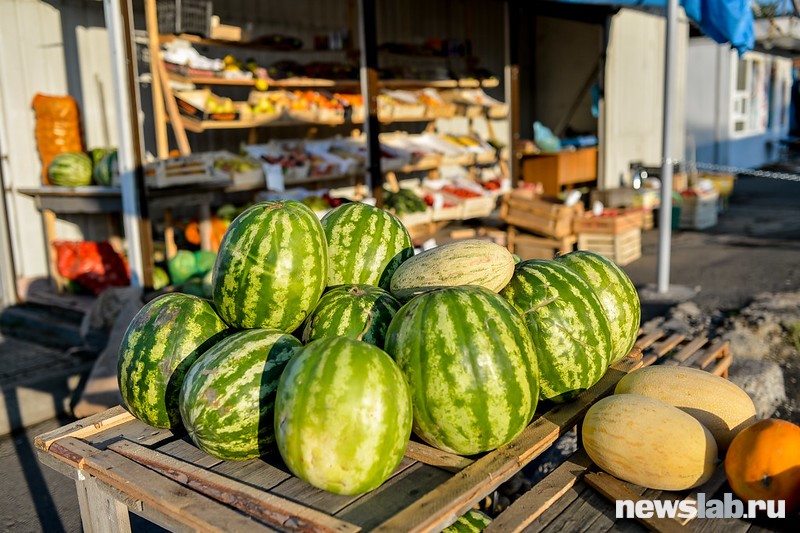
Avoid purchases from roads – watermelons are actively absorbing toxins from exhausts, so it is safer to purchase them in specialized stores. If you buy with your hands, be sure to check the seller’s documents: SES permission, a medical book and a certificate confirming the safety of fertilizers. Pay attention to the sales point itself – it should be equipped with a canopy, pallets and a fence.
When choosing a watermelon, give preference to medium -sized fruits with a round shape. The peel should be even, without damage, with a characteristic luster and saturated coloring. You can check the ripeness by slightly scratching the surface – the peel is easy to give in to a mature watermelon. Never ask the seller to cut the watermelon – this increases the risk of bacteria inward.
Before use, wash the watermelon with soap thoroughly and pour boiling water. Keep in mind that the greatest concentration of nitrates is in a three -centimeter layer under the peel, so it is safer to eat the pulp closer to the center. If the cut is too smooth when cutting, without pronounced grains, or the pulp has an unnaturally bright color and yellow veins, this may indicate a high nitrate content. To check, lower the piece into warm boiled water: if the liquid is prayed and the pulp will break up, such a watermelon is better not to eat.
Keep a cut watermelon only in the refrigerator wrapped in a food film, and eat for 12 hours, remembering the measure.