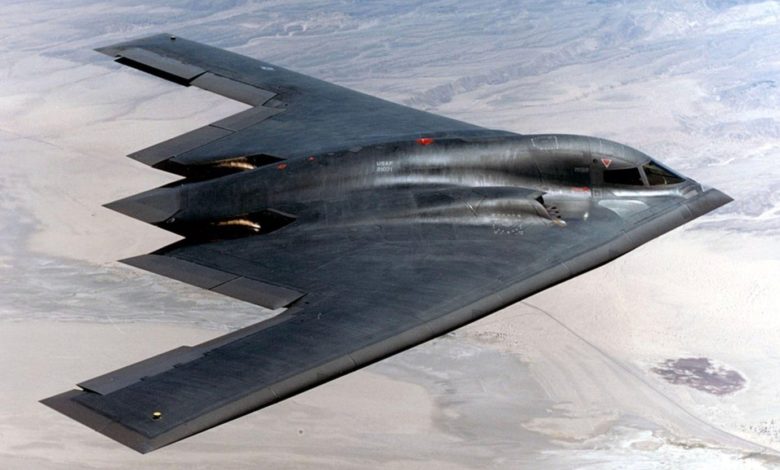
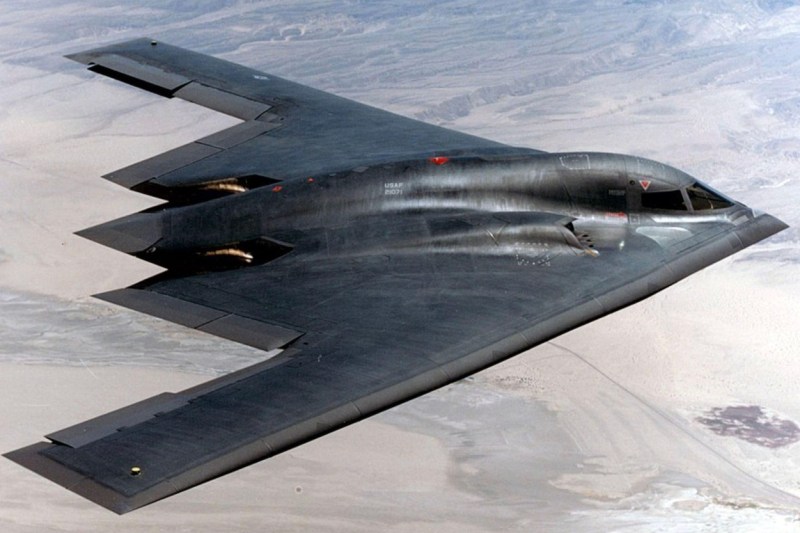
Bombardier Northrop B-2 Photo: Pictorial Press, Painorial Press Ltd / Alamy / Profimedia
The United States has hit three key nuclear sites in Iran, US President Donald Trump said on his social network on Saturday night. The sites are Fortow, Isfahan and Natanz, which are in the center of Iran's nuclear ambitions, writes CNN.
American television publishes on the site that is known about the three nuclear locations.
Natanz, the largest uranium enrichment facility
Natanz: The nuclear complex, located about 250 km south of the capital Tehran, is considered the largest uranium enrichment facility in Iran.
Analysts say it is used to develop and assemble centrifuge to enrich uranium, a key technology that transforms uranium into nuclear fuel.
Natanz has six underground buildings and three underground structures, two of which can accommodate 50,000 centrifuges, according to the non-profit nuclear organization threat initiatives (NTI).
According to the International Agency for Atomic Energy (AIEA), Iran enriched uranium with a purity of up to 60 % at its pilot to enrich the fuel above the ground. Uranium for weapons is enriched up to 90%.
Fortow, an installation buried deep in the mountains
There are still many unknown about the size and nature of this installation, located near the city of Saint Qom and buried deeply in a group of mountains. Much of what is known comes from a set of Iranian documents stolen years ago by Israeli secret services.
The main rooms are at an estimated depth between 80 and 90 meters below the ground. The US is the only country that has the type of bomb needed to hit such depth, Israeli officials and independent reports have previously said.
Recent reports of AIEA have suggested that Iran accelerated the production of uranium enriched at a level of 60% at the Fortow. The installation currently contains 2,700 centrifuge, according to experts and AIEA.
Isfahan, built with China's support
Isfahan: Isfahan is in the center of Iran and hosts the largest nuclear research complex.
The installation was built with China's support and opened in 1984, according to NTI. According to NTI, 3,000 scientists are employed in Isfahan, and the site is “suspected of being the center” of the nuclear program of Iran.
It “operates three small research reactors provided by China”, as well as a “conversion facility, a fuel production system, a zirconium plating system and other installations and laboratories,” NTI says.