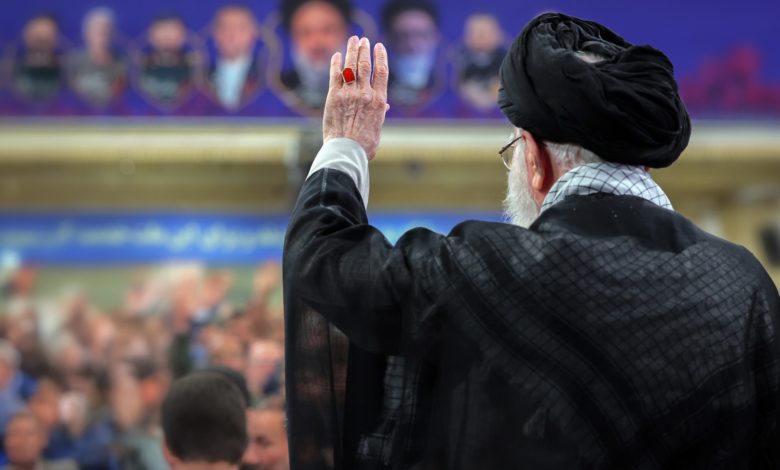
Ayatollahul Ali Khamena, the supreme leader of Iran, did not establish only the substitutes in the military command chain if they are killed by the Israeli blows, but also designated three high-ranking clerics to replace it in the event that he himself eliminated, writes the American the New York Times on Saturday.
Caution about a possible murder, the supreme leader of Iran now keeps in touch with his commanders largely through a trusted counselor, suspending any electronic communications to make it more difficult, say three Iranian officials familiar with his emergency plans for the war, NYT reports.
Cases in a bunker, Ayatollah Ali Khamena has already chosen a number of substitutes along its military command chain if more of its valuable lieutenants are killed.
And in a somewhat remarkable movement, adds NYT officials, Ayatollah Khamena has appointed even three high-ranking clergy as candidates in his succession if he is killed-perhaps the most eloquent illustration of the moment that he faces and his regime in power for more than three decades.
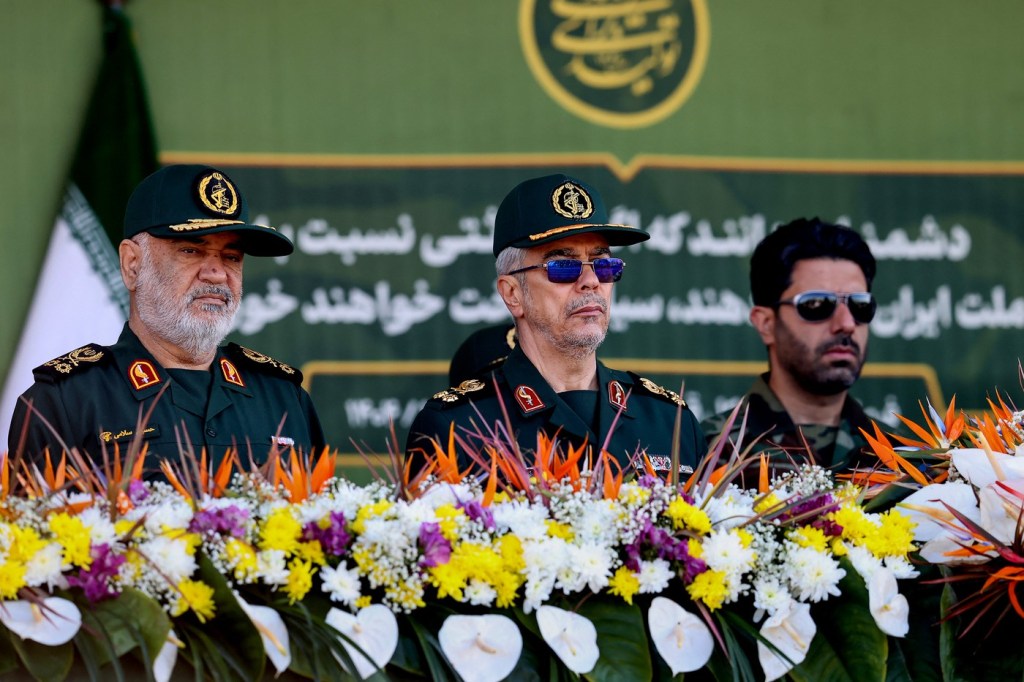 The attack of Israel beheaded the Iranian army. The most important generals were “martyred,” says Ayatollah Khamena. About whom it is about
Ayatollahul Khamena has had a series of extraordinary measures to preserve the Islamic Republic since Israel has launched a series of surprise attacks last Friday. And although it lasts for only a week, Israeli blows are the biggest military attack on Iran from the war with Iraq of the 1980s, and the effect on the country's capital, Tehran, was especially a strong one. In just a few days, these Israeli strokes were more intense and caused more damage to Tehran than Saddam Hussein throughout his eight -year -old war against Iran.
But Iran seems to have exceeded the initial shock, reorganizing sufficiently to launch its own counterattacks on Israel, hitting a hospital, the oil refinery in Haifa, religious places, but also housing.
At the same time, the high -ranking officials of Iran are preparing discreetly for a wide range of possible developments, as the war intensifies and US President Donald Trump analyzes whether to involve the United States, according to Iranian officials quoted by NYT, who insisted on preserving the anonymity as they were not authorized.
Khamenei asked to be chosen quickly a successor
To see inside the well -guarded leadership of Iran may be difficult, but the command chain seems to continue, despite the fact that it has been hit strongly, and there are no obvious signs of dissent in political ranks, according to officials and diplomats in Tehran.
Ayatollah Ali Khamena, 86, is aware that either Israel or the United States could try to assassinate, an end that he would consider a martyr, as the officials quoted by New York Times said. Given this possibility, Ayatollah made the unusual decision to train the experts in his country, the religious body responsible for the appointment of the supreme leader, to quickly choose the successor from the three names he provided.
Normally, the process of designating a new supreme leader could take months, the clergy choosing from their own name lists. But, with the country now in the war, the officials explained, Ayatollah wants to ensure a quick and tidy transition and to keep their inheritance.
“Absolute priority is the preservation of the state,” said Vali Nasr, an expert in Iran and international business professor at the University of Johns Hopkins in the US. “Everything is well calculated and pragmatic.”
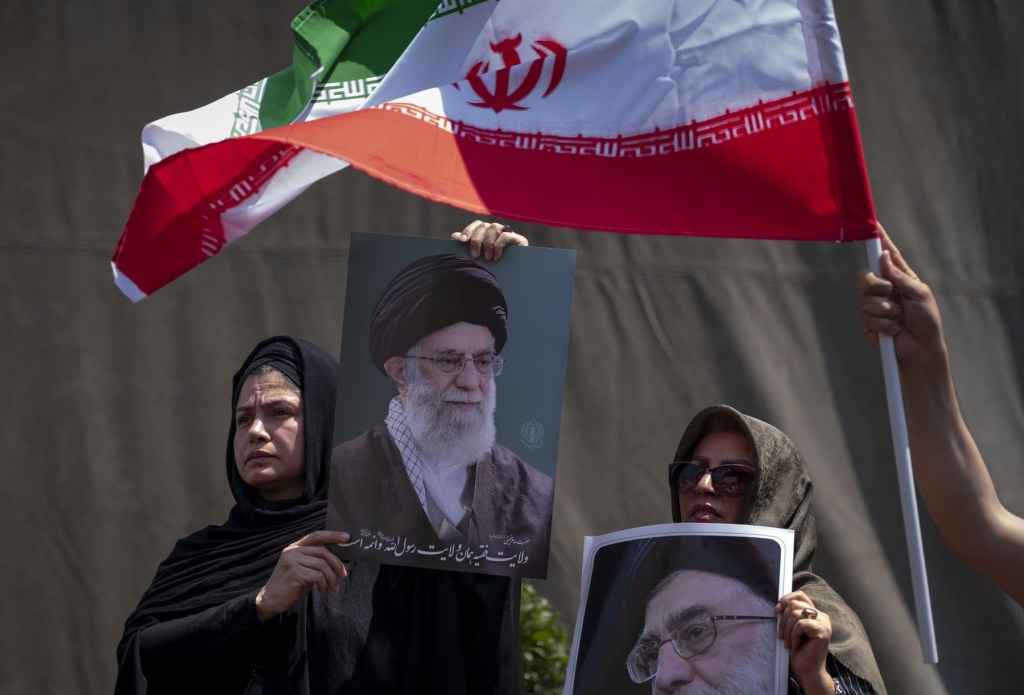 Israel's attacks reveal a bold purpose of war. How much is it possible? “May be worse”
The Supreme Guide holds huge powers in the state
The succession at the head of the Islamic Republic of Iran has long been an extremely delicate and thorny subject, rarely discussed publicly beyond the speculation and rumors in political and religious circles. The supreme leader has huge powers: he is the supreme commander of the Iranian armed forces, as well as the head of the judicial system, the legislature and the executive. It is also a Faqih Vali, that is, the highest guardian of the Shiite faith.
The son of Ayatollah Khamena, Mojtaba, also a cleric and close to the body of the Islamic Revolution, which was rumored to be a favorite to succession, are not among the candidates, officials quoted by New York Times said. Former Conservative President of Iran, Ibrahim Roisi, was also considered a favorite before his death in a helicopter accident a year ago.
Since the beginning of the war, Ayatollah Khamena has transmitted two recorded video messages to the public, on a background with brown drapes and near the Iranian flag. “The Iranian people will withstand a forced war,” he said, promising not to surrender.
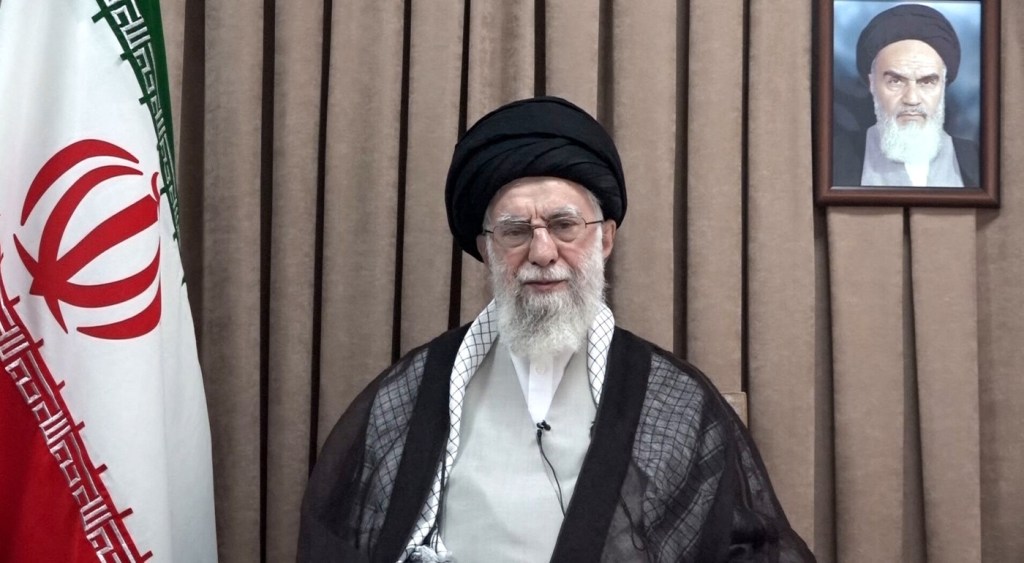
In ordinary times, Ayatollahul Khamena lives and works in a very well-secure complex in the center of Tehran, called “Beit Rahbari”-or the leader's house-and rarely leaves it, except for special occasions, such as keeping a sermon. High -ranking officials and military commanders come to him for weekly meetings, and speeches for the public are held from this complex.
His withdrawal in a bunker shows how fierce the Tehran was hit, in a war with the Israel that Iranian officials say are held on two fronts.
Fear of assassination, but also infiltration
One is carried from the air, with Israeli air blows on military bases, nuclear installations, critical energy infrastructure in Iran, but also of commanders and scientists in the nuclear field even in the blocks where they live, sometimes in very crowded neighborhoods. Some of the peak commanders of Iran have been rapidly destroyed.
At the same time, however, hundreds of people lost their lives and thousands were injured, civilians being killed throughout Iran, say human rights groups both inside and outside the country.
But Iranian officials say that they are also fighting on a second front, namely with undercover Israeli agents and collaborators spread on the vast territory of Iran, who launch drones to critical energy and military infrastructures. Fear of Israeli infiltration in the upper lines of the Iranian security and information has disturbed the power structure of Iran, even on Ayatollah Khamena, say officials.
“It is clear that I had a massive breach of security and intelligence services, this cannot be denied,” said Mahdi Mohammadi, a main counselor of the Iranian Parliament President, General Mohammad Ghalibaf, in an audio recording analyzing the war. “Our high -ranking commanders were all murdered within one hour.”
“The biggest failure (of Iran) was not to discover” the planning months that the Israeli agents carried out to introduce drone missiles and components to prepare the attack, “he added.
 “Extremely dangerous”. The risks that appeared as Israel liquidates one by one to those in the restricted circle of Ayatollah Ali Khamena
The fear of assassination and infiltration among Iran's command power is so widespread that the Ministry of Intelligence has announced a series of security protocols, asking officials not to use mobile phones or other electronic devices to communicate. He also ordered all high government officials and military commanders to remain in bunker, according to two Iranian officials.
Almost every day, the Ministry of Information or Armed Forces emit directives for the public to report suspicious persons and vehicles and refrain from taking photos and video recordings on sensitive locations.
The country also has communications interrupted with the outside world. The Internet was almost completely closed, and international calls to Iran were blocked. The Ministry of Telecommunications argued in a statement that these measures have been taken to find the enemy agents operating on the ground and to deactivate their ability to launch attacks.
“The security apparatus concluded that, during this critical period, the Internet is used abusively to affect the life and subsistence of civilians,” said Ali Ahmadinia, the communication director of Iranian President Masoud Pezeshkian. “We protect the security of our country by closing the Internet.”