“If Europe was not so dependent on Washington, he sanctioned Israel for Gaza and condemns his unilateral attack on Iran,” writes an editorialist and director of an important European institute, in an editorial published by The Guardian.
“The break in transatlantic relations put on the European leaders in difficulty, not knowing how to think, to act autonomously,” writes Nathalie Tocci, editorialist at The Guardian Europa and director of the Institute of International Affairs, in an opinion article published on Thursday. She also points out that “Europe urgently needs its own vision of the Middle East.”
Europe had just begun to return the page after a year and a half of complicity in the war crimes committed by the Israeli government in Gaza, when Donald Trump's plans for a “river” in Gaza and the “humanitarian” initiatives that even violate the humanitarian principles created a distance between the US and the European governments, which began to make their own.
“The trend of Europe has been reversed”
The editorialist reports that, before the attack of Israel on Iran, France and Saudi Arabia had planned a conference on the solution of the two states, which could have led to Palestinian statehood.
Also, the European Union had accepted a revision of the EU-Israel Association Agreement, which, given the war crimes committed by Israel, should have led to the suspension of the EU's preferential trade with Tel Aviv.
“The military attack of Israel on Iran and the ambiguous support, but obviously, the US for which they overturned the tendency of Europe to greater autonomy and moral clarity,” writes Nathalie Tocci.
She says that although the Iranian regime is not appreciated in the EU capitals due to violations of human rights and military cooperation with Russia, but also because Iran was, according to IaEA, in a race to hold nuclear weapons, Europe has firmly supported the need to solve the Iranian nuclear problem by diplomatic means.
That is why, in the early 2000s, European negotiators invented the “E3/EU format”, made up of diplomats from France, Germany and the United Kingdom, along with the High Representative of the EU, to mediate Iran's nuclear file.
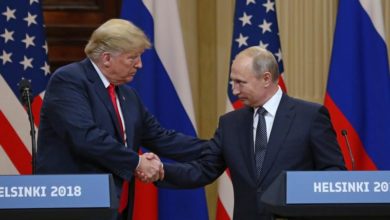
“Today, that world no longer exists. When Trump has launched direct negotiations with Iran, Europe has been marginalized, excluded from any mediation process. Now, with the military attack of Israel on Iran, we have not been able to position ourselves with the necessary clarity,” writes the director of the Institute in Rome.
“Europeans must handle themselves”
Nathalie Tocci believes that this chronic lack of power appears because Europe traditionally looked through the world through a transatlantic lens. She recalls that, in most international problems, for decades, Europe has collaborated with Washington, convinced that general values and interests were common.
There were also rare occasions in which European countries openly opposed the US, says Tocci, which gives the example of France and Germany that opposed the Bush administration about the US-led war against Iraq in 2003.
“Even if there is a difference in approach, Europe has sought to influence the US foreign policy by mitigating its harsh aspects, rather than by preventing it. European mediation in the matter of Iranian nuclear weapons, for example, has led to the Common Action Plan of 2015. Decoupling Western and Chinese savings, instead promoting the milder alternative of risk reduction, ”writes Nathalie.
“But Trump's destructive foreign policy has created a world in which Europeans have to do themselves,” believes editorialist.
What risks Europe
She says that “in terms of Ukraine, Europe has learned from mistakes and remains firm, maintaining the financial and military assistance granted to Kiev, while exploring ways to fill the gaps in case the US withdraws”, but that otherwise, “Europe is in a deadlock”.
“It is true that Europe has adopted a tougher position compared to Beijing, it is no longer naive; the EU has begun to examine Chinese investments in Europe and increased rates for Chinese electric vehicles,” but “contradictory signals transmitted by Trump means that Europe has to decide alone and what it wants from Beijingi.”
“The EU cannot afford a commercial war on several fronts, especially if its own commercial negotiations with Washington fail,” she warns.
According to Tocci, “through his political hesitations on the last war, Europe has not won the favors of Washington, nor did he improve his relationships with Israel. In the meantime, he has lost all his credibility as an honest mediator in relation to Iran.” “The cherry on the cake is that Russia has positioned itself as a possible mediator, and Trump has tacitly approved this absurd proposal,” she adds.
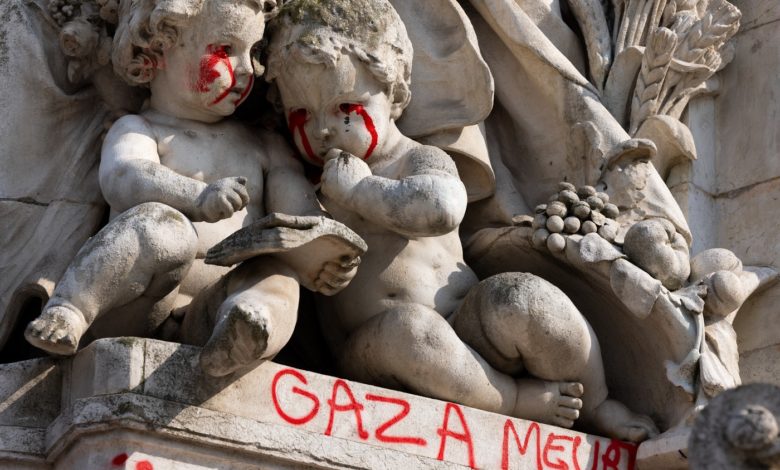
“The risk is that Europe will now block its own way to a more moral approach to the horrors in Gaza: the following days will show whether the EU will suspend the commercial agreement with Israel or if it will be waiting,” writes The Guardian.
Nathalie Tocci concludes that, although Ukraine is the main interest of Europe in security, war, chaos and nuclear proliferation in the Middle East have more serious consequences for Europe than for the US.