MEPs discuss a law for the welfare of dogs and cats / EU wants to prohibit races with traits that cause suffering to pets

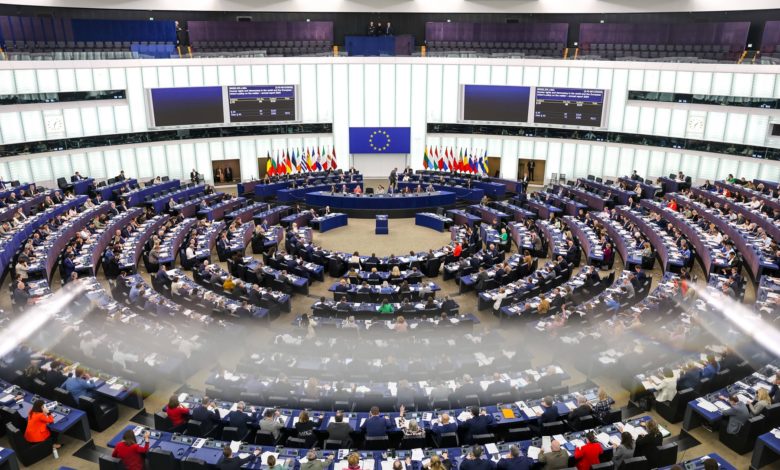
Declarying against electric scratches, mutilations and consanguinization, MEPs vote on Thursday a law of the European Commission (EC) that sets the minimum protection rules aimed at raising dogs and cats in the European Union (EU), AFP informs.
With 82 million cats and 72 million dogs living in the EU, and facing a return on pets, the European Executive has decided to regulate this market valued at 1.3 billion euros per year.
The draft law submitted to the vote establishes minimal criteria for the well -being of dogs and cats in farmers, shelters and points for sale: food, space, cleaning and prohibition of cruelty practices.
Fight against animal trafficking
The text also obliges when a dog or a cat, when identifying with the help of a subcutaneous microchip, already in force in most Member States, to record the animal in a database that can be consulted throughout the EU.
The objective is to combat trafficking with dogs from European countries such as Romania and Bulgaria, criticized by the associations that advocate for the defense of animals.
The mutilation (cutting the tail or ears, removing the vocal chords, etc.) will be prohibited in almost all cases, as well as the electric, suffocation or spit.
The growth of some animals to emphasize certain physical characteristics so exaggerated that the animals suffer from them (too short paws, too flat noses, etc.) must also be forbidden, as well as the use of these animals for shows or competitions.
The text of law also prohibits the consanguinity to the level of grandparents/grandchildren and between step-brothers and sisters, with only rare exceptions that are accepted, to save local species with poor genetic diversity.
Too many exceptions
However, although this regulation seems to be a very consensual one, the dimension of its application is still debated.
Prior to examining the text in the plenary, the Environment Commission of the European Parliament tried to make the text more ambitious, but failed. While the Commission for Agriculture, more attentive to the “excessive regulations”, is in advantage.
“For the moment, 80% of breeders would not fit in the field of application,” said Ecological MEP Tilly Metz. The small breeders, with four briskets or at most three calves a year, are indeed exempted from some of the obligations.
The group of ecologists intends to refrain from voting if the text will not become more ambitious, all the more so as it is defended by the Czech deputy Veronika Vrecionova, from the European Conservatives and Reformists (ECR), ranked as far right. In contrast, members of the ECR group are worried about the amendments submitted by the green.
Defenders of animal rights regret other exceptions: for stray dogs and stray cats, which are not targeted by the mandatory placement of microchips, for police or military dogs, hunting or agriculture dogs.
“There is a great lobby of the hunters in this text,” said Christopher Marie, director for European affairs within the 30 million friends Foundation, giving as an example the prohibition on mutilation, which has been relaxed in the case of hunting dogs.
The coercive scratches (electric, etc.), although forbidden, will be used to be used for the training of police, military or customs dogs.
“This text establishes some bases that are interesting, but it does not go to the end of things and does not attack the real causes of overpopulation (from the farmers – n.red.) And of the abandonment,” wrote Christopher Marie.
The same official especially regrets the weakness of the regulation on online ads, targeting 60% of the sales of dogs and cats, according to the European Commission.
Only the person who publishes such an announcement is considered responsible, but not the platforms on which those ads appear.
“This is really very problematic, because online sales lead to a very important number of abandoned animals,” explained Christopher Marie.
Once it is adopted by MEPs, the law text will have to be validated by the EU Member States to enter into force.