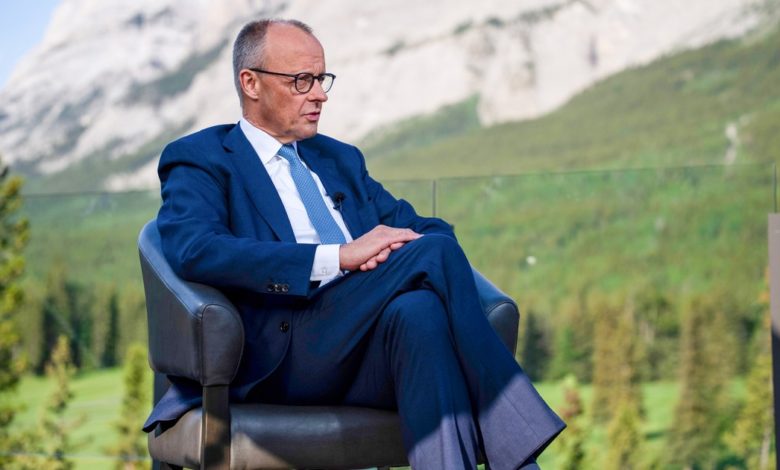
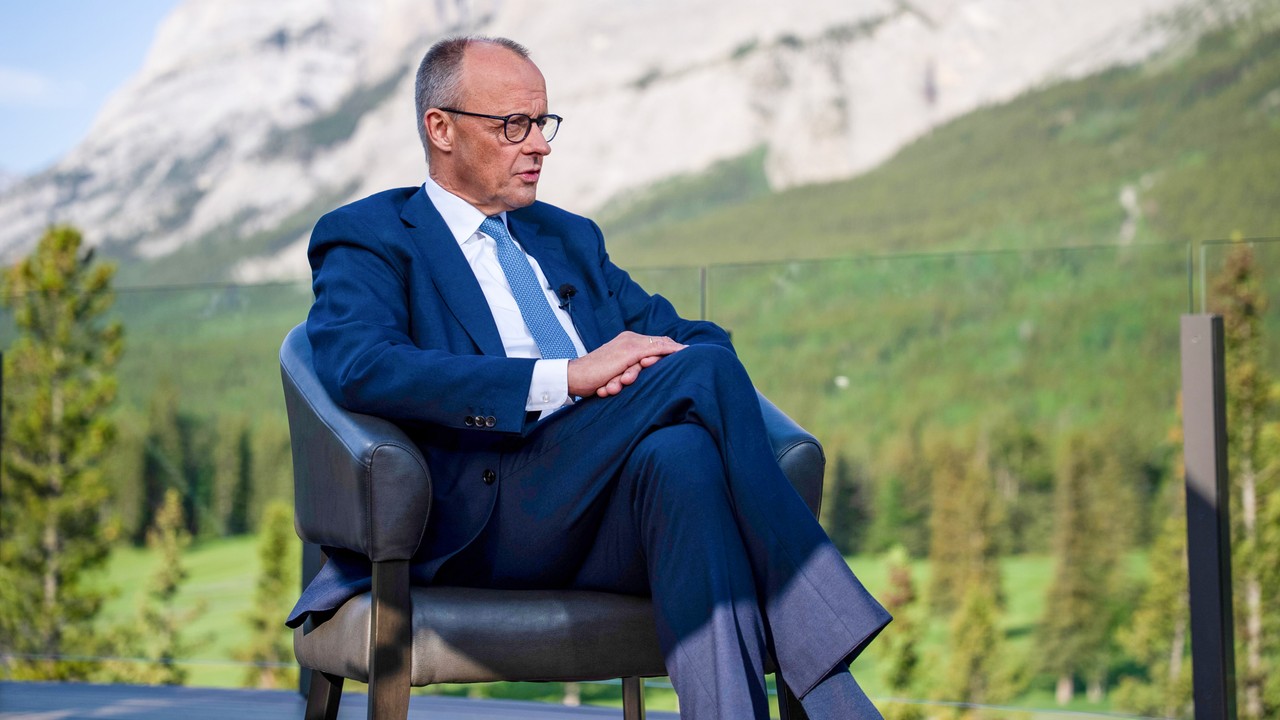
Friedrich Merz (German Chancellor): First, it's really good that we were able to agree on a joint statement. This also shows the spirit in which the G7 summit takes place. It aims to communicate, open dialogue.
I must honestly say that I am very happy with my progress in this matter. Yes, Israel answered. From Friday last week, Israel has been conducting military intervention. He apparently destroyed the objects very effectively and it can already be said today that in Iran there will be nuclear weapons, nor will the financing and support of terrorism on a global scale will continue in this extent by this country.
It is always a difficult balance, but last week the International Atomic Energy Agency (Maea) announced that efforts to limit this program were unsuccessful. Iman, Iran stated that he would intensify the enrichment of uranium, which was of course a drop that poured a charm of bitterness, also for the Israeli government, which made the decision about the military end of this program.
US President Donald Trump left the peak ahead of time, claiming that he must deal with the situation in the Middle East. Are you personally prepared for the fact that the Americans will now take part in Israeli military attacks?
After the preventive hit of Israel on the Iranian nuclear program, Iran attacked Israeli civilians. Many people were killed, including children. So far, Germany has only promised to provide firefighting agents. Would you agree to provide more weapons if Israel asked for it?
Israel has not yet asked for such help. He asked to deliver fire -fighting funds to potential sources of fire. We agreed to it right away. So far, there have been no further queries from the Israeli government and I do not expect them to appear in the near future.
Would you be essentially open to such a possibility?
We don't have to deal with this issue at the moment. In recent days, the Israeli army has shown what it could afford. Israeli intelligence services also showed what they can do. I don't think Israel is dependent on the military support of Germany.
Israel Prime Minister Binjamin Netanyahu does not hide that at least he would accept it if the Mulłów regime in Iran fell. Would you be happy if this terror regime came to an end?
I assume that the attacks from recent days have already weakened the Mullad regime and is unlikely to return to its former strength, and therefore the future of the country is uncertain. We have to wait now and see how things will go. On our own initiative, we offered all diplomatic help from Europeans.
For example, if diplomatic talks resumed, we would be ready to take part in them – just like before Israel's attack. This means that if a new situation occurred, Germany, France and Great Britain would be ready to provide diplomatic assistance again, as they did until Thursday last week.
How do you assess the chances and risk of changing the regime in Iran?
To be honest, it's hard for me to imagine the return of the mule regime to the old functions. Especially since a significant part of military leadership is already dead. Even the so -called leaders The revolutionary guard is dead. Well, it won't be the same as until the last Thursday.
“Putin has nothing to look for at this table”
The central topic of the G7 summit is also Russian aggression on Ukraine. Have you made any progress in their efforts to tighten the sanctions against Russia by Donald Trump?
At European level, we discussed the 18th Package of Sanctions. He is ready. It will be the furthest sanction package that Europe has ever imposed on another country. This will have far -reaching consequences for energy supply, as well as for all payment transactions.
Do you think it is likely?
It is possible.
Donald Trump said at the beginning of the summit that Putin's exclusion from the former G8 format after the annexation of Crimea was a big mistake. At the same time, Trump resigns from a meeting with the President of Ukraine, leaving earlier. In the Kremlin there should now shoot traffic jams from Crimean sparkling wine, right?
I don't know if it's really. I believe that Putin's exclusion from the G8 format after the annexation of Crimea, as it was called then, remains correct. In this format we do not sit at a table with warlords and war criminals. And that's why Putin has nothing to look for at this table.
As for the whole situation in Ukraine, the President of the United States is informed in detail. He has many opportunities to talk to Volodymyr Zelanski. He did it many times. We will also do it together with his finance minister, who remained here. So we will continue to maintain close contacts with Ukrainian leaders. I do not think that Donald Trump is not present today for limiting our efforts to help Ukraine.
Trade war and duties
World trade is the third important issue. The German economy almost trembles because of the duties imposed by Trump. Have you managed to convince him during this second meeting that the trade war would be harmful to everyone?
Yes, it is here that foreign and economic policy overlap. We must help end the war in Russia in Ukraine, otherwise energy prices will remain high. We must solve the customs dispute, otherwise the duties will remain high. That is why all the efforts we make as part of economic policy in Germany are worth only half, if we fail to reduce energy prices again, and at the same time reduce duties. In this respect, these issues are closely related. Talks are underway.
From the beginning I said that I am not expecting to resolve this issue at the moment. But we are approaching the solution. The agreement was concluded between America and Great Britain. I decided that if we go in a similar direction in the European Union, it would be a right move, because there is such a possibility.
The only predictable feature of Trump is its unpredictability. Now, during your first G7 summit, you had the opportunity to observe how Donald Trump cooperates with other heads of states and governments. What did you learn about contact with the current US president?
I can surprise many people because what I say does not match his public image. President Trump listens, asks questions, we do not agree on all issues, but it is a real dialogue. This dialogue took place here, on Monday and lasted several hours, including in the evening, and it already has value. We understand each other better, we exchange arguments and we will also find solutions.