Xi Jinping signed a treaty with five ex-Soviet states. China's ambitious projects in Central Asia

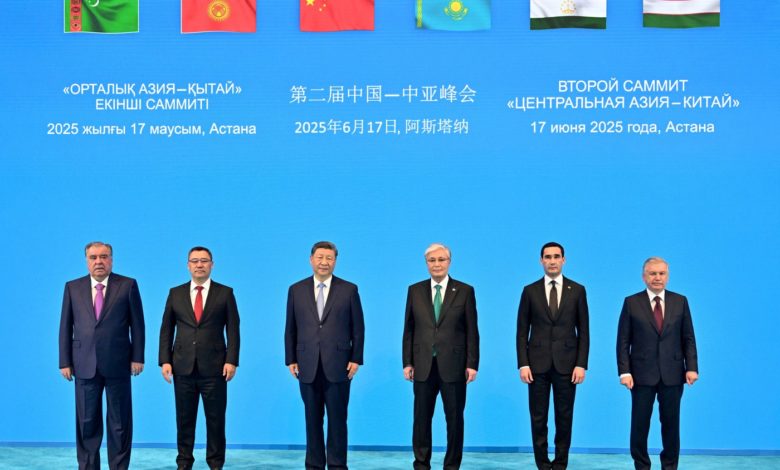
Chinese President Xi Jinping signed a treaty that strengthens China's relations with five Central Asia – Kazakstan, Kazzstan, Tadjikistan, Turkmenistan and Uzbekistan – and aims to deepen the cooperation in the field of trade, energy and infrastructure with this rich region, and the DPA and EFE.
Since the invasion of Ukraine by Russia, Beijing has intensified its efforts to improve economic ties with Central Asia states, which are traditionally in the sphere of influence of Russia, as a result of their strategic and energy resources.
Xi Jinping is looking for allies against US hegemony
At the regional summit hosted by the Kazakh capital, Astana, President XI Jinping praised a reference moment by signing a “permanent neighborhood and friendly cooperation” treaty with Kazakhstan leaders, Kyrgyzstan, Tadjikistan, Turkmenistan and Uzbekistan, Xinhua reported.
This is the second edition of this high -level meeting, after the first meeting, hosted by China in 2023. Both occasions coincided with G7 leaders meetings.
“Currently, the world is going through accelerated changes that in the last century, entering a new period of turbulence and transformation,” said Xi Jinping in the pronounced speech. “The commercial wars and tariff wars do not produce winners, and unilateralism, protectionism and hegemonism are doomed to harm both others and SIEşi,” said the Chinese head of the state, in an indirect attack on the United States.
“China is ready to collaborate with the countries of Central Asia to defend international justice, to oppose hegemonism and power policies,” said XI. He also promised financial assistance worth 1.5 billion Yuan ($ 208.86 million) for Central Asia countries this year, to support development projects and social projects to improve living in the five countries in Central Asia and called for more cooperation such as trade, minerals and agriculture.
Despite a commercial armistice with the US, China is eager to strengthen her relationships with her regional partners. China's bilateral trade with the five countries in Central Asia has reached a record level in the first five months of this year, with an increase of 10.4% compared to the previous year, Xinhua reported.
Turkmenistan, a major supplier of natural gas for China, is the only nation in Central Asia with a commercial surplus to China. The commercial deficits of Kazakhstan and Karzstan with China rise to tens of billions.
Major infrastructure projects
In separate bilateral meetings that he had with regional leaders, XI demanded the extension of cooperation in the field of natural gas, minerals, the construction of an international rail line and the application of the law, according to communications of the meetings posted by the Chinese Foreign Ministry.
In the meetings with Presidents Uzbec and Kyrgyz on Tuesday, Xi Jinping urged progress in achieving the China-Karzstan-Suzbekistan railway, a terrestrial route starting from the North-West Chinese region and bypasses Russia. The project has been discussed since the 1990s, but has gained new importance after Russia's sanctions have led to the route through Russia for those carrying goods between China and Europe.
Thus, the five former Soviet republic offers China alternative routes to ensure fuel and food in case of interruptions on other routes. In the long term, the Central Asia route could help, potentially, reduce the transport times between China and Europe.
In a separate meeting with the President of Turkmenistan, Serdar Berdîmuhamedov, Xi Jinping said that “both sides should expand the cooperation scale in the field of natural gas, explore cooperation in areas that are not resources and optimize the structure of trade.”
In addition, Xi urged the countries of the region to cooperate in the fight against extremism and terrorism and stressed that Beijing is interested in supporting the modernity of the Army and Security forces in Central Asia and organizing common military maneuvers.
On the same line, EFE recalls, the European Union also pleaded for the opening of new trade routes on the old Silk road during the summit in April in the historical city of Uzbec Samarkand, where it announced an investment of 12 billion euros in the region.
“China is willing to defend with the countries of Central Asia International Justice and to counteract the policy of hegemony and force,” said the Chinese president.
What is asked to beijing
In turn, the host of the high level meeting, President Kazakh Kasîm-Yomart Tokaiev, with whom XI signed more than 20 agreements, assured that the relationship between Beijing and Central Asia has become “a strategic partnership” and stressed that China represents 40% of the region's foreign trade.
President Tokaiev recalled that the region houses 20% of the world uranium reserves, 17% of oil and 7% of gas, in addition to rare metals. President Kazakh proposed to his Chinese counterpart a common development project of a Caspian Sea loading terminal, in the context of the Kazakh leader – 85% of Chinese goods intended for Europe transit the territory of Kazakhstan.
China, Kyrgyzstan and Uzbekistan signed an intergovernmental agreement last year for a crucial project to reduce the transport time between China and the Middle East markets and Europe. Known as CKU, it will cost $ 4.5 billion, will be 523 kilometers long and will be able to carry about 15 million tonnes annually. It will connect Kashgar (China), Jalal-Bad (Kyrgyzstan) and Andiyan (Uzbekistan), avoiding Russia's territory and connecting with Europe through Iran and Turkey, a route with almost a thousand kilometers and eight days shorter.
Meanwhile, Turkmenistan, a country that borders Iran, has been willing to increase gas and electricity exports to the Asian giant.
In response, all the leaders in this region demand the Beijing transfer of technology and cooperation in areas such as space exploration or artificial intelligence.