The fathers's fathers from Afghanistan, forced to be in their own families: “They became unpaid soldiers of the Taliban”

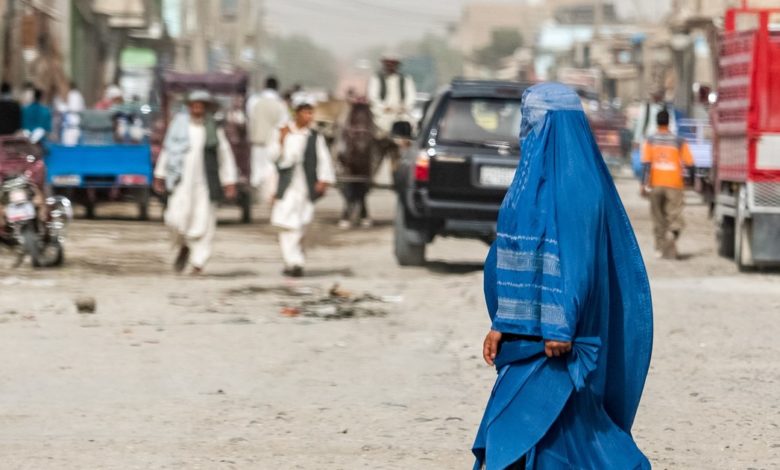
In Afghanistan controlled by the Talibans, fathers are forced to apply the strict regime laws against women to protect their daughters, writes The Guardian. Women are subjected to the prohibition to leave the house unaccompanied, forced to cover themselves completely, and their voice should not be heard in public. Men are held accountable for any deviation of female relatives, so many families have become true oppressive environments. Women's lives have become increasingly controlled and restricted and often have violence and abuse from their own family. Although some men detect this role, social pressure and fear of punishment cause them to comply.
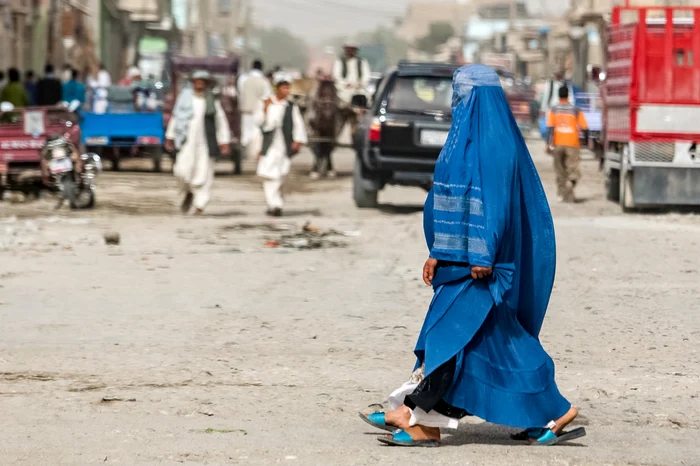
Afghane women wearing burka to the Kabul photo shutterstock
In Afghanistan led by the Taliban, the life of the girls of girls has become a nightmare. Amir says that he is forced to be more of a guard than a loving parent, a police officer of a gender apartheid system, but he feels that he has to impose on the two teenage daughters, to protect them from the anger and reprisals of the Taliban.
Just a few years ago, Amir's daughters had a social life and a future. They went to school, visited their friends and moved freely in their community. Now, he says, he would prefer his daughters to never leave the house. Like many other fathers from Afghanistan, he heard scary stories about what can happen to young people who enter the “Morality Police”.
In the rare moments when the prayers and insistence of his girls to be allowed to go out in the world become too difficult to bear, they are sent, but it insists on being accompanied by a man in the family and to be careful to cover his body.
“I insist on carrying Hijab and I remember that they are not allowed to laugh in public or on the market”, he says. “Moral Police” is very strict, and if they do not respect the rules, they can be retained. “
In the summer of last year, three years after taking over the power in August 2021, the Taliban announced an extensive set of laws on “vice and virtue”, which practically eliminated women in public life.
According to them, women should be completely covered when leaving the house; not to allow their voice to be heard in public, not to go anywhere and never look directly at a foreign man.
At that time, it was not clear as they were implemented, given the relatively small herds of the “morality police”.
However, in the months that followed, it was proved that this role was transferred to the fathers, brothers and spouses, who thus became unpaid employees of the oppressive regime of the Taliban on women and girls in Afghanistan.
And they are pushed to comply – not just because they are afraid of what could happen to women if they are caught by the Taliban authorities: according to the new rules of the Taliban regime, if the authorities believe that a woman has violated the morality code, rather her male relative is punished – fined or even closed.
Testimonies from Afghanistan
The Guardian and Rukhshana Media have spoken more than a dozen men, as well as young people from all over the country, about how the Taliban laws affect their attitudes and behaviors towards women in their families.
“Men have become unpaid soldiers of the Taliban,” says Jawid Hakimi, from Bamyan province. “We are forced, in order to defend our honor, reputation and social status, to impose the Taliban orders on women in our families. Day by day, the society adapts to the Taliban rules, and their restrictions [asupra femeilor] Gradually reconfigures the society after their vision – and we feel obliged to align our families. It is a suffocating atmosphere. ”
Parwiz, a young man from a province in northeast of Afghanistan, says that when his sister was detained by the “moral police” because he did not wear Hijab, he feared for her safety and decided not to allow this to happen again.
“I was forced to go to the police station, where I was insulted and I was told that I have to do everything the Taliban say,” he says. “When I returned home, I spilled all my anger and frustration on my mother and sister.”
Fear of public punishment and humility
Other men talked about how the fear of public humiliation if the Taliban applies a pedestrian for “immoral” behaviors generate repression and violence against women in their families.
Freshta, a young woman from Badakhshan province, says she is beaten by her husband if she leaves the house even to buy food from the market. “I went to the corner of the street to buy vegetables and we were wearing a long, black hijab, but not Burqa. When I turned, he hit my face and beat me.
“He told me,” Do you want to break the rules? What would happen if any work colleague would see you? ” For months I almost did not leave the house.
Rabia, 22, says he cannot take the risk of his family to be publicly humiliated because his older sister, Maryam, goes out in public and someone could say that she is not decent.
“Our pride does not allow us. We have shame, we have honor. We cannot bear the thought that, God forbid, someone would say something about it in the city or on the market,” he says.
A domestic prison
On the other hand, the young people spoke about the suffering to see how their own families become deputies of the regime, implementing an extremist ideology that has already taken the right to education, work and personal autonomy.
“My father's behavior has changed after the Taliban came. Before, he didn't care too much about our clothes,” says Masha, 25 years old. “Before, he never told us not to wear certain clothes or avoid certain places, but as soon as the Taliban came. He said:” If you consider me your father and care about the dignity of your family, you will wear hijab. Do not use makeup, no hair should be seen, ” she tells.
“So now, every time I have menstruation, I have to handle without hygiene or medicines. I don't leave the house anymore.”
Richard Bennett, the UN special rapporteur for human rights in Afghanistan, says that, although he has documented “resistance acts” of some Afghan men against the institutionalized repression of the Taliban, “within families, male relatives impose more and more restrictions on women, and more women are in need of permission. Family ensures compliance. ”
“The presence of de facto officials and alleged informants in communities, threatening constant supervision and unpredictability of rules contributes to the feeling of insecurity, amplifying psychological stress and anxiety, especially among young women,” he says.