The National Bank of Romania (BNR) has performed an analysis that shows the effects of Russia's large -scale invasion in Ukraine, triggered in February 2022, on economies in the region.
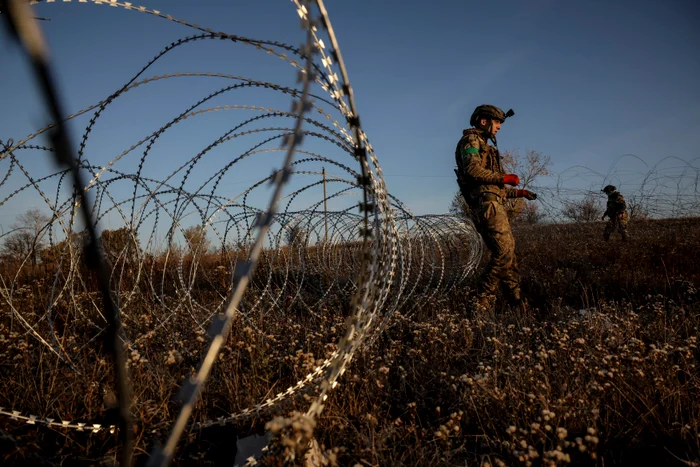
Photo: Profimedia
The report focuses on the economic situation in Bulgaria, Czech Republic, Hungary, Poland and Romania.
Thus, the simulations realized shows that, by the end of 2022, the conflict contributed to increased inflation by approximately 1.1 percentage points and to lower GDP by up to 1.4 percentage points, compared to a hypothetical scenario in which the war would not take place, notes Profit.ro, which cites HotNews.
By the end of 2022, the war led to an increase in inflation by about 1.1 percentage points and a decrease in GDP by up to 1.4 percentage points, compared to a hypothetical free scenario.
In addition to the huge human losses and materials in Ukraine, the war also caused a major energy shock in the region, after Russia interrupted gas deliveries to the EU. The effects have spread throughout the regional economy, affecting consumption, production and exports.
“The results of the simulations indicate that, by the end of 2022, the conflict caused an increase in the inflation rate by approximately 1.1 percentage points and a decrease of the GDP by up to 1.4 percentage points, compared to a hypothetical scenario in which the war would not take place. The analysis shows a relatively more pronounced impact on the economies in Central and Eastern Europe compared to those in Western Europe. The result can be attributed to the structural vulnerabilities specific to the region and, at the same time, by geographical proximity to the conflict area, factors that have amplified the volatility of macroeconomic indicators.“, It is shown in the report of the National Bank, signed by Daniel Dăianu (Fiscal Council), Tudor Grosu (Dir. Modeling Directorate and Macroeconomic Forecasts- BNR), Andrei Neacșu (economist within the same Directorate of BNR), Andrei Tanase (economist, Modeling and Macroeconomic Prognosis Directorate) and Radu Vrânceanu School, Thema).
Thus, the economy of Romania lost 4.1 billion euros in 2022, 4.8 billion euros in 2023 and almost 5.5 billion euros last year (not by inflation), from the value of the economy (GDP), according to ProTV calculations based on the official data provided by the Ministry of Finance.
The total, thus, reaches a smaller GDP last year with over 14 billion euros compared to as much as it could. As the state's revenues as a weight in GDP are around 27-29% of GDP, it turns out that the actual income would have been, with almost 5 billion euros higher if the Russian Federation had not invaded Ukraine.
The analysis also compares the impact of the Ukraine war on the economies of Bulgaria, Poland and Romania, which have faced similar challenges: a massive influx of refugees, disturbances of the supply chains and an increase of the investors' aversion due to the proximity to the conflict area.
On the other hand, countries like the Czech Republic and Hungary, used as a control group, were less directly affected, with a greater distance from Ukraine.
As an effect of the war, prices of raw materials increased significantly: oil by 18.3% and natural gas by 34.2%, the latter reacting stronger. Regarding the economic impact, GDP has decreased both in Romania and in the US, but more pronounced in Romania, with about 4 percentage points, compared to a decrease of about 2 percentage points in the US.
At the end of May, Foreign Minister Emil Hurezeanu, blamed the “peak changes” suffered by the Government because Romania delayed the payment of the contribution to the EU fund that supports Ukraine, worth 18.6 million euros.