The well -kept secret of the largest airline in Europe. How to collect billions of euros by taxing passengers for luggage

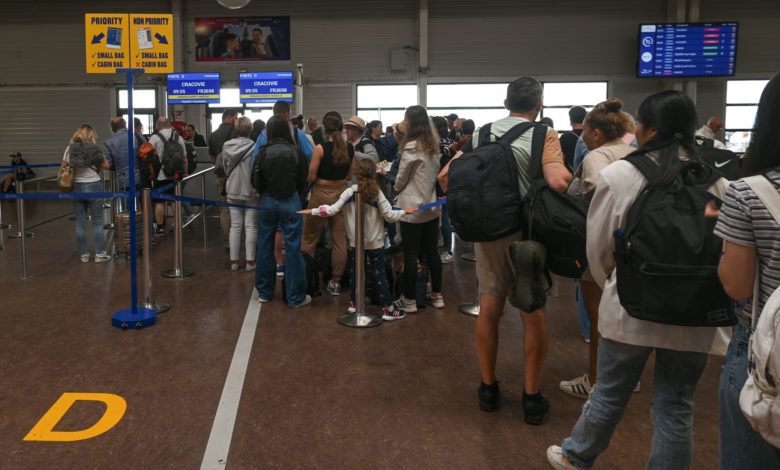
Passengers spent over 10 billion euros in 2024 to transport a cabin luggage on the 7 main low-cost companies in Europe, the largest of them, Ryanair, being the largest beneficiary, says at Libre Belgique.
The tariffs practiced by the airlines exceed in some cases even the price of air tickets and can be even significantly higher if the luggage in question exceeds with a few centimeters the standard dimensions admitted to be brought to the passenger cab.
Even though the “traps” of low-cost carriers are now well known by many travelers, there are still enough victims of these practices that sometimes test the regulatory norms imposed by the authorities.
In Belgium, for example, the Consumer Rights Organization has recently filed a complaint against Ryanair for “lack of transparency” regarding the rates applied to additional baggage, as most companies offer the possibility of free bringing a backpack or hand bag to the plane cab.
The airlines frame the receipts they obtain from the additional luggage in the category of “auxiliary” income, which do not come directly from the sale of air tickets.
At Ryanair, the largest airline in Europe, auxiliary revenues now represent about one third: 4.7 billion euros out of a total of 13.95 billion euros.
Airlines in Europe get huge income from passengers's hand luggage
Auxiliary revenues are even the main growth engine of Ryanair, registering a 10% increase in 2025, while the receipts obtained by the sale of air tickets have increased by only 1%. And of all the options for the cost offered by the airlines (priority boarding, the place of the place, meals, etc.), the rates for the luggage for the cabin are the ones that bring the most money, as has shown an investigation this week by the Italian daily Corriere della Sera.
According to the calculations of the Italian newspaper, the passengers spent over 10 billion euros in 2024 to take a luggage on the cabin on board the seven low-cost companies in Europe: Ryanair, Easyjet, Wizz Air, Vueling, Eurowings, Transavia and Volotea.
Usually, companies accept a small booth luggage for free, but sometimes tax the other luggage transported, especially if they exceed a certain dimension, variable depending on the airline.
Up to 80 euros for a luggage brought to the plane cabin
The rates practiced by the airlines can vary from 20 to almost 80 euros per suitcase brought on the plane. “A true jackpot If we keep in mind that 390 million luggage for the cabin were charged last year in Europe by low-cost companies, ”writes Libre.
Italian journalists in turn emphasizes that this service offers one of the largest profit margins in the air transport industry.
The weight of a baggage accepted in the cabin being between 8 and 10 kg, the service has a cost for the company: the plane consumes more fuel.
But the calculations remain categorically in favor of air carriers. The additional cost with the kerosene for 120 cab luggage does not exceed 156 euros per flight. However, taxing 25 euros per luggage, a low-cost company can receive up to 3,000 euros, making a net profit of almost 2,850 euros for each air race.
A profitable strategy for Ryanair
Ryanair is the low-cost company with the highest “auxiliary” income. In the 1.11 million flights made in 2024, it transported about 156 million hand luggage in the cabin. They brought him 3.5 billion euros from the total auxiliary revenues of 4.7 billion.
Ryanair relies on the huge volume of passengers transported (over 200 million last year, a record in Europe), but also has its secrets to get maximum revenues from luggage rates.
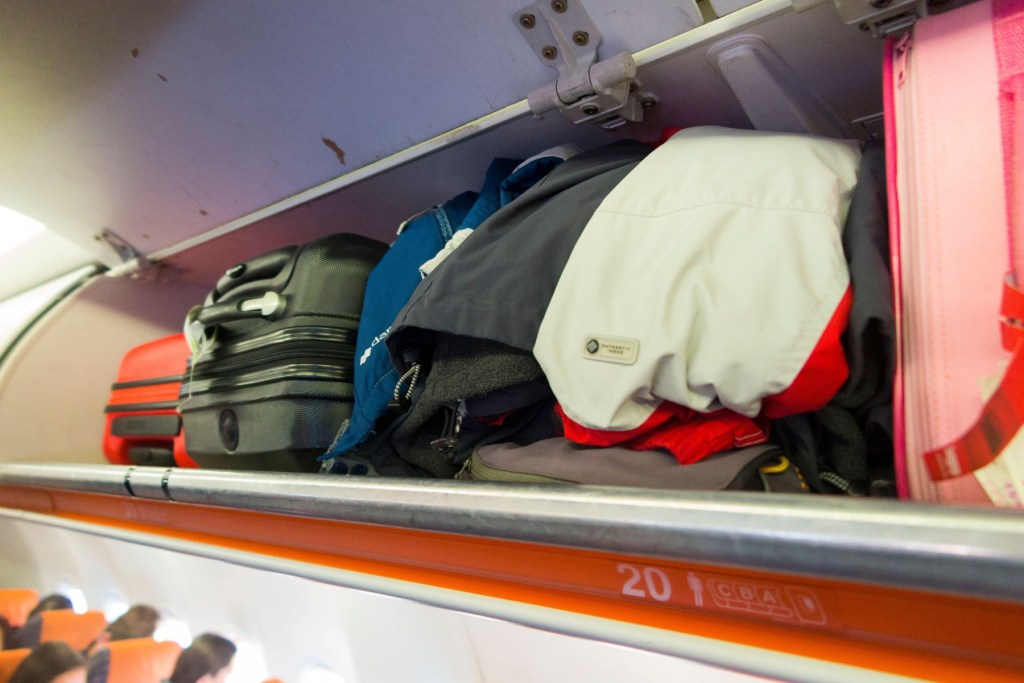
The new Irish aircraft, Boeing 737 Max, offers more space in upper compartments than most of the aircraft used by competition.
Ryanair thus passed 118 luggage in the Boeing 737-800 compartments, at 178 on the Max. In addition, the Irish company requires thinner suitcases, with dimensions of 55x40x20 cm, compared to 55x40x25 cm, the dimension generally accepted in the competitors.
The seemingly minor difference can prove to be a headache before boarding for passengers who hang their clothes into the suitable suitcase in order not to pay a hold luggage. In addition, numerous suitcase producers sell products designed for the general standard of 55x40x25 cm of the air industry.
In the ranking of the revenues obtained from the luggage taxation for the cabin, the British company Easyjet is in second place, with 2.2 billion euros obtained in 2024. This is followed by Wizz Air and Vueling, which received just over a billion euros each of this auxiliary service.
Following is Eurowings, which received 650 million euros, Transavia with over 450 million, and, in the end, Volotea, with about 200 million euros.