
Misinformation, lack of information and spread of false information can have a significant impact on the economy of a country, the specialists consulted by “Adevărul” explaining what is to be done so that the labor market is no longer affected.
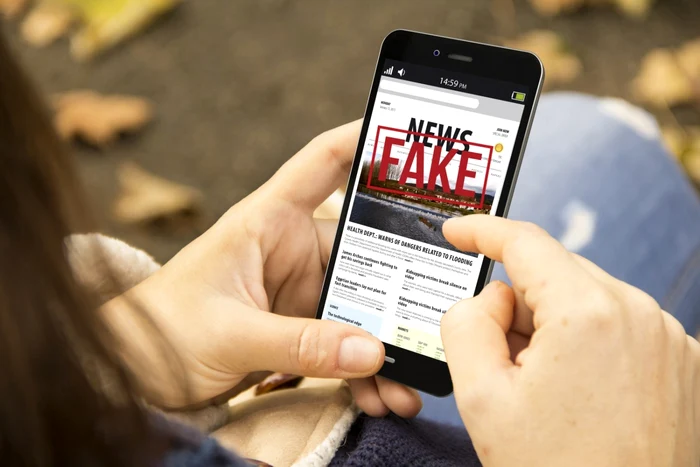
Young people can be misinformed if they do not check the information from safe sources. Photo archive
According to the study, public confidence, market stability and efficiency of decision -making processes can be affected when false information circulates freely, and misinformation can feed social and political tensions, affecting government stability and generating economic uncertainty.
Misinformation can lead to fluctuations in financial markets and decrease the economic attractiveness of a country and can influence the perceptions of employees and employers, affecting the recruitment, retention and productivity of work.
“The first step is to recognize where young people are informed today. Social media has become their main news source, surpassing the traditional television and press. A recent survey of the European Parliament shows that 42% of young people between 16 and 30 are mainly based on platforms such as Tiktok, Instagram and YouTube to find out. unverified.“, Said for” Adevărul “Marius Stanciu, lawyer and partner within the law firm Buju Stanciu and Associations.
Potray to him, education and critical thinking are the antidote of misinformation. Young people need to learn how to think, not what to think. This means the systematic introduction of media and digital education in schools and universities. “It is not enough to know how to use technology; they must understand the mechanisms behind it. For example, to recognize the bias of confirmation: the tendency to believe information if they confirm their previous beliefs. Today, 6 out of 10 young people fall into this trap, considering what sounds familiar. What is the source?“Added the specialist.
“The man on facebook” is not a guru in career or economy
According to him, reliable sources and mentors also play an essential role. “Instead of relying on the” Facebook man “as a career or economy, we should promote the access of young people to real specialists and validated information. Here are the family, teachers and even employers willing to get involved in the formation of the future generation. Studies show that young people have more confidence in their reference adults in their life, or a young teacher, or an information to a young teacher, It distinguishes a myth of a reality. Let's make the critical contagious thinking, just as a challenge on Tiktok: Once a young man learns the habit of checking the information, the behavior can spread to his colleagues. “added Stanciu.
Technology must be transformed from the part of the problem. Online platforms and even artificial intelligence can be used to filter and signal fake news. Of course, the AI itself can “hallucin” facts at times, so it is not a panacea-a very talkative chatbot can tell beautiful, but imaginary stories. But the same algorithm that today delivers funny clips could be trained to signal: “Attention, unverified source!”. In addition, independent initiatives such as factors and debunaking platforms must be supported and popular with young people. If on Instagram we can follow the stars, why would we not follow pages that disassemble the fake news?
Last but not least, let's not forget the responsibility of the press and opinion leaders. A correctly informed young man is the result of a common effort: school, family, media and civil society. Correct information does not mean academic boredom, but presenting the truth in an attractive way. When trusted sources will become as “cool” as viral memes, young people will no longer confuse popularity with veracity.
What should be done so that the recruitment and the labor market is no longer affected
Marius Stanciu explained for “Truth” that misinformation influences career choices in an insidious way. “Imagine a graduate who plans his professional future according to what he heard in his bubble on the Internet. If in that corner of the Internet it is repeated that “the X industry has no future” or that “it is full of unemployed with the Y diploma”, it is very likely that the young man will avoid that direction, sometimes despite his own skills or passions. Thus, the economy loses talents that have been wrong or were unjustly discouraged. For example, the legal field suffers from a sometimes distorted perception: some young people believe that the law means either instant glory as in movies, or boring routine without success, two equally misleading extremes. More recently, there is also a technological myth: “Anyway, the robots and artificial intelligence will be replaced, what good to do?”he says, adding that, in reality, the professions evolve, do not disappear overnight, and the truth about the labor market must be communicated transparently to counteract these alarmist or fantasy narratives.
In his opinion, the collaboration between education and industry is crucial. In order for the recruitment not to suffer, young people need a clear and realistic image of the labor market. This means internships since the studies, mentoring programs offered by companies and visits to the headquarters of companies – in short, direct exposure to professional reality. When a student sees with his eyes as he is in a modern law firm, for example, he will no longer be convinced of stereotypes heard online about “how to work in legal”. Modern employers can play an active role by going on campuses, at job fairs, organizing interactive webinars in which they disassemble myths about their domain. In the era Zoom and Tiktok, an agile company will know how to explain to the Z generation with authenticity that has to offer, not through rigid communications, but through open dialogue and authentic content (including on social media).
“There is also a need for a concerted effort to transparent and clean the recruitment market. Here the private environment and public policies intervene. For example, the practice of misleading job or” Ghost Jobs ” – Published positions even does not really exist. Did you know that almost a five -list job is not a job? Serious and create confusion on the market.
The formation of a large -scale critical thinking among the emerging labor is as important as the formation of technical skills. An employee who knows how to distinguish solid rumor information will make better career decisions and will adapt more easily to changes. Here companies can contribute by offering orientation trainings and access to updated resources about industry trends. A responsible employer does not recruit his people only as CVs in a database, but also educates them, helps them to filter their expectations in relation to reality. For example, if a panicard rumor circulates on the networks that “all programmers will be fired because of AI”, an IT company could communicate internally and externally which is, in fact, its strategy related to new technologies, calming and informing the candidates and employees alike.
Last but not least, the regaining of trust is the key. As long as the public will feel that “what is said” differs from “what is happening” in reality, the mistrust will further supply misinformation. Therefore, companies, educational institutions and authorities must communicate honestly, with visual data and examples. Let's show the young real heroes of the economy, not just sensational success stories or, conversely, only negative cases. The labor market is neither apocalypse nor paradise – and again Young people deserve a nuanced, honest and balanced picture so they can choose informed“, he concluded.