As long as Russia will be able to replace the planes destroyed by Ukrainians. Losses leave a goal in a strategic field for Moscow

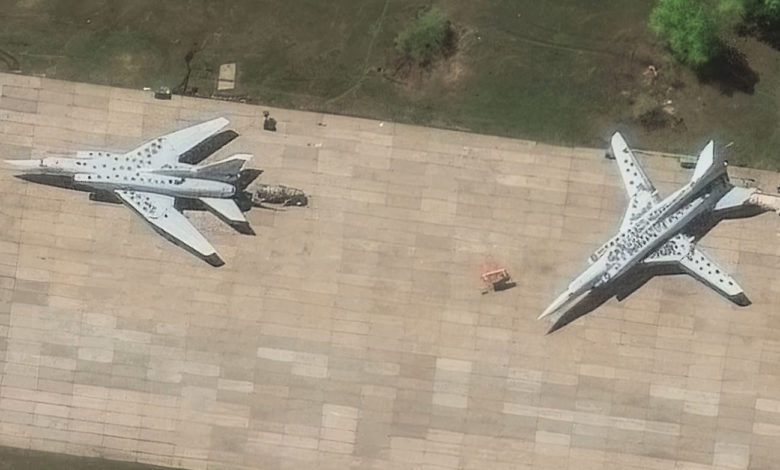
Russia will need years to replace the strategy bombers that have been hit by Ukrainian drones last year, putting even greater pressure on a modernization program, Western aviation experts say by Reuters.
The United States rated up to 20 the number of planes hit – half of the number estimated by Ukrainian President Volodimir Zelenski – of which about ten were destroyed, two American officials said.
The complex missions of the planes attacked by Ukrainians
The Russian government denied the destruction of any plane and stated that the damage can be repaired, but the Russian military bloggers spoke of the serious loss or damage of about 12 aircraft, while accusing the military responsibilities.
The attacks – prepared for more than 18 months in the operation of Ukrainian intelligence services entitled “The spider's web and carried with drones that were brought close to the aerial bases, in trucks – have represented a strong symbolic blow for a country that, since the beginning of the invasion in Ukraine, has frequently reminded the world.
In practice, experts say, they have not seriously affected Russia's nuclear attack capacity that consist of most rockets launched from the ground or submarines.
On the other hand, the Tupolev TU-95MS and TU-22M3 bombers that were hit were part of the long-range air fleet that was used during the war to launch conventional missiles on Ukrainian cities, weapons, military bases, energy infrastructure and other targets, Think-Tank Russi in London.
The same fleet was used for periodic patrol flights in the Arctic Ocean, the North Atlantic and the North Pacific as a proof of force meant to discourage Russia's opponents.
Bronk said that at the beginning of the invasion in Ukraine, Russia had around 50-60 TU-95 and about 60 TU-22, along with about 20 Tupolev TU-160M, capable of transporting nuclear load. He estimated that Russia has lost more than 10% of TU-95 and TU-22 aircraft, if the losses from last weekend are taken into account as well as some planes lost in the war.
These losses “will put a high pressure on an essential force of Russia that operates at full capacity anyway,” Bronk told Reuters.
Technological advance of Russian aviation under the question mark
The replacement of these aircraft will be problematic because there are models designed in the Soviet era and have been out of production for several decades, although existing aircraft have been improved over the years, said Douglas Barrie, an aerospace expert at the International Institute of Strategic Studies in London.
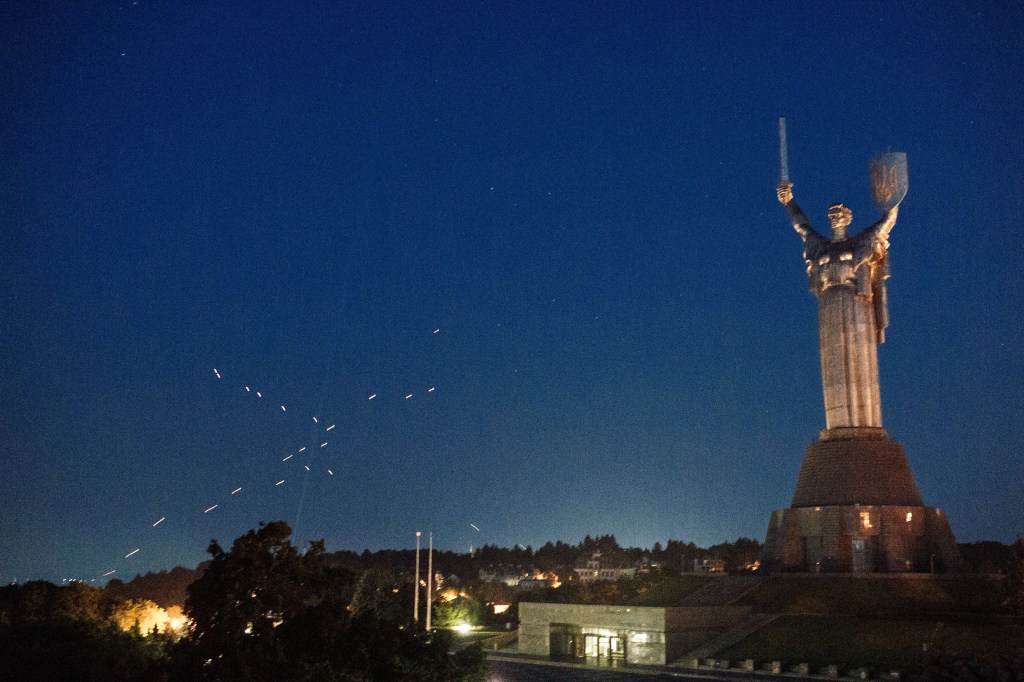 Russia's response to “Kiev's terrorist attacks”: a swarm of over 450 drones and rockets / Moscow claims that “all the targets were hit”, Ukraine has another balance
Barrie said that the possible production of new ones is very unlikely. In addition, Western sanctions against Russia have been targeted to restrict the import of components such as microprocessors that are vital to aircraft systems, although Moscow was successful in finding alternative sources.
Russia has modernized its bombers TU-160M, and Last year Putin flew for 30 minutes with such an aircraft, after which he stated it as ready for entry into service. But the production of such aircraft is slow – a Russian military blogger said it is four planes a year – and Western experts said that progress in developing the new generation of bombers, Pak Yes, is very slow.
The federation of American scientists stated, in a report last month, that Russia concluded the contract with the Tupolev producer for Pak DA, but the Russian press of the test flights will only take place in the year, and the production would start in 2027.
Even if it seems logical for Russia to try to speed up the Pak DA project, it may not be able to do so, says Hans Kristensen, the director of the Fosa Nuclear Information Project. He recalls that Russia is facing delays in other major defense projects, including the new Sarmat intercontinental ballistic missile.
And Justin Bronk is skeptical about Moscow's chances of accelerating the graph for the future generation of bombers. “Russia will struggle to produce Pak DA aircraft in the next five years, not to accelerate the program, due to budgetary problems and material and technological constraints on the industry imposed by sanctions,” concluded Bronk.