How close is the moment when trains will no longer run at 40 kilometers per hour: “We will be in a different reality” / The four major railway construction sites where work is currently being done in the country

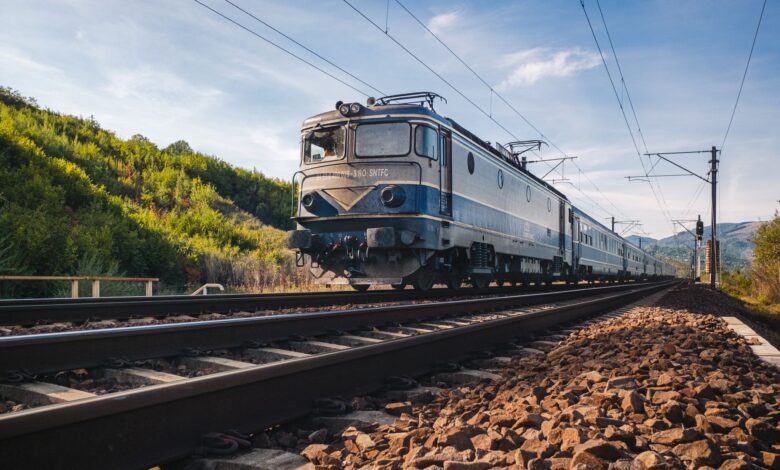
The average speed of trains in Romania is below 43 kilometers per hour, and one of the explanations is the large number of sections on which there are construction sites, most of which are delayed. A former important Transport official explained to HotNews when there are chances to see a real increase in average speeds, but also what is the situation of the largest railway yards in the country.
Currently, trains crossing the country from one side to the other rarely have average speeds above 50-55 km/h, and on sections such as Brașov – Sighisoara and Arad – Caransebeș, the average is around 40 km/h, mainly due to construction sites. When will it be better?
“Between Cluj and the Diocese of Bihor we have certain lots that will be 90% ready this summer. There are projects that will be finished in 2028. It is clear that we will have a speed gain. If it is completed, as we expect, in 2028 and Sighișoara – Brașov, at that moment, the distance will be covered much easier”, Ionuț Săvoiu, who until the end of April was state secretary at Ministry of Transport. There will be segments on Cluj – Bihor Diocese that will close in 2029, adds Săvoiu.
However, there will still be segments on the Cluj-Bihor Diocese route that will close in 2029, adds Săvoiu.
When will we have tfaster reindeer in Romania
But when will the Romanian trains run much above the current average speed?
“Somewhere in the perspective of 2030 we will be in a different reality,” says the Transport official, who admits that things are going hard and that there are implementation problems generated by the previous lack of funding.
The jump in speed should be seen from year to year, because new sections appear in circulation and Quick Wins projects are also completed, the official says.
The four largest railway yards
At the moment, the largest railway construction sites are focused on the European corridors inside the Carpathian arc. On the pan-European railway Corridor 4, the most extensive works are being carried out on the northern branch from Brașov to Sighisoara and on the Deva – Simeria sector. On the southern branch of corridor 4, work is underway on the Arad – Caransebeș sector.
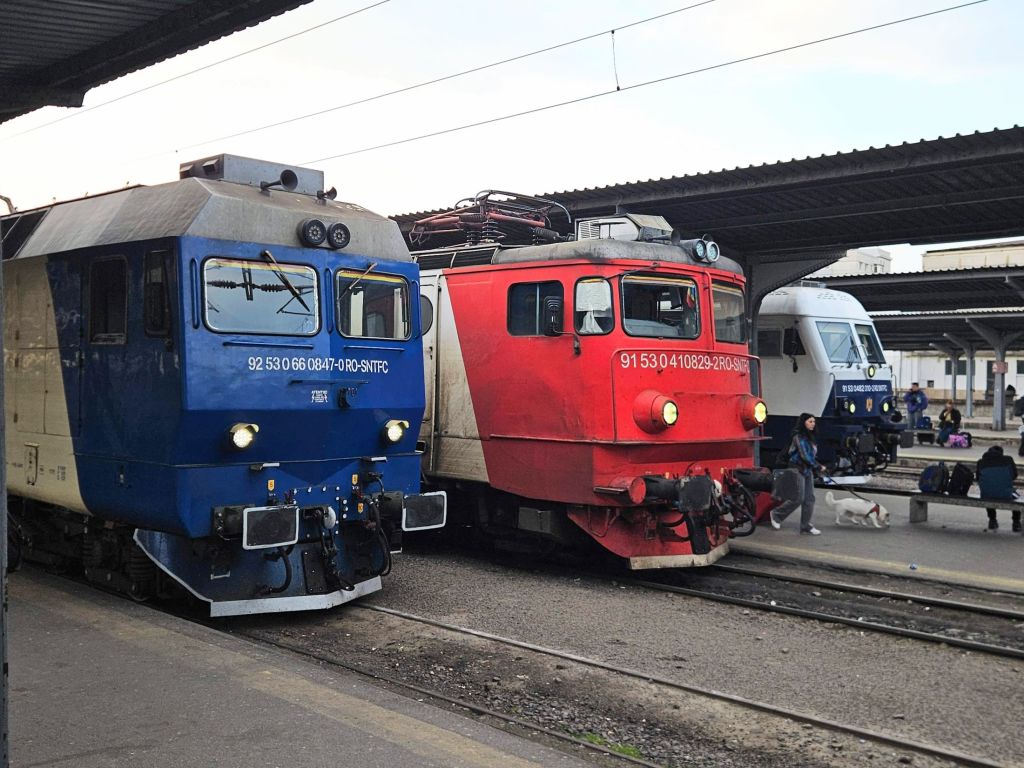
The fourth largest construction site – Cluj – Oradea – is on the secondary network (TEN-T Comprehensive), but receives funding through the PNRR, the post-pandemic recovery fund, which has a deadline of August 2026.
The longest train tunnels in the country – deadline 2028
The latest CFR SA data, for the month of February, indicated for Brașov – Sighisoara a physical stage of 59% for the works between Apața and Cața and 55% for the other two subsections.
The estimated date for the completion of the works at Apața – Cața is February 2028, and for the other two, June 2028. The longest tunnels in the country are being built on those sites: Ormeniș (7 km) and Homorod (5 km).
Between Simeria and Deva there are construction sites where work began almost a decade ago, and the physical stage of construction on the four sections is between 81% and 97%. Completion dates for three of the sections are in 2026 (May, August and November). For the 22 km section between Ilteu and Gurasada, the deadline is December 2027.
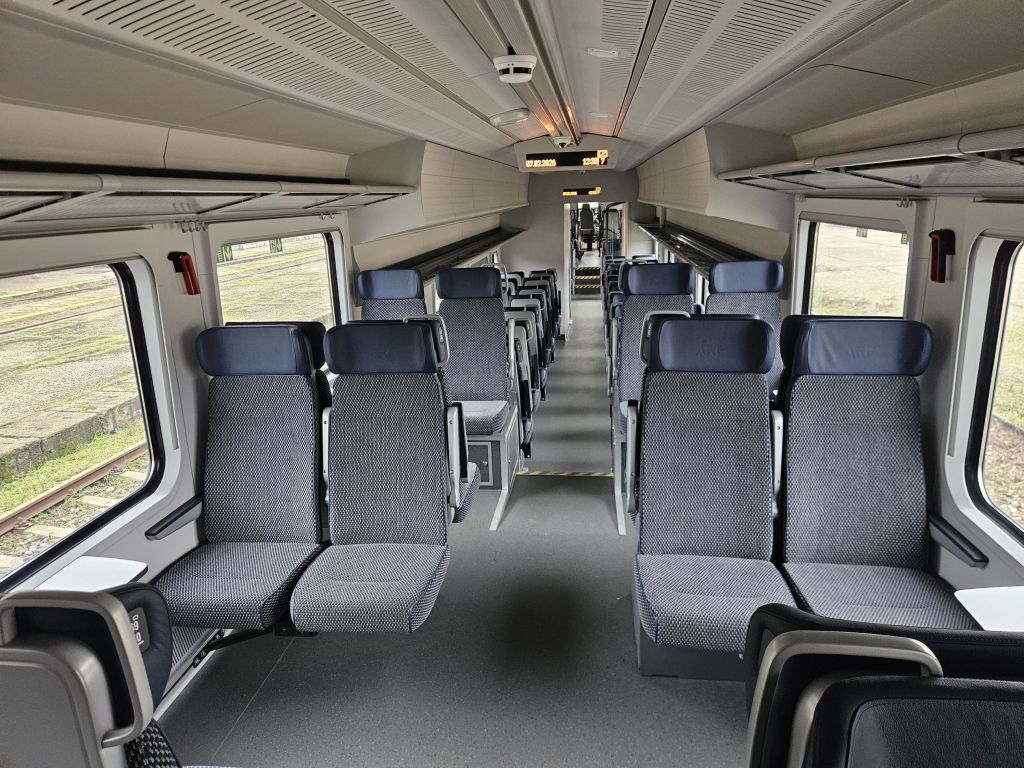
Between Caransebeș and Arad, the construction sites started more recently, and on the three sections, the physical stage of the works is between 7% and 27%. For two of these sections, the completion date is June 2026, and for Lugoj – Caransebeș, July 2027.
PNRR construction sites in danger of losing money
On the construction sites between Cluj and Oradea, two sections have reached a physical stage of the works of 59% (Aghireș – Poieni and Cluj – Agihreș). The CFR SA calendar indicates August 2026 for the partial completion of the works (stage 1).
Two other sections are at the beginning, with physical stage of 17% and 35% respectively. The deadline in the document for phase 1 is August 2026. Due to delays, the risk is that the works will not be ready on time, and Romania will practically lose European money.
Punctual works, of the Quick Wins type, to eliminate speed restrictions are carried out on a total of 500 km, on routes such as Bucharest – Craiova, Teiuș – Câmpia Turzii – Apahida and Dej – Apahida.
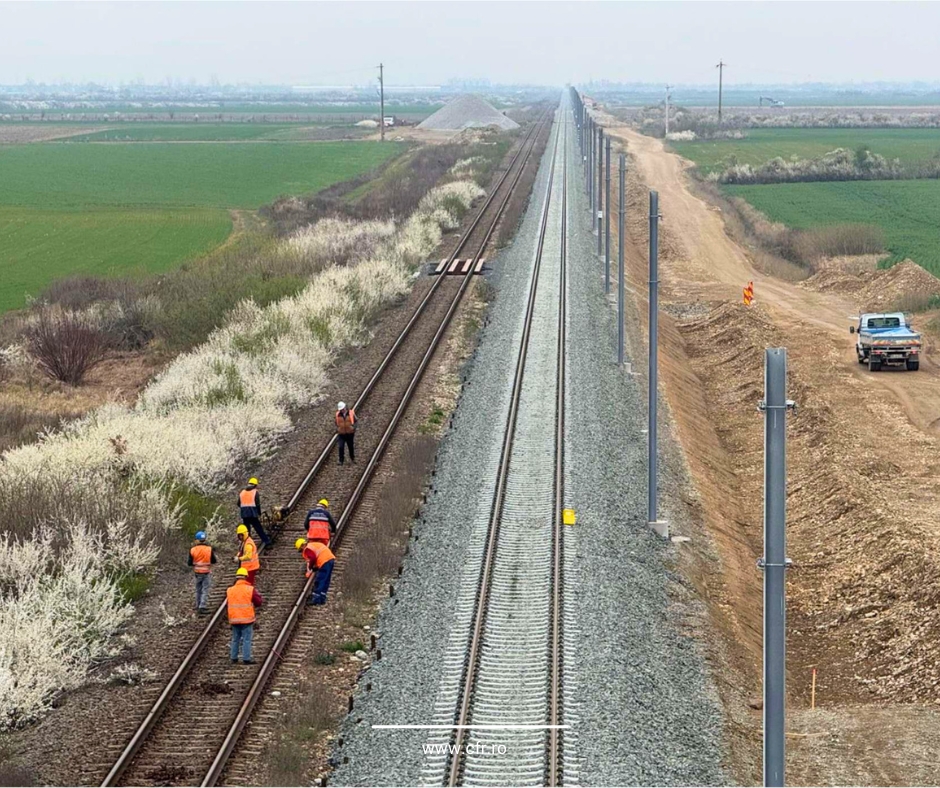
Outside the conventional network, extensive modernization work is being done for the cargo lines in the port of Constanța and there are also plans to repair the Palas tunnel.
There are plans, but not the necessary money
Beyond the construction sites in progress, there are also projects to repair the rest of highway 100 (Bucharest – Timișoara) and to increase the speed on highway 500 (toward Moldova).
“We have to ensure co-financing from the state budget for the projects that will be financed from European funds and at the moment we have projects that do not yet have secured financing and I give Craiova – Bucharest and Ploiești – Suceava as an example”, says Ionuț Săvoiu. “Therefore, on modernization we still do not have a clarity regarding the provision of all the necessary financing”.
There are tender procedures for Craiova – Bucharest and – if funding is found – the project shows that trains will be able to reach 200 km/h, and in the future the idea would be to modernize the Craiova – Calafat line as well. “At Calafat we have a railway bridge that opened a few years ago, but it is not used, because the Bucharest – Craiova – Calafat route is a long one,” the official added.
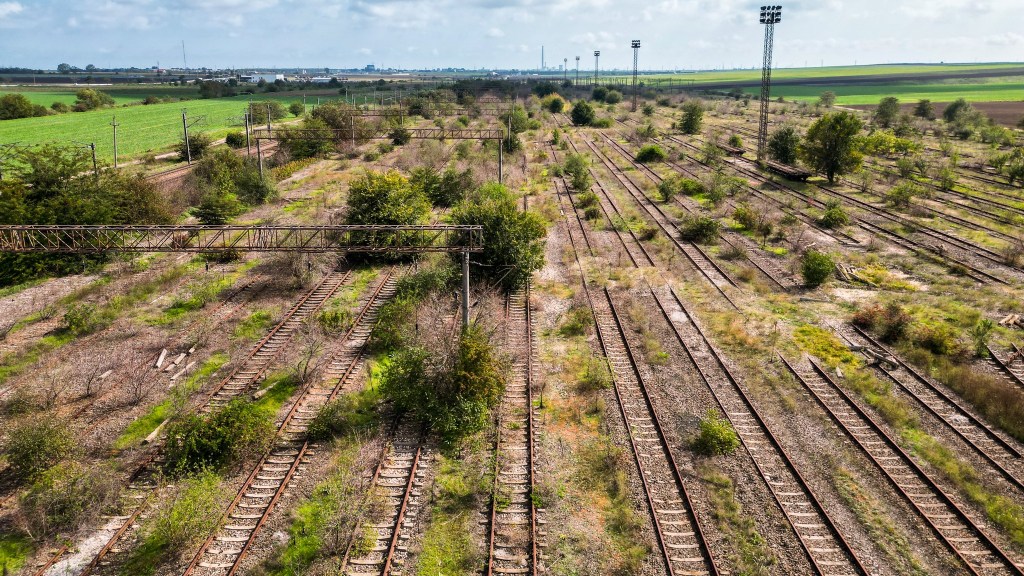
There is no direct train from Bucharest to Calafat, and in the best case, changing at Craiova, the 316 km are covered in over eight hours.
Where the “economy is dying” train does not reach
The Secretary of State also says that there is another problem in the railway sector, because there is no financing mechanism on the secondary lines, of short length. He says it is these lines, which make up 40% of the total 10,000km network, that worry him the most.
“On these non-interoperable routes we have residents, we have economic units that cannot do without the train. I give you an example of the factory in Fieni which was disconnected from the railway system for four months last year and was in danger of losing 3,000 jobs, because the train no longer reached there with materials”, says the state secretary.
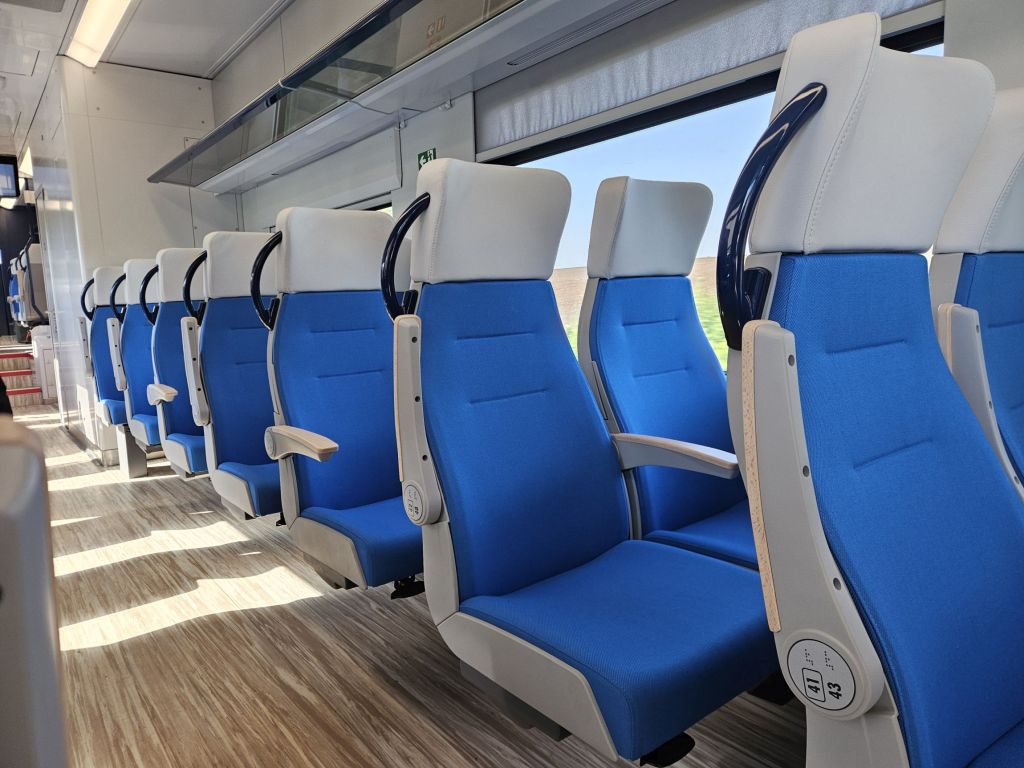
Non-interoperable lines are, as a rule, secondary lines, with low traffic, lines that are not found on important European corridors.
Săvoiu says that for the non-interoperable routes, Romania still does not have a sustainable financing mechanism, which is very serious, because “where the train does not arrive in safe and efficient conditions, the economy dies. Romania must also give an answer to this problem”.
What is the average speed of the fastest trains on the Romanian railways?
- M100 Bucharest – Timișoara, 49 km/h
- M200 Brașov – Sibiu – Curtici, 54 kmh
- M300 Bucharest – Cluj – Oradea, 55 km/h
- M400 Brașov – Satu Mare, 48 km/h
- M500 Bucharest – Suceava, 80 km/h
- M600 Tecuci – Iasi, 71 km/h
- M700 (combined with M500) Bucharest – Galați, 76 km/h
- M800 Bucharest – Constanta, 112 km/h