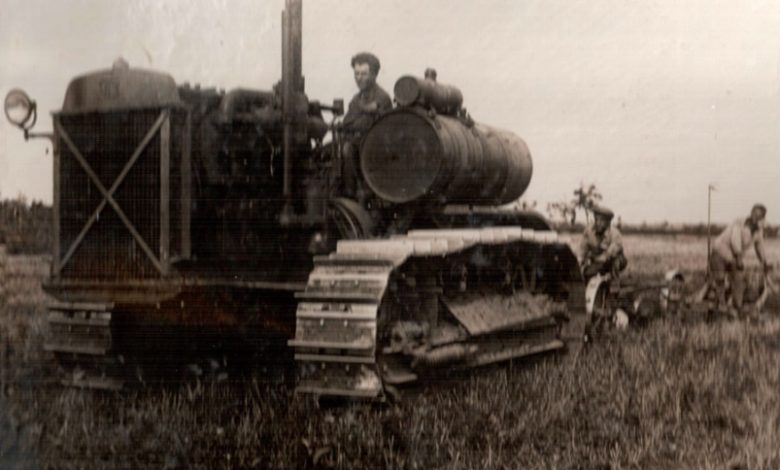
June 6, 1939
At a meeting of the Communists of the Stalin (now the Oktyabrsky) district, the results of the May Plenum of the Central Committee of the All -Union Communist Party of Bolsheviks were discussed, which approved the draft resolution of the Central Committee of the All -Union Communist Party of Bolsheviks and the Council of People's Commissars of the USSR “On measures to protect public lands from squandering”. The party organizations of collective farms were invited to mobilize the Communists, Komsomol members and all collective farmers to fight the perversions of the party’s policy in collective farm construction and violations of the charter of agricultural.

June 6, 1948
The newspaper “Birobidzhan Zvezda” (12+) on June 6, 1948, in a constant section “in our region”, spoke about the village of Yekaterino-Nikolsky of the Stalin (now October) district.
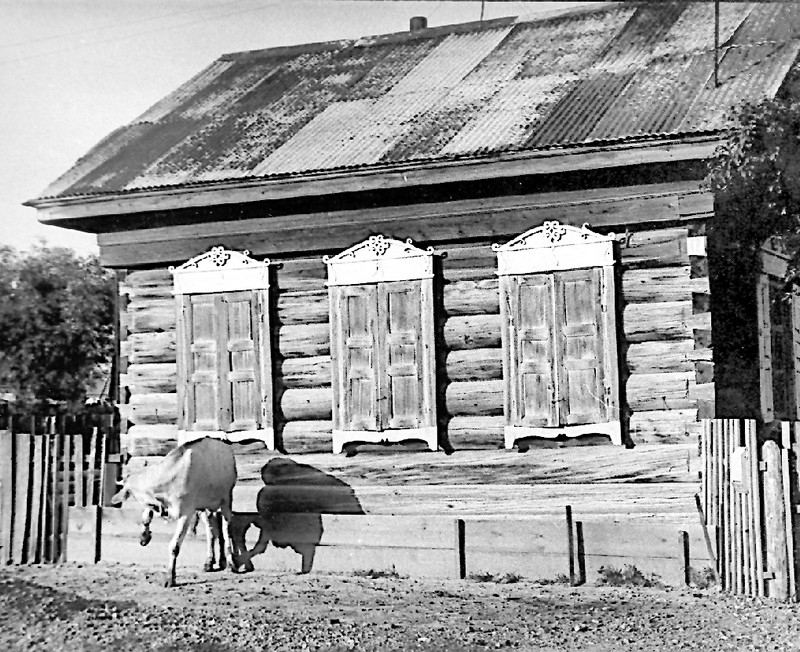
The huts of the first Cossacks in Yekaterino-Nikolsky. Photo: Photo: Gosarchive EAO
The oldest settlement of the region was formed in 1858 and got its name named and patronymic of the wife of Governor General of Eastern Siberia Muravyev-Amursky-Ekaterina Nikolaevna. Already at that time, Yekaterino-Nikolskoye was a large settlement. There was a village department, two bread shops, three shops, a drinking institution and two schools in which 20 students studied. There were two teachers in the large village, the clerk of the Stanichnaya Directorate, the priest. The village was inhabited by the Cossacks of the walking semi -battalion.
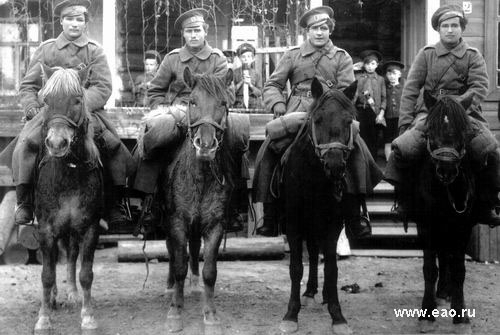
Cossacks of the Oktyabrsky district. Photo: Gosarchive EAO
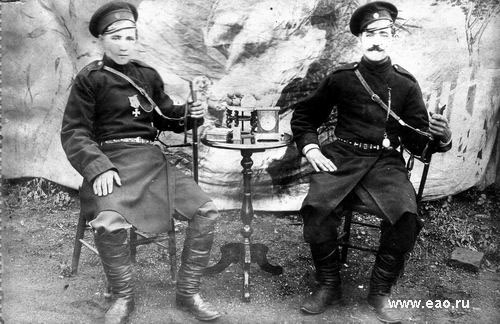
Cossacks of the Oktyabrsky district. Photo: Gosarchive EAO
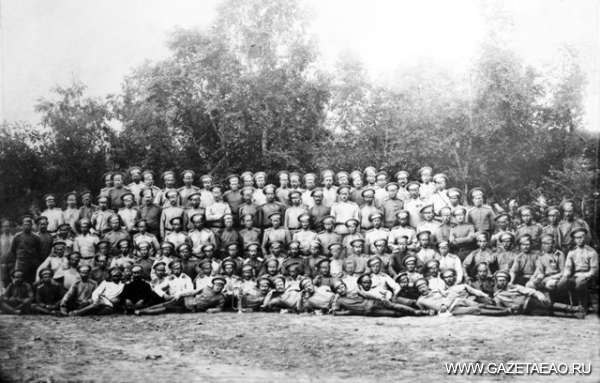
The priority of the Ekaterino-Nikolskaya Cossack hundred. Photo: Gosarchive EAO
The appearance of the village has changed unrecognizably. Here is the largest collective farm to them. Stalin, mail, phone, telegraph, radio, hospital, rural club and library. Mail to the village is delivered by a mailing plate. Steamboats regularly stick to the pier. There is a control and seed station, an zoo couple, a weather station.
The pride of Ekaterino-Silek is a complete secondary school, in which 336 students study.
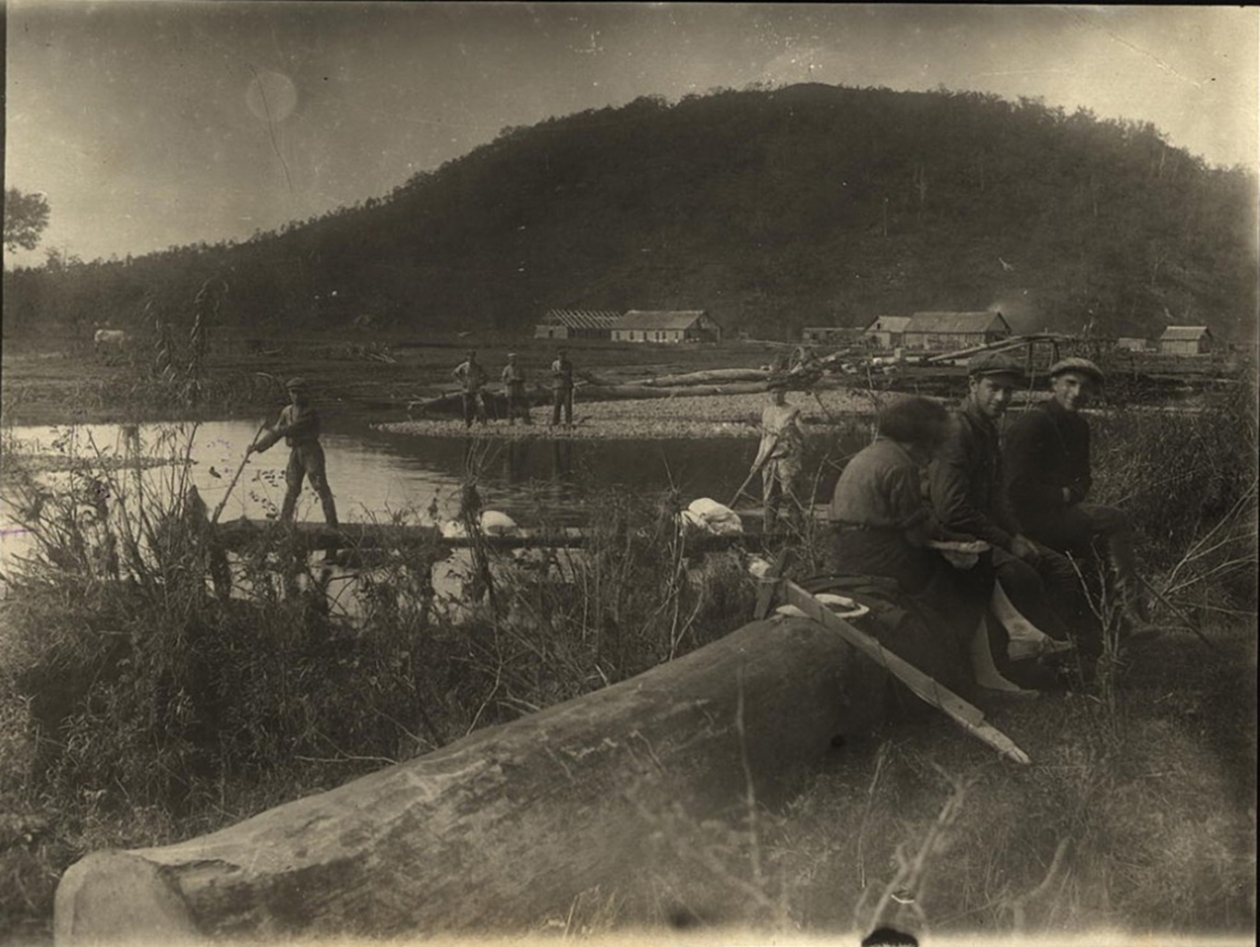
Forest alloy on the BIR. Photo: Gosarchive EAO
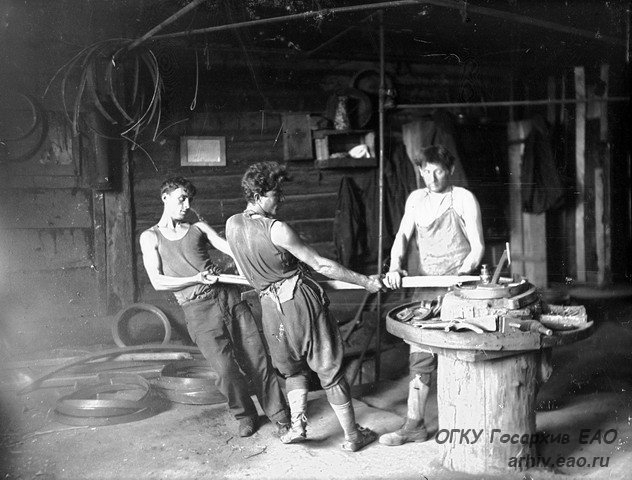
Workshop of bent furniture of the factory named after Dimitrova. 1936. Photo: Gosarchive EAO
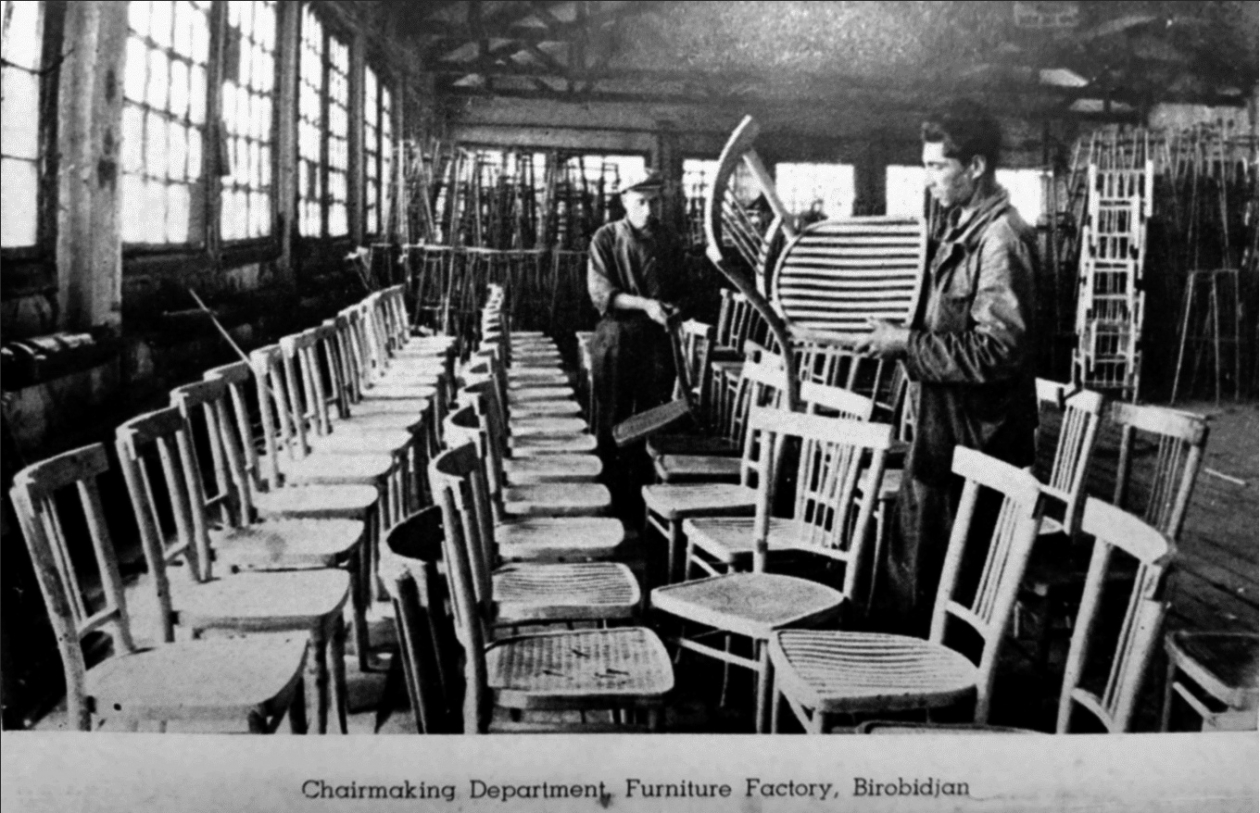
Furniture factory. Photo: Gosarchive EAO
In the same section they wrote that this year Birobidzhan furniture factory named after Dimitrova for the first time conducts logging For production needs on their own. The blanks take place on the 21st kilometer of the Birofeld highway. Here, the woodcock is cutting wood, which saves 40% of the funds that were previously spent when sawing forests in the “Detail” artel.
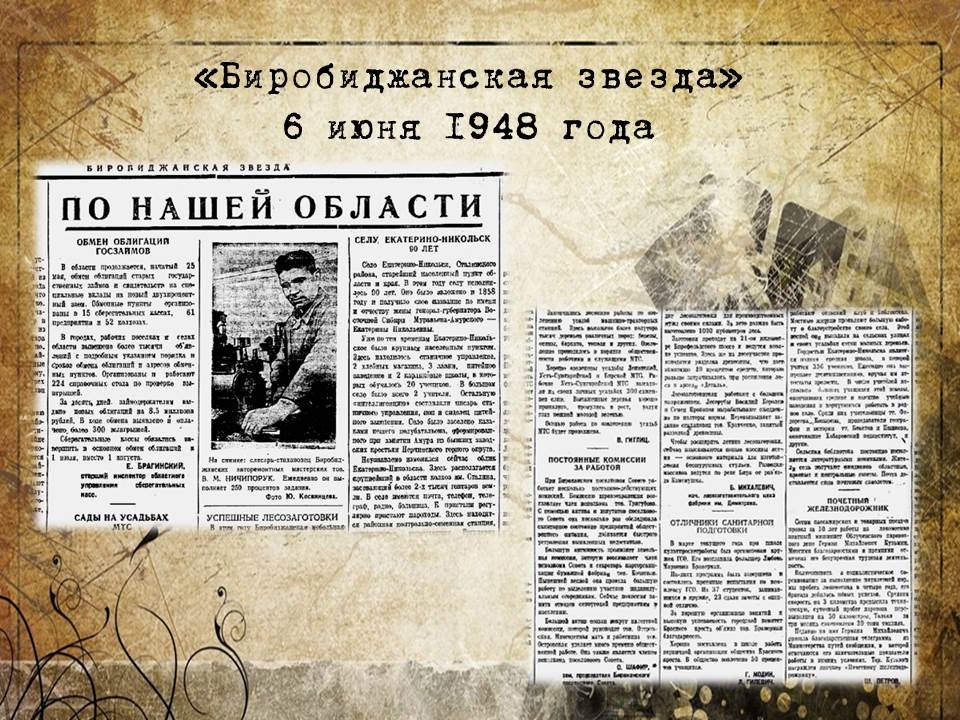
Cutting from the newspaper “Birobidzhan Star”. Photo: Photo: Regional Library
In March 1948, a GSO circle (ready for sanitary defense) was organized at the Culprop Excellency School. He was headed by a paramedic Lyubov Markovna Braverman. Of the 37 students involved in the circle, 23 passed the tests perfectly. For a good organization of classes and high academic performance, the City Committee of the Red Cross declared gratitude to Lyubov Markovna. The work of the primary organization of the Red Cross is perfect at the school. 50 percent of students are involved in the society.
June 6, 1962
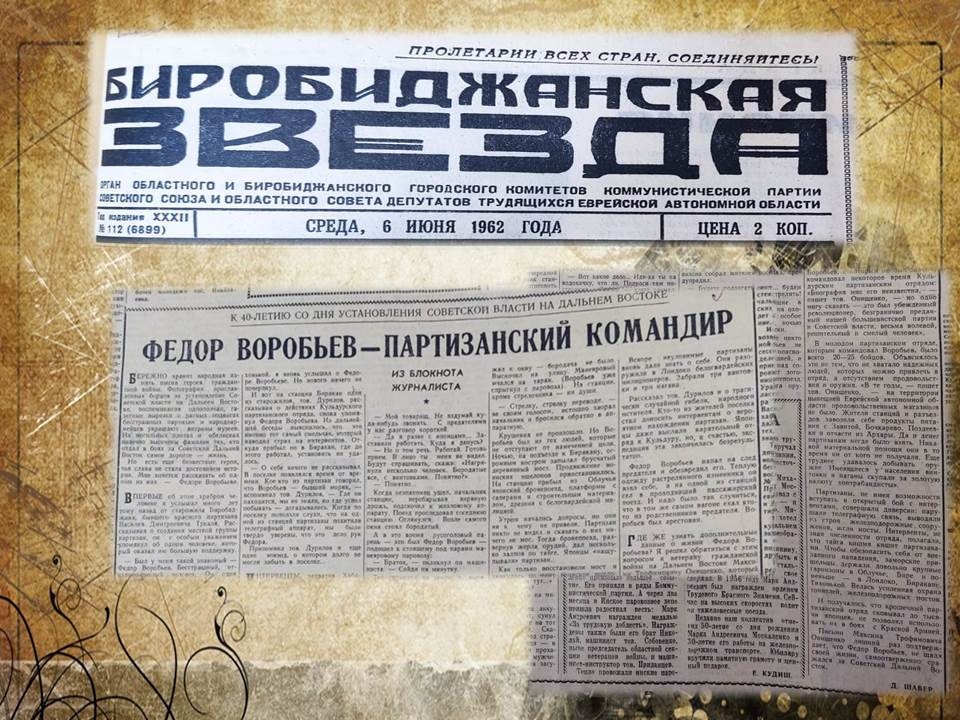
Cutting from the newspaper “Birobidzhan Star”. Photo: Photo: Regional Library
In the newspaper “Birobidzhan Star” dated June 6, 1962, an article by D. Shaver “Vorobyov – partisan commander” was printed. Which talked about the activities of Fedor Vorobyov, who during the Civil War in the Far East was the commander of the Kuldur partisan detachment. There were only 20-25 fighters in the detachment. Partisans, unable to enter into an open battle with the interventionists, committed sabotage. They violated the telegraph communication, disabled railway structures, burned bridges.
“The interventionists, not knowing the number of the detachment, believed that the taiga is teeming with partisans. To protect themselves from a sudden attack, the overseas aliens kept quite large garrisons in Obluchye, Bire and smaller – in Londoko, Birakan, quietly. There was an enhanced guards of tunnels, railway bridges. And it turned out that the crushed partisan partisan. The detachment fettered up to a thousand Japanese, did not allow them to use them in battles with the Red Army … “.
June 6, 1970
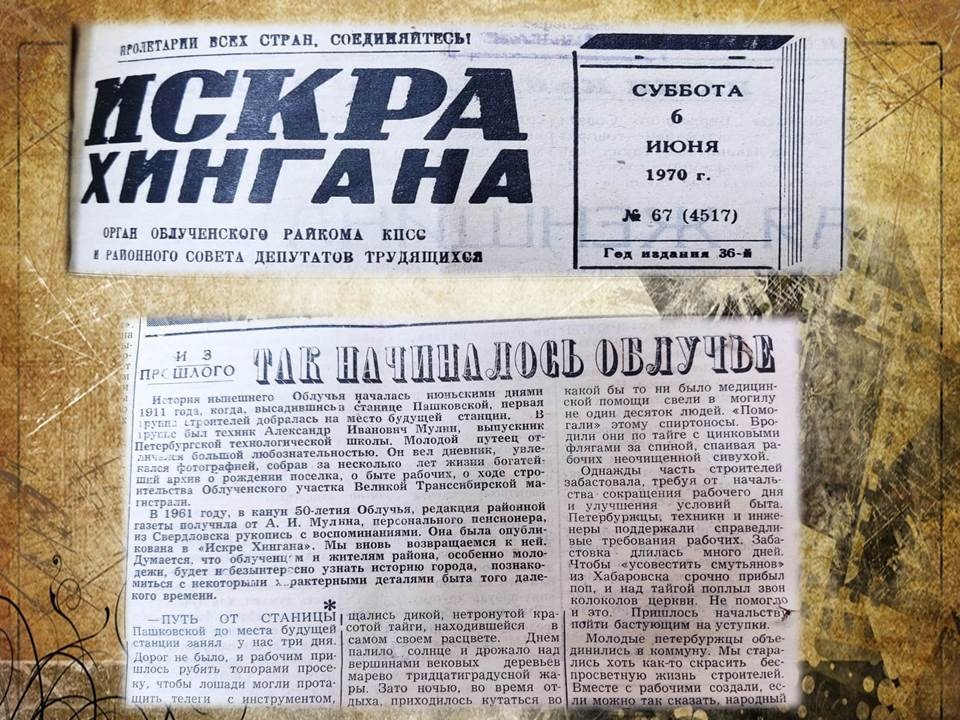
Cutting from the newspaper “Birobidzhan Star”. Photo: Photo: Regional Library
The newspaper of the Obluchensky district “Iskra Hingan” (12+) on June 6, 1970 introduced readers to the memories of the technician Alexander Ivanovich Mulin, a graduate of the St. Petersburg Technological School on the construction of the Obluchensky section of the Great Trans -Siberian Railway.
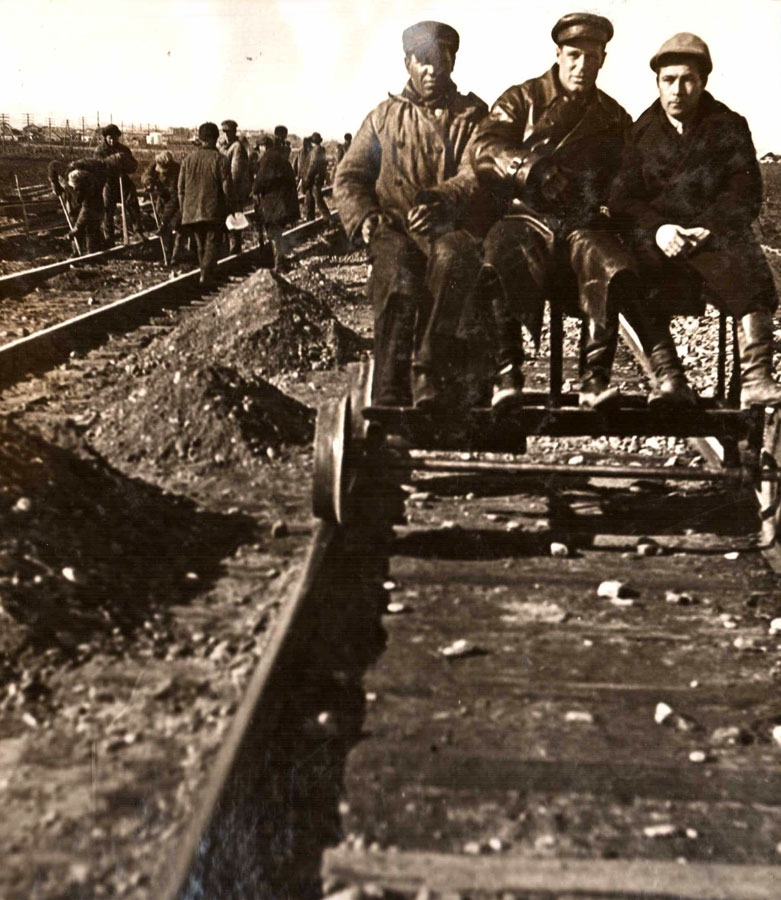
Ussuri railway. Photo: Photo: Gosarchive EAO
“1911. The path from the village of Pashkovskaya to the place of the future station took us for three days. There were no roads, and the workers had to chop out the axes of the clearing. There were many students of St. Petersburg University and the Technological School among us. Therefore, the first street built in Olachi was called Nevsky Prospekt. Young Petersburgers united in communal. Together with the workers, I remember, so to speak, the first performance was L. Andreev’s play “The Days of our life” (12+). So to speak, the publisher of the satirical leaf of the “bitch”.
June 6, 1975
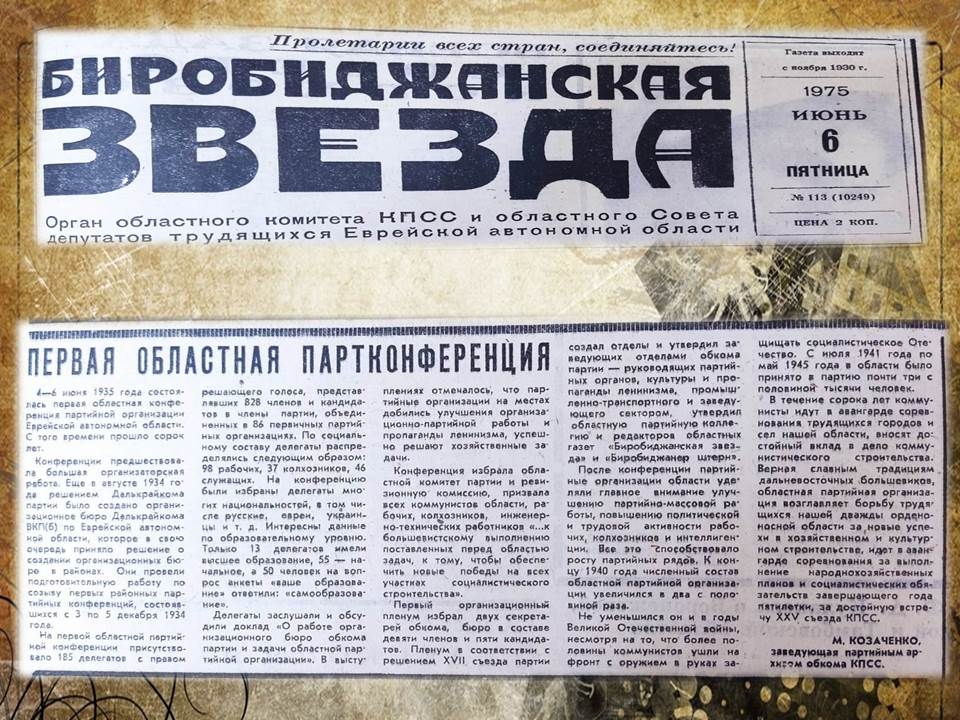
Cutting from the newspaper “Birobidzhan Star”. Photo: Photo: Regional Library
On June 6, 1975, the Birobidzhan Star newspaper on its pages said that the first regional conference of the party organization of the Jewish Autonomous Region was held from June 4 to 6, 1935. The conferences were preceded by a large organizational work. Back in August 1934, by the decision of the Dalcircase of the Party, the organizational bureau of the Dalkraikom of the CPSU (b) in the Jewish Autonomous Region was created.
At the First Regional Party Conference, there were 185 delegates with a decisive vote, representing 828 members and candidates members of the party united in 86 primary party organizations.
The conference elected the regional party committee and the audit commission, called on all the communists of the region, workers, collective farmers to fulfill the tasks assigned to the region.
The first organizational plenum elected two secretaries of the regional committee, a bureau consisting of nine members and five candidates. After the conference, party organizations of the region paid the main attention to improving party-mass work, increasing the political and labor activity of workers, collective farmers and intelligentsia.