A favorable resolution of the Supreme Administrative Court on inheritance and donation tax. Less formalities for taxpayers

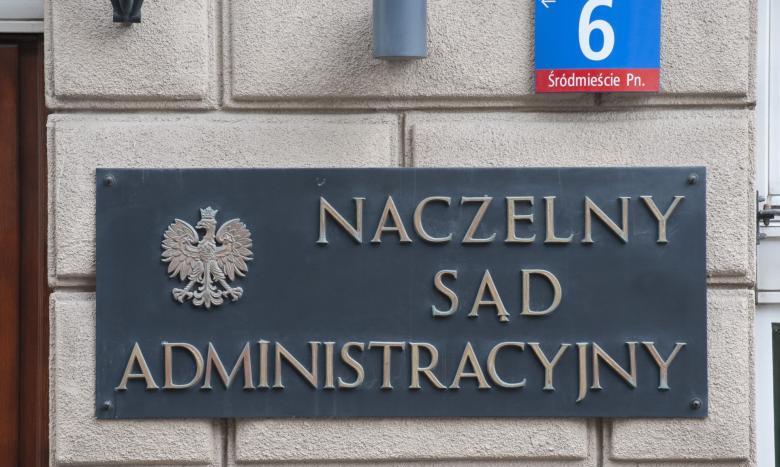
The Supreme Administrative Court facilitated the lives of heirs. If you have a final court decision confirming the acquisition of property, there is no need to submit an additional tax declaration. Importantly, the tax office will have a shorter, three -year date for issuing a tax decision instead of the previous five years. This change brings greater confidence and limits formalities for many taxpayers.
On May 26, 2025, the Supreme Administrative Court (Supreme Administrative Court) adopted a unanimous resolution, which can significantly facilitate the lives of taxpayers in matters of inheritance and donation tax (reference number III FPS 2/25). NSA said that In a situation where the tax obligation arises on the basis of a court decision regarding the acquisition of an inheritance, there is no obligation to submit a tax return by the heir. This is an important change, which also affects the limitation period for issuing a tax decision.
Acquisition of inheritance with inventory
The basis of the resolution was an individual case in which in October 2018 the District Court stated that the son acquired the inheritance from his father with the benefit of inventory. Information about this was forwarded to the Tax Officewho called the taxpayer to submit a tax declaration (SD-3 form). The authority issued a tax decision in January 2023, but the taxpayer appealed, indicating that the decision was issued after the expiry of the three -year limitation period.
The second instance authority maintained a decisive decision for the taxpayer, but the Provincial Administrative Court (WSA) in Łódź repealed her. The cassation complaint was lodged by the Director of the Tax Administration Chamber, which ultimately led to the decision by the Supreme Administrative Court.
The dispute has lasted for years
The case went to the Supreme Administrative Court after many years of disputes and contradictory interpretations of courts and tax authorities. In the analyzed case, the heir was summoned to submit a tax return and tax was imposed on him. The taxpayer questioned the decision, indicating that it was issued after the 3-year date.
Different courts and organs presented different positions-from the need to make a declaration and a 5-year limitation period, to acknowledging that a court decision is sufficient as a notification. The Supreme Administrative Court finally followed the more favorable jurisprudence for taxpayers.
Finally, in March 2025, the Supreme Administrative Court considered this case and indicated that there was a serious legal issue: whether the creation of a tax obligation actually imposes an obligation to submit a tax return and whether the lack of this testimony entitles the authority to extend the limitation period to 5 years.
What is changing?
Until now, the law has applied the obligation to submit a tax return (SD-3 form) in the event of acquisition of property by inheritance. The Supreme Administrative Court emphasized that the court's decision confirming the acquisition of an inheritance replaces this obligation, and the lack of testimony does not automatically extend the limitation period to 5 years. Instead, the tax decision should be delivered within 3 years of the end of the year in which the tax obligation arose.
The NSA, composed of seven judges, also drew attention to the need for clear and transparent editing of tax regulations. The current wording of art. 6 para. 4 of the Act on inheritance and donation tax in connection with other provisions, such as Article 17a paragraph 1 of the Inheritance and Donation Act, should not result in the imposition of an unintentional obligation to re -submit a tax return. Thus, the court shared the position of the Ombudsman, who also opposed such extended obligation.
Ombudsman on the side of taxpayers
It is worth noting that in practice, three divergent approaches of administrative courts are distinguished in this matter:
- A beneficial line for taxpayers – The renewal of the tax obligation for the acquisition of the inheritance does not require re -submitting, and the deadline for issuing a decision is 3 years.
- The position of tax authorities – The taxpayer must submit a tax return, and failure to submit it results in the possibility of issuing a decision up to 5 years from the tax obligation.
- Mixed approach – If the authority has the right to issue a decision on the basis of the original tax obligation, it does not have to take into account the emergence of the re -renewed (renovated) obligation. Therefore, the limitation period is 5 years.
The Ombudsman emphasized that A favorable interpretation for the taxpayer should be used. He drew attention to the ambiguities in the regulations and the need to clearly determine the taxpayer's obligations. According to him, if the taxpayer already has a final decision confirming the acquisition of an inheritance, he should not be forced to re -submit a tax return, which could unnecessarily extend the time of legal uncertainty.
In addition, the spokesman indicated that the tax authorities have various sources of information (e.g. courts, bailiffs, notaries), which allow them to determine the tax obligation without having to force the taxpayer to make further formalities.
What does this mean for taxpayers?
The Supreme Administrative Court's decision is a signal that heirs do not have to be afraid of excessive formalities related to inheritance and donation tax, if they have already received a final court decision confirming the acquisition of property. At the same time, the tax authorities will be 3 years from the end of the year in which the tax obligation arose, to issue a decision determining the tax. This is a significant limitation on the current 5-year date that could have been giving birth to legal uncertainty.
When the death of a spouse is just the beginning of problems. Guide to legal and financial issues