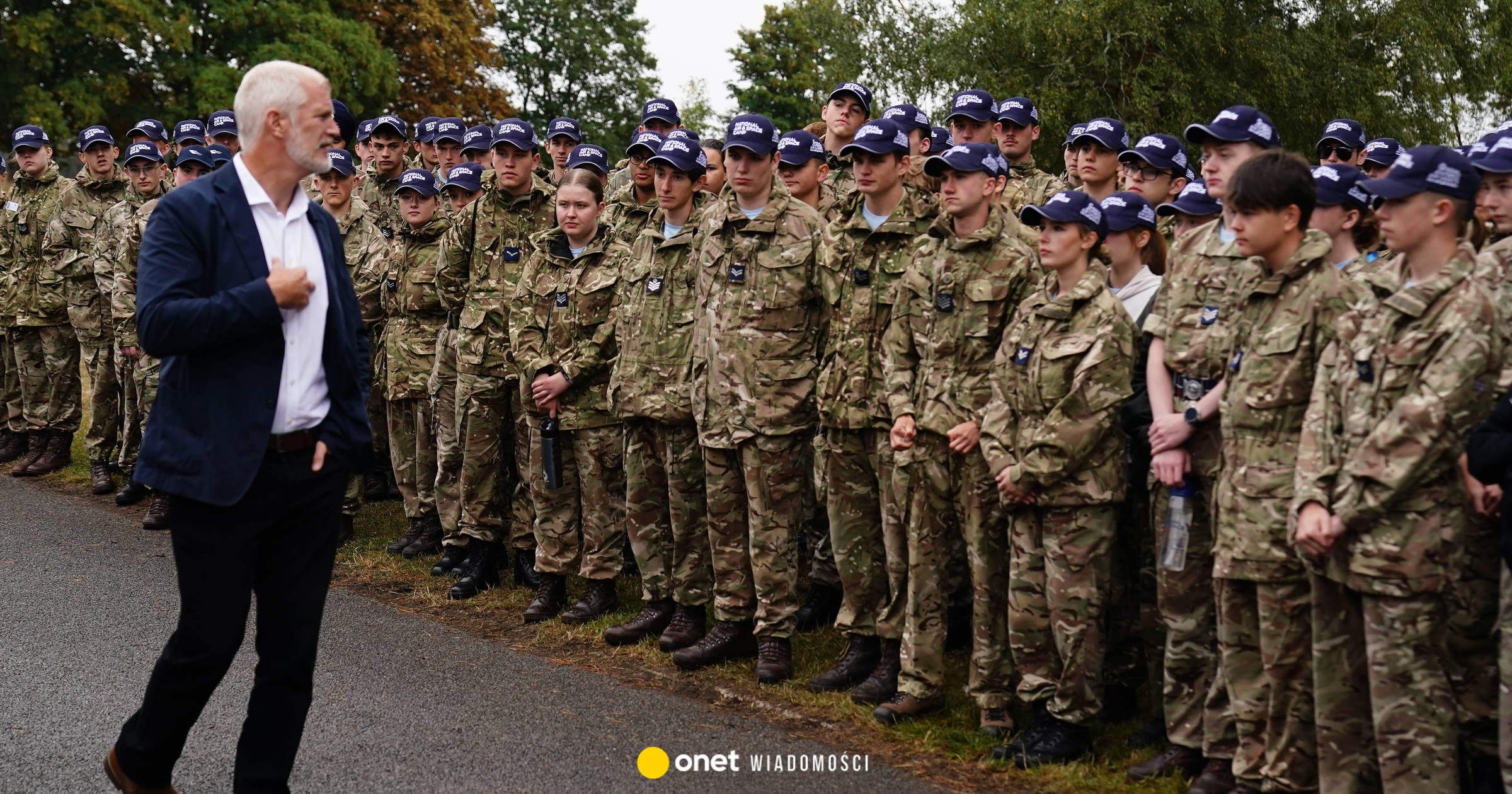
Trump will not give way to customs. “He treats it as a challenge for his masculinity”

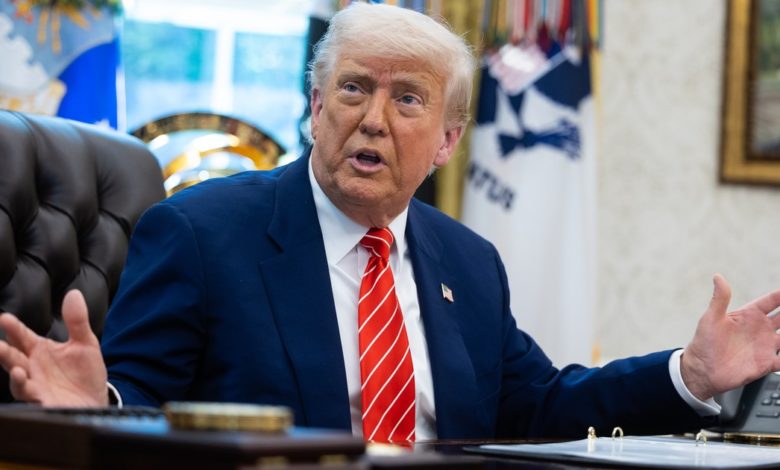
Despite the threat to the central element of his economic program, Trump does not stop in efforts to impose high duties at all costs and show those who question his strength and believe that “cuttings”, that he will not change their minds. He and the officials of his administration claim that negotiations with other countries will continue, emphasize that they will win the current customs battle in court, and even prepare emergency strategies in the event that it did not happen.
Trump's determination to act quickly, can paradoxically slow down the implementation of his duties system. It also threatens to lose credibility among enterprises where he counts on investment in the United States, and world leaders, whose support he needs to negotiate commercial contracts.
Few, however, expect a change in the position known from the president's tenacity or any doubts after the Wednesday ruling of the American Court of International Trade, which briefly stopped most of the duties.
– I don't think it stops the administration in any way. The president will try to use his duties in all possible ways – said Marc Short, who was the Legislative Director of Trump and the Chief of Staff of Vice President Mike Pence during his first term. – The president is not a person who accepts failure. He certainly did not do it in 2020. It is not that due to an unfavorable court decision, he intends to withdraw from it – he added.
Trump and his closest colleagues perceive the pace at which the president introduces not only [nową] commercial policy, but your entire program, as an advantage, not a defect. Trade advisor Peter Navarro, who cooperates with Trump from the first term, often calls this pace “sometimes Trump”, and others, high -ranking white house, often attribute any inconsistency or variability in the president's approach to shaping his negotiating sense policy.
“We have to act quickly,” Trump told journalists in the oval office on Friday afternoon. “We must be fast and clever.”
Trump may be particularly interested in overthrowing the view that it is weak, after the term Taco, or “Trump Always Chickens Out” (Trump is always cowards), was anonymously admitted to Trump from Trump's allies from outside the White House, an anonymously admittedly adopted among Wall Street traders.
“I don't think Trump can withdraw now, mainly because of this Taco motif,” he said. “He is clearly very annoyed and treats it as a challenge for his masculinity,” he added.
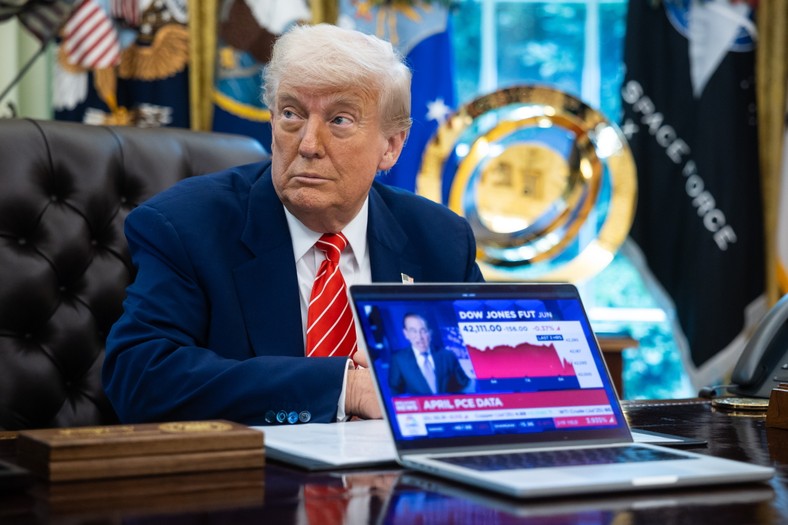
US President Donald Trump while watching news about the stock exchange at a press conference in an oval office at the White House in Washington, DC, USA, May 30, 2025.
Or step back
European leaders are still irritated by the inconsistent US approach to trade, which can be a preview of what Trump can meet during the G7 summit next month in Canada, where he will arrive with a slightly less decisive negotiating position.
However, the president shows no signs that he intends to withdraw from duties, which he often calls “the most beautiful word” in English.
In the west wing of the White House, advisers underestimated legal effects as a small obstacle, and not a serious threat to commercial policy, which is becoming an increasingly central element of the presidential heritage. And although they were outraged by the conversations focused on Taco, it was not expected that Trump would leave his maximalist trade policy.
– Since the 1980s, he has been consistent in terms of customs and trade – said the White House official anonymously. He is not firm in this matter because someone has created a meme about Taco, which became a viral – he added.
Emergency plan
Administration officials prepare emergency plans in the event that a wide set of duties imposed on US trade partners has been suspended again by the court, as expected by trade lawyers and other people from the administration surroundings, when the Court of Appeal again considers the case in June.
According to two informants acquainted with discussions on the trade strategy of administration, one of these plans is a mechanism that allows you to quickly impose duties without the consent of a congress or a more troublesome process of gathering evidence and review. This strategy, one of several considered, would allow the president to replace the existing 10 % Customs duties imposed on all countries with fees of up to 15 %, but only for six months. After this period, Trump would need the consent of the Congress to extend it.
“It is important to understand that the President's Trade Team has been thinking about these legal tools for years. And there are many people on television and the Internet who have been thinking about it for about six minutes,” said US commercial representative Jamieson Greer during an interview at CNBC on Friday morning. “So, of course, these are the issues that we consider and discuss for a long time,” he added.
However, the so -called duties of Section 122. – named after a part of the trade act, which defines them – have never been checked in court, which means that the administration may face obstacles again. To quickly implement the so -called duties of the Liberation Day, the White House referred to the extraordinary rights contained in the federal law known as Ieite, which, according to the federal court, seems to go beyond his legal rights.
– Regardless of whether the actions would be taken on the basis of IEEPA or other rights, the president clearly made it clear that customs are the central element of his economic program and intends to use the impact they exert to achieve better results for the United States – said Everett Eissenstat, who was the deputy director of the National Economic Council and was a key advisor to trade in the first term of trade in the first term Trump. “Regardless of whether this tool is suitable or any other, the president will continue his actions,” he added.
Allies fears
However, even Trump's allies are afraid that people in the White House do not do enough to advise the president the best solutions, succumbing to his desire to act quickly without presenting him a full set of lasting strategies.
– Regardless of whether it is supported by duties or not, it is quite obvious that the president does not have unilateral permissions to raise taxes – said Stephen Moore, an external economic adviser to Trump, who has long been skeptical about the independent approach of administration to trade. “It is quite obvious that at some point Congress will have to vote on a customs policy,” he added.
While advisers are thinking about strategies that would allow them to survive the hardships of ongoing legal challenges, Trump focused on demonstrating determination.
After a long entry in social media on Thursday, May 29 in the evening, in which he sharply criticized the International Commercial Court and the ruling, which in his opinion “will completely destroy the president's power”, Trump continued to publish entries on Friday morning, directing severe criticism at the President of China XI Jinping.
Claiming that a drastic reduction of 145 % Ceals imposed on Beijing were aimed at saving China from a “serious economic threat”, Trump also stated that China “had completely violated the US agreement.” Greer attributed the frustration of the President to the Chinese “delaying the implementation” of an agreement negotiated at the beginning of this month.
Perhaps the most important sign of the president's defensive attitude towards the criticism of Wall Street was the way to start a long, free press conference in the oval office on Friday, May 30 in the afternoon. Trump ordered the adviser to place an iPad on the presidential desk, from which he recreated a fragment of Rick Santelli's statement from CNBC – whose Tyrada from 2009 gave rise to the Tea Party movement – praising his economic achievements.
While playing the clip, Trump raised his eyebrows and nodded to journalists and advisers facing him. “Not bad, right?” Trump said after the clip, and the outgoing adviser Elon Musk begged everyone present for applause.