The disturbing secrets of saline in Romania: “Here are beings that do not resemble people at all”

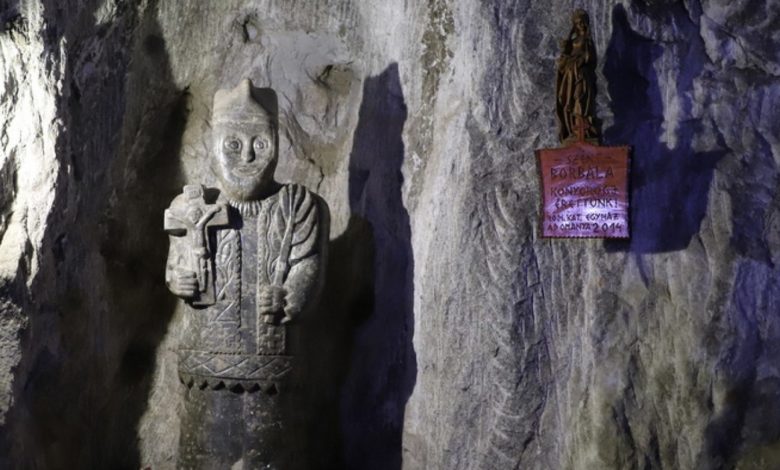
Becoming from the second part of the 20th century tourist attractions, some saline in Romania hide disturbing stories. There have been places for long, prisoners and convicts to death for a long time, who frightened those who came to explore them.
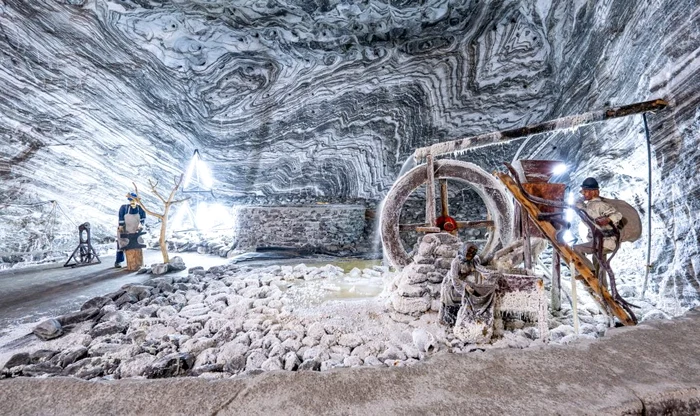
Salina Ocnele Mari. Photo: salrom.ro
Romania keeps some of the largest reserves of gem salt in Europe, and the tradition of its exploitation extends over 2,000 years. The salt deposits take place throughout the Carpathians, from Maramureș to Dobrogea.
The best known saline is in Turda, Praid, Târgu Ocna, Ocnele Mari, Ocna Sibiului and Slănic Prahova, exploited for centuries.
Some salt mines have been refurbished and transformed into popular tourist attractions, but also in treatment places. They are visited by tens of thousands annually, but some hide a disturbing past, less known to the general public.
In ancient times, on the current territory of Romania, it is assumed that the Romanians used slaves for the extraction of the salt, as they did in the Mines and Iron, the work reserved for slaves and prisoners being heavy and extremely dangerous.
From the Middle Ages until the 19th century, some Ocne in the Carpathians were places where many prisoners, servants and convicted, were considered among the most frightening places of detention.
Ocnele Mari, the place of the condemned
Paul de Aleppo, Archdioacon Syrian and Antiochian Orthodox Chronicler, traveled in the middle of the seventeenth century in the current lands of Romania and visited the famous Ocne from Transylvania and Muntenia. It was disturbed by the view from Ocnele Mari, considered at that time the largest ocna in the Romanian Country.
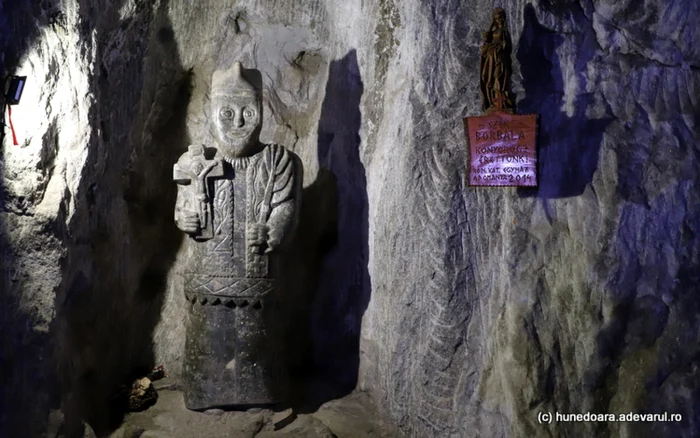
In the praid saline. Photo: Daniel Guță. TRUTH
“It is investigated by all the merchants in the Turkish country (which come) to buy salt and load it for Constantinople, because all the salt used in Rumelia and Constantinople is brought from this country.”noted the Syrian scholar.
Salt cutting was extremely difficult, added the clergy. The workers were digging wells for several tens of meters until they reached the salt layer.
“And all those who have been caught as thieves or who are under condemnation are sent in chains by the gentleman in this place, where they cut the salt during the night and then take it out during the day. Each piece is a large boulder, weighing between two and three hundred spares. These big boulders are raised by the long -rope.”this note.
In the time of the ruler Matei Basarab, the ocnele were considered places from which no prisoner had escape, added the chronicler.
“” Here I saw a view that breaks your heart, because when these bastards who are locked in the ocn could not receive in any other morning than on the day of the arrival of the Lord, between their ranks, some of the blood, with their eyes and the faces, Clean, clear as sugar ”reported Paul de Aleppo.
Turda, the salt chamber of medieval Transylvania
Salina Turda would have been exploited since the time of Roman occupation in Dacia, when the city bore the Latin name of Potaissa.
“The exploitation of salt in the Roman era is probable, but the certain evidence of this activity is lacking. The great medieval and modern exploitations (until the first third of the 20th century) and the collapse of the vaults in the old ocne, followed by the appearance of the salt lakes, to have destroyed the traces of ancient exploits” “is shown in the history of Salina Turda, published on the website of the tourist attraction.
In the Middle Ages, Salina Turda was, for a long time, the main source of salt supply in the region. According to the history of saline, the salt was exploited only by free people, employed as miners at the beginning of each year.
However, some medieval chroniclers contradict the image of an exploitation controlled by the local community. In the middle of the seventeenth century, Evliya Çelebi, the famous Ottoman traveler and scholar, visited the Ocns from Turda and was deeply impressed-and shocked-what he found.
“The city of Turda is under the control of the Ardealului Craiului, but it forms a special district, which produces income as the Egyptian treasury. From this city it goes to all the cities of serhat and other lands. Its inhabitants are all poor. Whoever saw the salt oc. The pit that reaches the depths of the earth, to the bottom of hell, and, forbidden to Allah, those in the people of Muhammad are placed in these ocne, if they reach bondage;
The Turda's Octena offered a dramatic view. In the deep galleries in the ground were the criminals and thieves, to cut the salt.
“They are a category of beings that do not resemble humans at all. They are bastards in the way of wild. They break the endless mountains with big hammers and remove the salt by making caves and pits.”reported the chronicler who traveled to Transylvania around 1660.
Ocnele of Moldova, medieval prisons
Evliya çelebi also arrived in Târgu Ocna, Moldova, where the conditions in which people were working was not milder. Among the Ocnași were numerous Ottoman prisoners forced to work until death.
“The whole mountain and rock here are salt, and the slaves, drilling the mountain, removed the salt from the rock. Here I found two hundred Mohammadan prisoners that I released, removing the caves. But many of them died when they came to light. From this ocna, as they are, I would say that they are huge wells and they look like hell ”, the scholar reported.