Isolation, fear and total disconnection of reality. What pushed Vladimir Putin in a logic of self -destruction – The Times analysis

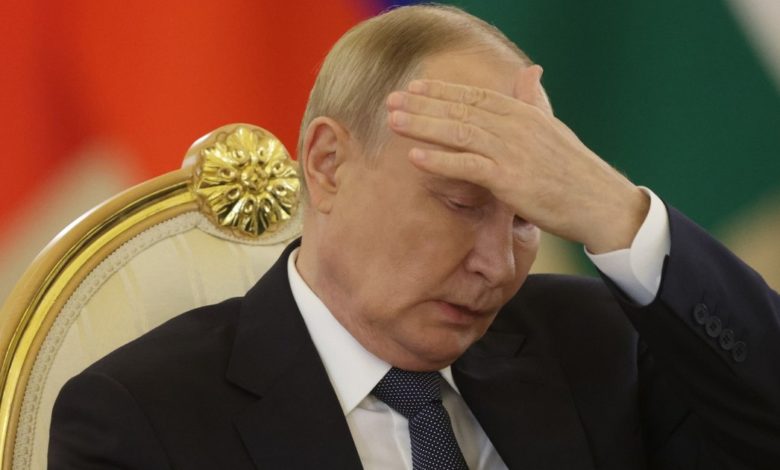
A dictator in isolation, prisoner of his own obsessions and increasingly broken by the reality of the outer world. This is how the sources and analysts quoted by The Times are described, in an investigation that pursues the gradual psychic degradation of the president of the Russian Federation, Vladimir Putin, beyond the cold facade of the Kremlin leader.
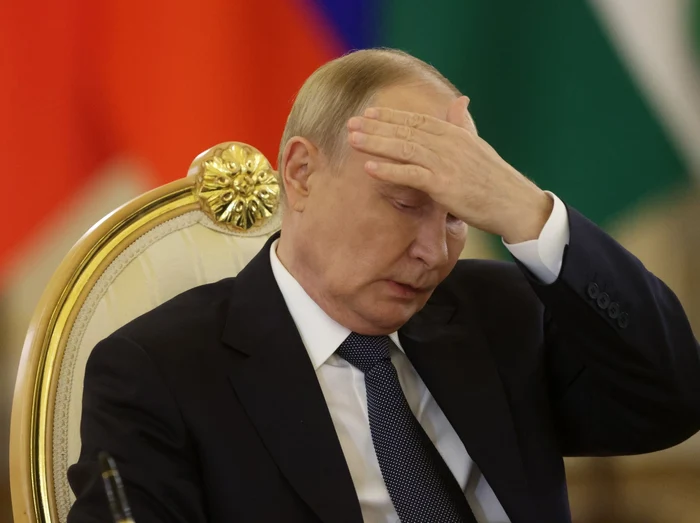
Russian President Vladimir Putin/Photo: Getty Images
The Covid-19 Pandemia would have accelerated a latent alienation process that today, say the specialists, translates into a leadership not on facts, but on ghosts.
When the leader disappears in the bunker: the beginning of the rupture
While most leaders of the world have chosen in the pandemic to maintain a minimal degree of public visibility, Vladimir Putin has almost completely disappeared from the media and institutional landscape. For almost two years, he withdrew to his residence at Novo-Ogartîovo, a fortified complex at the outskirts of Moscow, equipped with disinfecting tunnels and an almost total insulation system. The access to the Russian leader was conditioned by two -week quarantines, including for high -ranking officials and “veterans” invited to symbolic meetings.
Thus, his circle of communication has been drastically restricted. Basically, the only ones with whom he continued to interact constantly were a few close ones from the secret services area, led by the influential Nikolai Potișev. The result: a progressive distortion of reality and a continuous food of the security and paranoid vision.
Fiction takes the place of reason
“He reacts to the images of his own mind, not what is happening outside.”says Gleb Pavlovski, former Kremlin counselor. And the former editor of presidential speeches, Abbas Galliamov, warns that the loss of self -control in an absolutist leader is always a sign that the end will be a violent or disastrous one.
In fact, the first signs of behavioral change were noted in 2022 by the American senator (today's Secretary of State) Marco Rubio. Shortly after triggering the invasion in Ukraine, he said that “something is not right with little.” Today, what seemed like a warning becomes an almost medical evaluation.
Zelenski, Trump and Silence that feeds the aggression
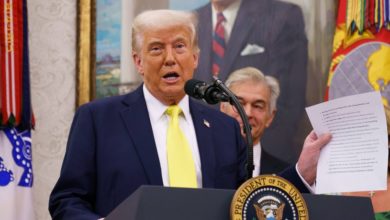
Recently, Ukrainian President Volodimir Zelenski criticized the lack of reaction of US President Donald Trump to the wave of air attacks launched by Russia. “His silence encourages Putin,” said the leader from Kiev. The white house replica was not expected, but it came in a confused note: Trump said that “Putin is crazy”, but also accused Zelenski of “creating problems.”
In Moscow, the Kremlin reacted through a duplicitous discourse. Dmitri Peskov spokesman praised “The efforts of the US President for resuming the dialogue”but he mourned the “emotional tensions” that complicate things. A formulation that shows, once again, how little the objective reality matters in a system where the leader's perception is the only source of decision.
Isolation as a system strategy and disease
This self-imposed isolation, transformed into a state policy, seems to have become the new norm around the Kremlin. In the absence of a democratic control, an open dialogue with society or even a real opposition, the power in Moscow functions as an echo. With an increasingly broken leader of the world, but convinced of the infallibility of one's own beliefs, the risks of escalation become imminent.
Instead of a state reason, Russia seems to follow a reason for fear today, fueled by a man who no longer sees the world, but only the shadows of a reality built in isolation. And the free world, no matter how much they try to keep calm, have to take this degradation seriously – not as a simple character trait, but as a strategic threat.