The specter of Russia's attack. This place can become a NATO command center

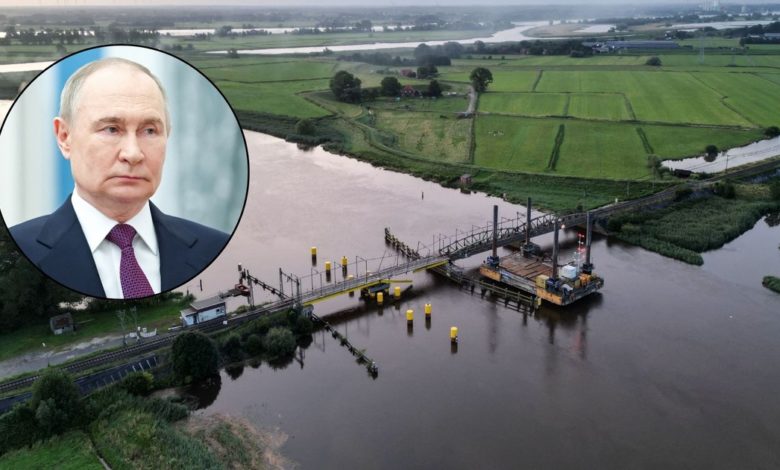
When “Rapida”, an 110-meter inland navigation ship, with good visibility and full moon, hit the railway bridge on the Hunte River near Elsflet in Lower Saxony in Lower Saxony, on the night of 25 February 25, 2024, the visible damage to the beak was small.
However, the effects of collision are serious: for people commuting to work in the Westermarsch poviat, which due to the closing of the bridge will be doomed to cars and buses for many weeks, but above all for ports in Brake and Nordenham, whose only railway connection was cut off. AND Also for Ukraine.
Quays in Brang and Nordenham, on the west bank of Weser, are Double important for a country mercilessly attacked by Russia. Brake serves as a substitute reloading point for Ukrainian cereal exports. In Nordenham, the part of the ammunition provided by the US is reloaded from ships to trains. In the following weeks, the gearboxes with ammunition for the Ukrainian army had to be redirected, which caused a waste of time, which most likely cost Ukraine a significant part of the defense force, as well as human life.
No wonder that the Huntebrucke bridge near Elsfleth is specially marked on a large map hanging on the wall of the Bundeswehr command center in Lower Saxony. The focal point of cooperation between the military and civil command, between the Bundeswehra and the Lower Saxony country, located in the powerful complex of brick barracks buildings in Hanover, supervises, among others over the fact that the second largest union country of Germany would be able to fill the entrusted to him as soon as possible The role of the NATO logistics center.
Escalation scenario
In the case of armed conflict with Russia, Dolna Saxony, as the head of the national command, Colonel Dirk Waldau explains, would become the “NATO soldiers' transfer center”. This region would not only have to accept the constant transport of soldiers, but also to help care for up to 1 thousand. wounded daily, which the Bundeswehra expect during possible escalation on the eastern Flanka NATO.
Added to this would be hundreds of thousands of refugees who would look for shelter from death and violence in the depths of the lower Saxony. This would be a gigantic task not only for the army, but also for the civil society of the union country.
According to the operational plan for Germany, which has over 1,000 pages and is covered by a secrecy clause, in the case of a crisis alliance in the North Sea ports in Lower Saxony and Bremen would land Hundreds of thousands of NATO soldiers. With Wilhelmshaven, Bremerhaven, Emden or Stade, these troops together with ton operating vehicles would be moved to the east.
In order for the operation to run smoothly, not only railway bridges would have to be passable, but also infrastructure Drogowa Dolna Saxony should be designed by then so that if necessary, you can move convoys consisting of 50 t weighing tanks if necessary.
At best, the main communication routes, but also smaller federal and national roads, would be available not only large, easily recognizable for the opponent. – The more options the army has, the better it feels – Yes, Col. Waldau describes the requirements of the Bundeswehr towards the infrastructure of the union country. In such a situation, a large space for military parking spaces is also needed, the so -called convoic support centers. Added to this are accommodation, hospitals, resistant to fuel delivery crises and a sufficient number of staff that could ensure the supply of passing departments, but also returning to soldiers and wounded.
Doubtful German readiness
All this would have to be planned, purchased, implemented and prepared during the next five yearsif the operational plan for Germany has a novel and the lower Saxony is to become an efficient NATO operating center. If the Federal Republic of Germany, as the defense minister Boris Pistorius postulated a year ago, wants to become “ready for war” by 2029 to deter the enemy.
So far in Lower Saxony There have not been too much progress yet in this regard. – According to my knowledge, no construction actions have yet been taken as part of the operational plan for Germany – the rapid assessment of the national commander sounds sharply. There is no doubt that the lower Saxony is currently ready to defend only to a very limited extent.
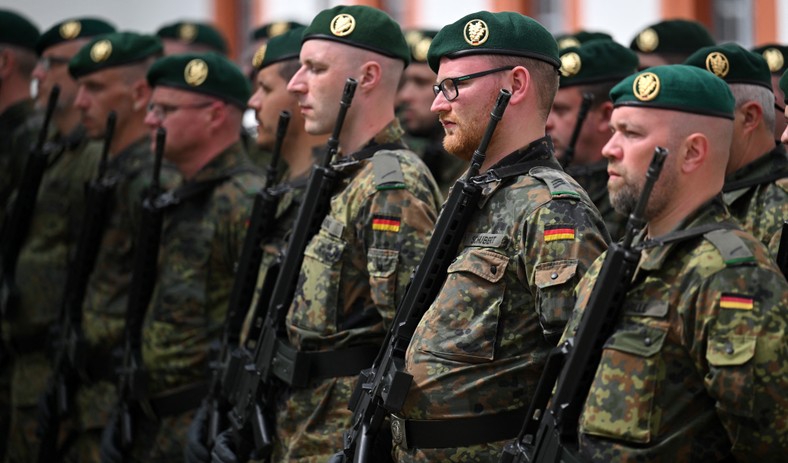
Bundeswehr soldiers
Nordenham and Brake were cut off from the railway network for two months after “Rapida” rammed the bridge in Elsflet. At the end of April, the line was opened again. Both ports were re -connected to the German railway network – but only until July 23 last year. That day, another inland boat, “Naima”, hit the repaired replacement bridge. The railway line has been closed again. At least in the National Command in Hanover, no one believes in the case. The Oldenburg prosecutor's office initiated an investigation into both collisions.
According to Bundeswehr and the Ministry of the Interior in Hanover, not only the transport roads of Lower Saxony are today the target of hybrid war, espionage and even sabotage, numerous attacks of drones and cyber attacks. Energy networks, data centers, power plants, telecommunications and transport companies, economic enterprises and industrial plants belong to this part of civil infrastructure, which is important for Germany's military defense and should be much better protected than it was before the start of the Russian war.
Questions (so far) without answer
Private operators would be responsible for appropriate protective measures. However, according to the opinion of the National Command and regional economic associations, they are not sufficiently prepared for hybrid attacks, as for the case of a crisis alliance. The same applies to aid organizations and 45 poviats and cities with poviat rights in this union country, which play a key role in the implementation of the tasks of population and rescue protection on site.
Joachim Schwind, managing director for public security in the Union of Lower Saxony poviats, sets a whole series of questionswhich arise in connection with the operational plan for Germany and the integration of military and civil defense at the level of municipalities necessary for its implementation.
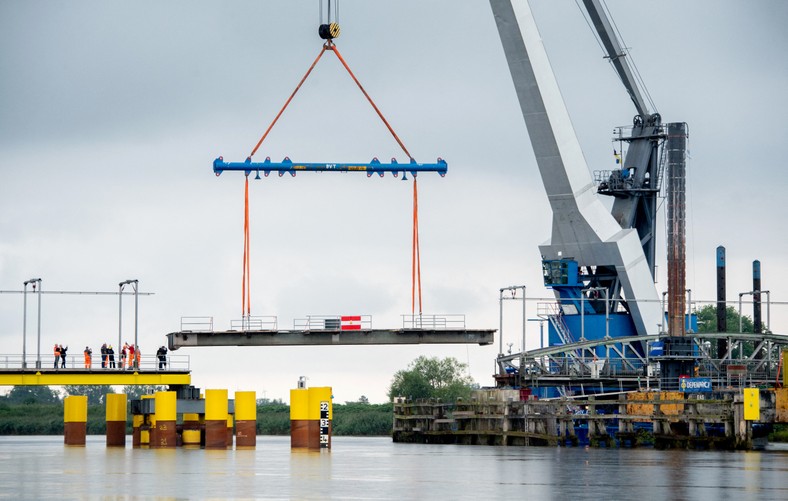
Works on a damaged section of the railway bridge on the Hunte River
– Which civil infrastructure is systemic significance and which is not? Who will receive fuel available in the first time? Police? Ambulance? Sanitary services? Where will civil assistance organizations take the staff necessary for their work if some of these people are appointed to service or already support the full -time Bundeswehra? Are poviats to organize all this themselves? – says.
According to Schwind, for the municipal authorities in Lower Saxony, all these questions have remained unanswered so far. Therefore, the Landkreistag position on the protection of population and rescue is as careful as the position of the local military command. Schwind clearly states: “We must plan better in the event of a crisis.”
“We must prepare for such a threat”
At least the new Prime Minister Olaf Lies reacted to pressure from municipalities, economy and Bundeswehr at the beginning of his term. In his government statement, the social democrat announced on Tuesday that he intends to initiate permanent “dialogue on the security policy of Lower Saxony”in which, in addition to the Bundeswehr and national administration, municipalities, economy and trade unions, assistance and security organizations and an employment agency are also to participate.
“Even if we all hope it will never happen again extreme situations On German land, we must prepare for such a threat in our country. There are countries that massively attack our infrastructure, but also our entire democracy, “he said in parliament.
At the end of August 2024, the ports in Nordenham and Brake were re -connected to the railway network thanks to the spare part to a temporary bridge damaged in July. This bridge is to be replaced by a new, more stable construction at the latest in 2028.
The prosecutor's office in Oldenburg erected the captain “Rapida” allegations deliberately causing the hazard of rail and sea traffic. The trial before the District Court in Brake will probably start this summer. According to prosecutors from Oldenburg, the investigation against the captain of “Naima”, which caused second damage to the bridge, was discontinued after paying a fine.