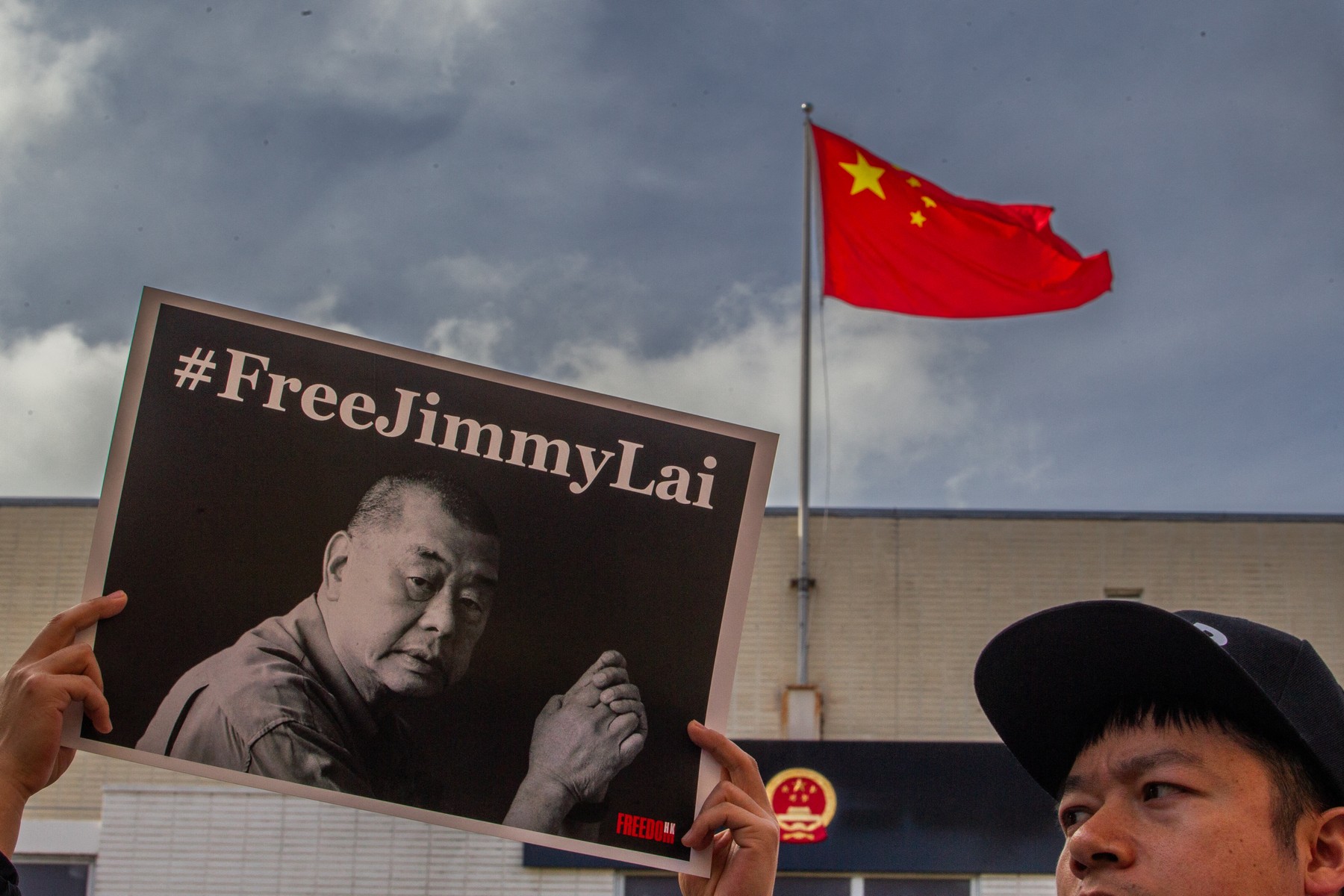
Countries that want to attract scientists fired by the Trump administration. How big is the “brain exodus” in the US

As the Trump administration has reduced billions of dollars with federal funds for scientific research, thousands of scientists in the US have lost their jobs or grants, and governments and universities around the world have seen an opportunity here, reports Associated Press, taken over by News.ro.
The “Canada Leads” program, launched in April, hopes to encourage the next generation of innovators, bringing biomedic researchers at the beginning of his career in the north of the border.
Aix-Marseille University in France launched the program “Safe Place for Science” (safe for science) in March, committing themselves to “receive” the US scientists who “feel threatened or prevented in their research.”
The Australian program “Global Talent Attraction Program”, announced in April, promises competitive salaries and relocation packages. “In response to what is happening in the US,” said Anna-Maria Arabia, the head of the Australian Academy of Sciences, “we see an unprecedented opportunity to attract some of the most intelligent minds.”
A system shaken by budget discounts
Since World War II, the United States have invested huge amounts in scientific research in independent universities and federal agents. This funding helped the United States to become the most important scientific power in the world and has led to the invention of mobile and internet phones, as well as new methods of treating cancer, heart disease and stroke, Holden Thorp, chief editor of Science magazine.
But today, this system is shaken. Ever since President Donald Trump has taken over in January, his administration has reported what he calls waste and inefficiency in federal science and operated significant discounts of personnel and financing granted to the National Foundation for Science, National Health Institutes, NASA and other agencies, as well as to the funds granted.
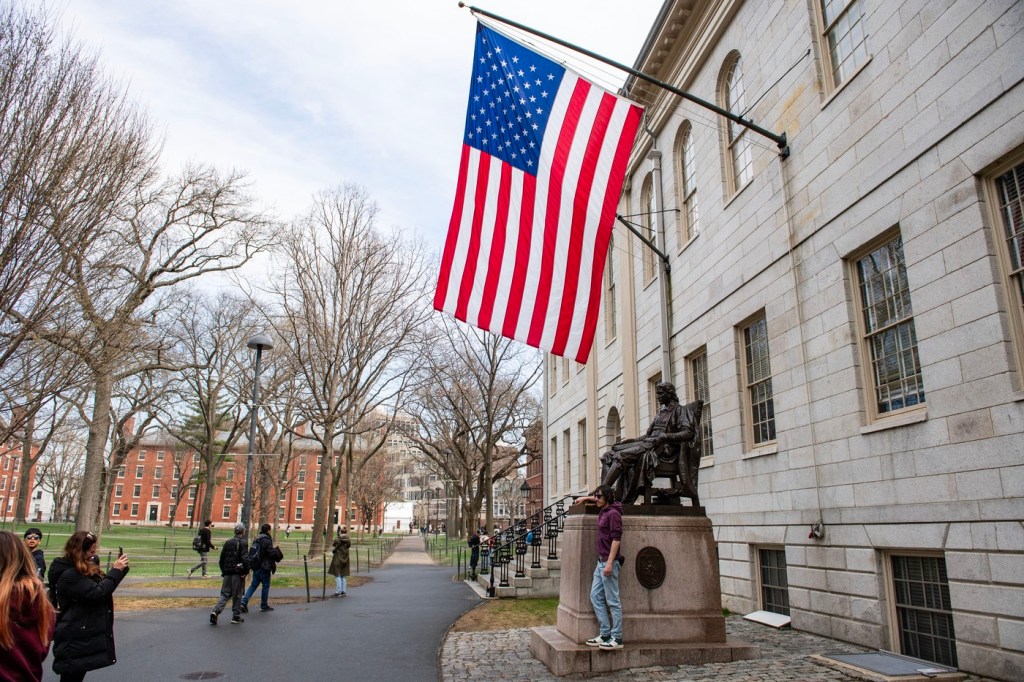 The Trump administration has completely forbade Harvard University to have foreign students. What happens to those who take their courses in the present
The draft budget of the White House for next year provides for the reduction of the NIH budget by about 40% and that of the National Science Foundation by 55%. “The Trump administration spends its first months reviewing the projects of the previous administration, identifying the waste and realizing the research expenses to suit the priorities of the American people and to continue our innovative domination,” said the White House spokesman, Kush Desai.
Already several universities have announced the freezing of employment, dismissing the staff or stopping the admission of new students in postgraduate studies. On Thursday, the Trump administration revoked the right of Harvard University to enroll international students, although a judge suspended this decision.
The research institutes from abroad follow with concern the collaborations that depend on the US colleagues, but they also see opportunities to attract talents. “There are threats to science … to the south of the border,” said Brad Wouters, at the University Health Network, the most important hospital and medical research center in Canada, which launched the recruitment campaign “Canada Leads”. “There is a whole talent tank, a whole generation that is affected by this moment.”
Invited to Europe
Universities around the world always try to recruit personally from other universities, as do technology companies and companies in other fields. What is unusual at the moment is that many global recruiters are targeting the researchers, promising something that seems to be threatened: academic freedom.
The President of the European Commission, Ursula von der Leyen, said this month that the European Union intends to “meet the freedom of scientific research in the law.” She spoke at the launch of the campaign “Choose Europe for Science” of the block, which was in preparation before the budget reductions of the Trump administration, but who sought to take advantage of the current moment.
Eric Berton, president of Aix-Marseille University, expressed a similar feeling after the launch of the “Safe Place Science” program (safe for science). “Our American colleagues in the field of research are not particularly interested in money,” he said about the applicants. “What they want above all is to be able to continue their research and to respect their academic freedom.”
The dimensions of the exodus are still uncertain
It is too early to say how many scientists will choose to leave the US. It will take months until universities analyze the requests and give financing, and the researchers will need even more time to change their lives
In addition, the American advance in research and development financing is enormous – and even significant discounts could stand on crucial programs. For decades, the United States has been the main world funder research and development, including government, university and private investments. In 2023, the country funded 29% of world research and development, according to the American Association for the Progress of Science.
However, some institutions from abroad signal a significant interest from US researchers. Almost half of the applications submitted to the “Safe Place For Science” program – 139 out of 300 – came from US scientists, including researchers in IA and astrophysicians.
The number of US candidates who applied at this year's recruitment round for the Institute of Genetics, Molecular and Cellular Biology in France was doubled compared to last year. At the Max Planck company in Germany, the Lise Meitner's Excellence program, intended for young research, has attracted three times more candidates from US researchers this year.
Recruitors working with companies and non-profit organizations say they notice a similar trend. However, there are practical obstacles to overcome for those who want to move to another continent, she said. These may include linguistic barriers, organizing the care of children or the elderly and the significant differences between the national pension or retirement programs.
Brandon Coventry has never thought that he would consider a scientific career outside the United States. But the discounts of federal funds and the uncertainty regarding the granting of new subsidies made him doubt. Although he hesitated to leave his family and friends, he has applied for university positions in Canada and France.
“I never wanted to leave the United States, but this is a serious option for me,” said Coventry, who is a postdoctoral researcher in the field of neural implants at the University of Wisconsin-Madison.
“The US has always been an example”
But it is not easy to give up a scientific career and move, let alone change your life. Marianna Zhang studied how children develop racial and gender stereotypes as a postdoctoral researcher at the University of New York, when the scholarship granted by the National Science Foundation was canceled. She said she felt that “America, as a country, was no longer interested in studying questions like mine.” However, she wasn't sure what she would do next. “It is not an easy solution, to run and to take refuge in another country,” she said.
The recruitment programs vary in ambition, from those trying to attract a dozen researchers to a single university to the continental initiative “choose Europe”. But it is not clear whether the total amount of financing and new positions offered could compensate for US losses.
Even if universities and institutes are thinking of recruiting US talents, fund reductions are more concerned with concern than with joy. “Science is a global activity,” said Patrick Cramer, director of Max Planck, stressing that data sets and discoveries are often shared between international collaborators.
One of the objectives of the recruitment campaigns is “to contribute to the prevention of losing talents for the global scientific community,” he said.
Researchers around the world will suffer if collaborations are interrupted and databases will be closed, scientists say. “The US has always been an example, both in the field of science and education,” said Patrick Schultz, president of the Institute of Genetics, Molecular and Cell Biology in France. Therefore, discounts and policies were “very worrying for us, because they were an example for the whole world.”