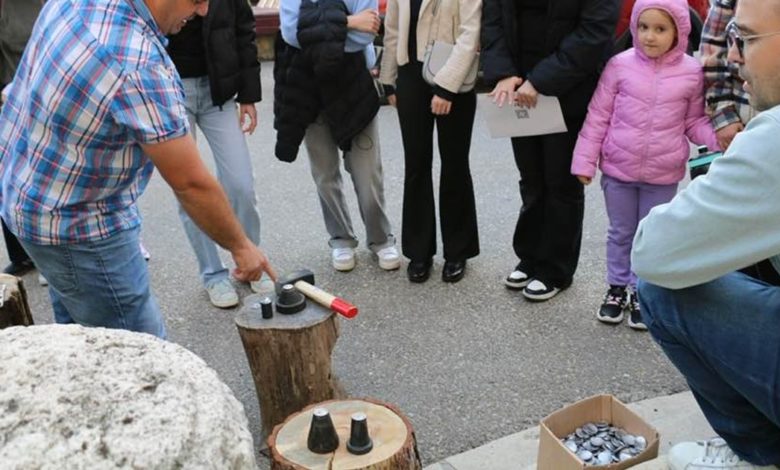
A museum in Oltenia gives visitors the opportunity to see how the coins were beaten in the past and even to try their powers to make replicas.
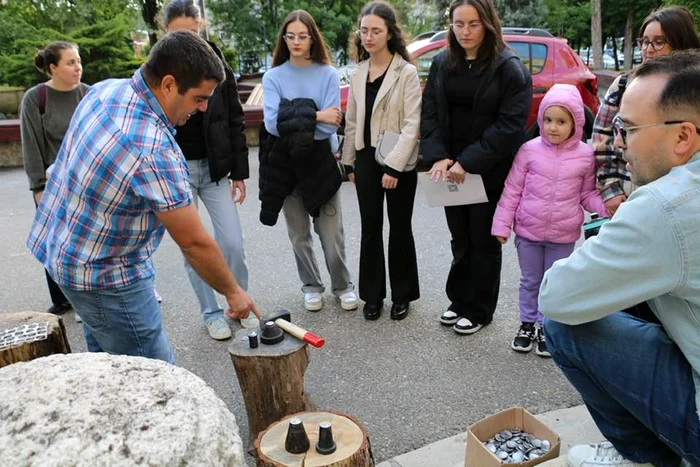
Workshop aroused photo visitors' interest: Olt County Museum
The Olt County Museum is the goal you visit and you can go home with replicas of some special coins. At the “Museum Night”, among the workshops open to the visitors was the one of beating. This workshop worked for the first time in 2024, in Romula-Fest, in the locality built over the ruins of the Roman Fortress, and since then there are requests, coming especially from the schools, the museographers reveal to the children the mysteries of the currency.
“We will have it again at Romula-Reșca, at the end of this month, and when we have scheduled events we do this workshop. I had workshops as many times as it was requested. I offered the coins for free to visitors ”, said the manager of the Olt County Museum, George Smarandache.
Although in the country there is still currency in other museums, in Oltenia the workshop of this type is the only one. Three valuable coins from the museum dowry, representative for the Oltenic institution, coins discovered over time, were chosen to make molds.
“There are three monetary stamps, or molds. One is made after a Celtic currency, from the 4th century BC. Hr., Discovered in Morunglav, in Olt County, the next one is Greek, Macedonia Prima, discovered in Radomirești, in Olt county, and then we have a pole after Roman currency, made during Trajan, after the conquest of Dacia. It was discovered in Enoșești, Piatra-Olt ”, explained the archaeologist Florin Ciulavu.
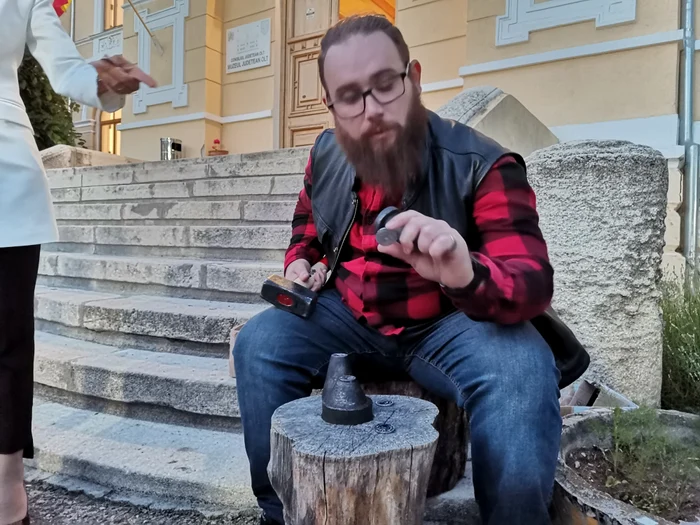
The tools used were reconstituted as close to the historical truth of photo: Alina Mitran
The Roman currency was traveling throughout the empire, the archaeologist added. The museographers have tried to reconstruct the entire process as faithfully as possible. “We tried to carry out the stamps and this beating activity as close to what was happening at that time. That is why we are talking about currency beating, because the currency was made with the sting and the hammer. From a single blow, both the obverse and the reverse of the currency must be printed on both sides ”, described the archaeologist how the process goes.
The children, most of them, have been limited to observe what is happening. The parents, on the other hand, tried their skill and power and actually beat coins. A gentleman who quickly learned how to execute the blow made “At least 100 coins, for all the children waiting”, Using lead monetary pills previously prepared, they revealed the representatives of the museum. Visitors also found out who had the right to beat currency, but also that for falsification, hard punishments were applied.
“Always falsified currency. The punishments were very harsh for the counterfeiters, therefore, in order to avoid falsification, those who made the monetary drawing thought certain safety elements, elements difficult to achieve, so that it would be difficult to reproduce by those who could have falsified ”, also stated the archaeologist Florin Ciulavu.
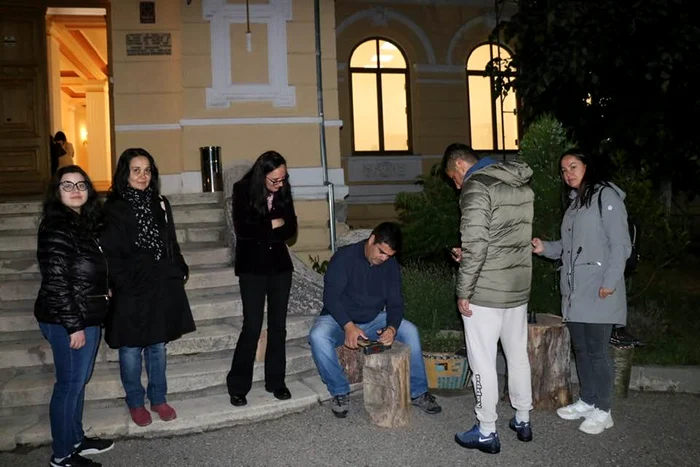
Beaten currency until late at night: Olt County Museum
The representatives of the Olt County Museum have been inspired for this activity at the initiatives of other museums. “We did not invent this job, but we tried to take good what we saw in other parts, to adapt to our museum and to do as well as possible ”said the archaeologist.
The Celtic currency, have found visitors, is very rare at national level. Such coins were made, with the tacit agreement of King Philip II, and in the neighboring countries.
“In Romania they are relatively rare, but in Oltenia they are very rare. We have 15 pieces ”said archaeologist Florin Ciulavu.
“The molds are made by a metal engraver that teaches before 1989 and who worked with the national currency and the National Bank for making the faces on banknotes and coins. They are made manually, after molds ”, said the director of the museum, George Smarandache.