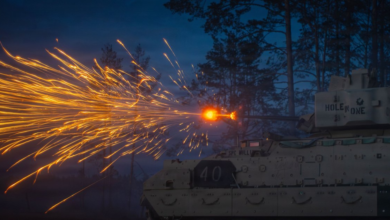
The Russians were offensive all the time, but now new units with new equipment are coming. Ukraine will be more difficult to oppose it. Exhausted units, which were used for attacks two or three months ago, moved mainly on foot. Basically, however, it did not change much in how fast, how deep and how far they go. It is still a cascading offensive with many small attacks that press on the front.
It sounds rather like a game, not a breakthrough.
Exactly, it's a warming war. The ultimate goal [Rosji] It is that Ukraine's losses are more difficult to replace, and the Ukrainian army uses more than Russian over time. Then at some point a point where Kiev will no longer be able to put an organized, coherent resistance.
Recently, the tone has been slightly softened between Ukraine and the USA. Now, however, there are voices from Washington that Americans can withdraw completely. Would Europe be able to compensate for this?
No, Europeans are completely unprepared.
From 2022, they did not prepare for the support of a long war. They also did not prepare for Donald Trump. It is not clear, however, how the Americans will withdraw. If Europeans and Ukraine still have a chance to buy diligently needed weapons, withdrawal will be easier to carry out than in the case of Americans introduced an embargo for delivery.
Do you see any strategy in the US?
It is so with Trump that he repeats what the last interlocutor told him. If it is Putin, it is completely on the side of Russia. If it is Emmanuel Macron or Keir Starmer, he rehearse again. But it only lasts until he talks to someone else.
In recent weeks, everyone is talking about peace – even Russia. But in fact it seems that the room is more distant than ever. How do you assess it?
Yes, we are very far from the room. Serious negotiations will only be possible when Putin no longer see the chance to win the war and achieve his goal, which is to subordinate Ukraine to a military force. This is currently unlikely due to the large factor of uncertainty, which is the United States. This means that the current US actions significantly prolong the war. This is the opposite of what leads to peace.
Recently, a proposal has appeared from several sides to take extensive diplomatic actions: Ukraine, Russia, Europe, the United States. Is this a sensible approach?
Continuation of the material under the video
Of course, Putin knows that Wołodymyr Zelnski has an advantage if Europeans sit at the negotiating table. That is why he would probably reject this proposal. Then everything would depend on how Trump will do. But as long as Putin can decide everything militarily, he will not get involved in negotiations and always find excuses why they are not beneficial to him at the moment. Zelnski and Europeans tried to explain this to Trump: it is not Ukraine who causes the lack of talks. The problem is that this reality does not exist in Trump's mind.
Russia presents war in Ukraine as a local and even internal conflict. At the same time, Russian propaganda prepares the ground for war with Europe. On Baltic Sea It goes far beyond propaganda. Is Europe directly threatened?
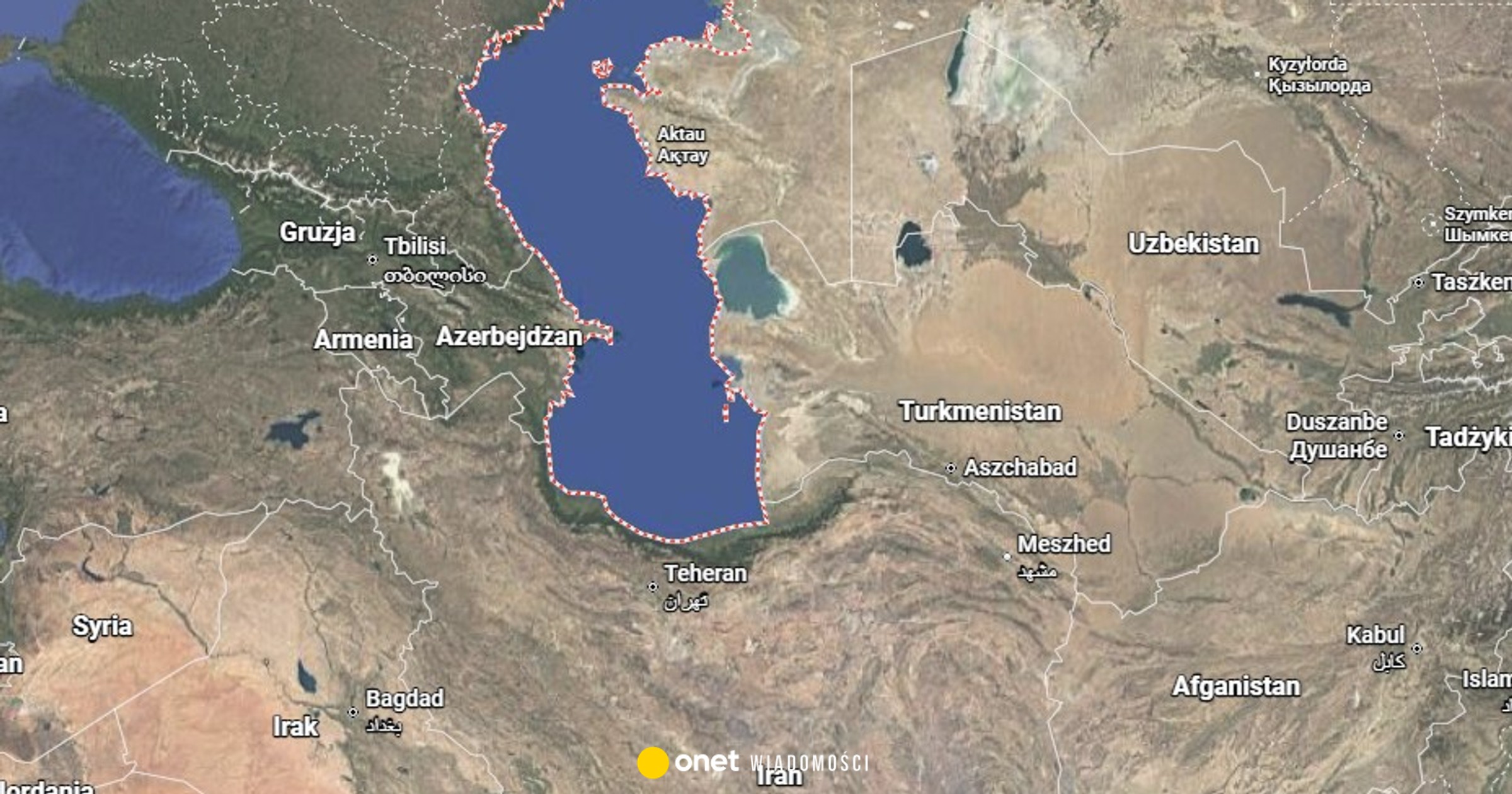
Europe is a second goal. It will depend on the result of the war in Ukraine how much time the Russians will need to consolidate their strength. However, it can be assumed that Europeans will be next in the queue. What the Russians are currently doing in the Baltic Sea is testing NATO and Europe cohesion. These are demonstrations of forces to examine to what extent this coherence can be weakened.
In this context, the term “hybrid war” often appears. Is this not too idealization of the situation?
The problem is that the “hybrid” term has become a slogan that determines everything that does not reach the threshold of a real war. In fact, it would mean that the state entity is claimed to be a non -state entity, but acts in the interest and for state organs. If Russia now sends combat aircraft, stops tankers or sends FSB border troops, then of course it is not a hybrid, this is not masked – the Russian state tries to check how far it can go.
The argument against the immediate threat to Europe is often that Russia is already overloaded with the situation in Ukraine.
Therefore, someone explain to me where Europeans have 800 thousand. people in uniforms – and ready to act. On paper, Europe has more tanks and heavy equipment than Ukraine, but they are not ready for use. In 2022, the Russian army entered the border of 190 thousand. soldiers. Now there are 650,000 Ukrainians had about 250,000, now it is 880 thousand. However, if I look at NATO reacting forces, it's one division, and with logistics it gives 15,000. soldiers. Mobilization is a process that does not occur overnight. Secondly: the Russians have undergone a drone revolution and Europeans did not. After this war, the Russians would have a significant advantage. Then the question would arise: would Americans still stand on the side of Europeans? Looking at Trump, I have great doubts about it. Russia will not wait until we catch up.
Viaqueslav Madiievskyi / AFP
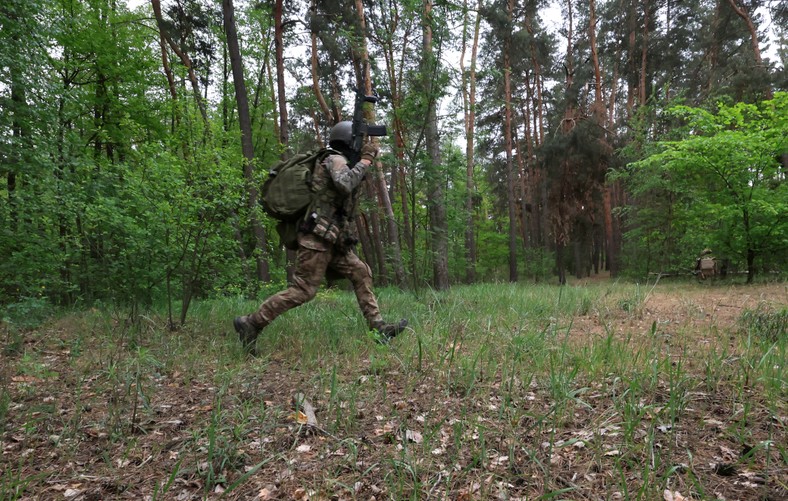
A Ukrainian soldier in the Kharkov region, May 18, 2025.
From the point of view of Russia, Ukraine has a historical dimension. Each claim to be an empire depends on Kiev. What does Putin want?
Russia wants to be world power and dominant military force in Europe. Putin wants to take revenge on the breakup of the Soviet Union. This means restoring old territories and the destruction of the enemy that broke the empire – a united, democratic Europe. Moscow presented all this in December 2021: He wants to create a European order convenient for Russia, which grants her privileges, and turns the rest of the continent into obedient vassals. The order in which the rule of law and democracy are no longer relevant.
In recent days, it is often said that you should now take decisive actions and impose sanctionsthat will really hurt. The question is: what has happened so far?
Sanctions that have been adopted so far are quite effective when it comes to their total number. The problem is that they were introduced gradually. Too high requirements for solving this problem were never set before the authorities in Moscow. The second issue is that enforcement of sanctions rests in the United States. In the US, penalties for violating sanctions are much higher than in Europe. In addition, supervision is more accurate, and sanctions also have extraterritorial effects – even a European company that provides goods from Europe to Russia can be held responsible in the United States. This is not the case with European sanctions. In addition, if there were no relevant American sanctions for new EU packages, their enforcement would only be the responsibility of European security bodies and courts. And these are not very effective. Probably many enterprises will say: “We take this risk.”
I’m Ashley Davis as an editor, I’m committed to upholding the highest standards of integrity and accuracy in every piece we publish. My work is driven by curiosity, a passion for truth, and a belief that journalism plays a crucial role in shaping public discourse. I strive to tell stories that not only inform but also inspire action and conversation.