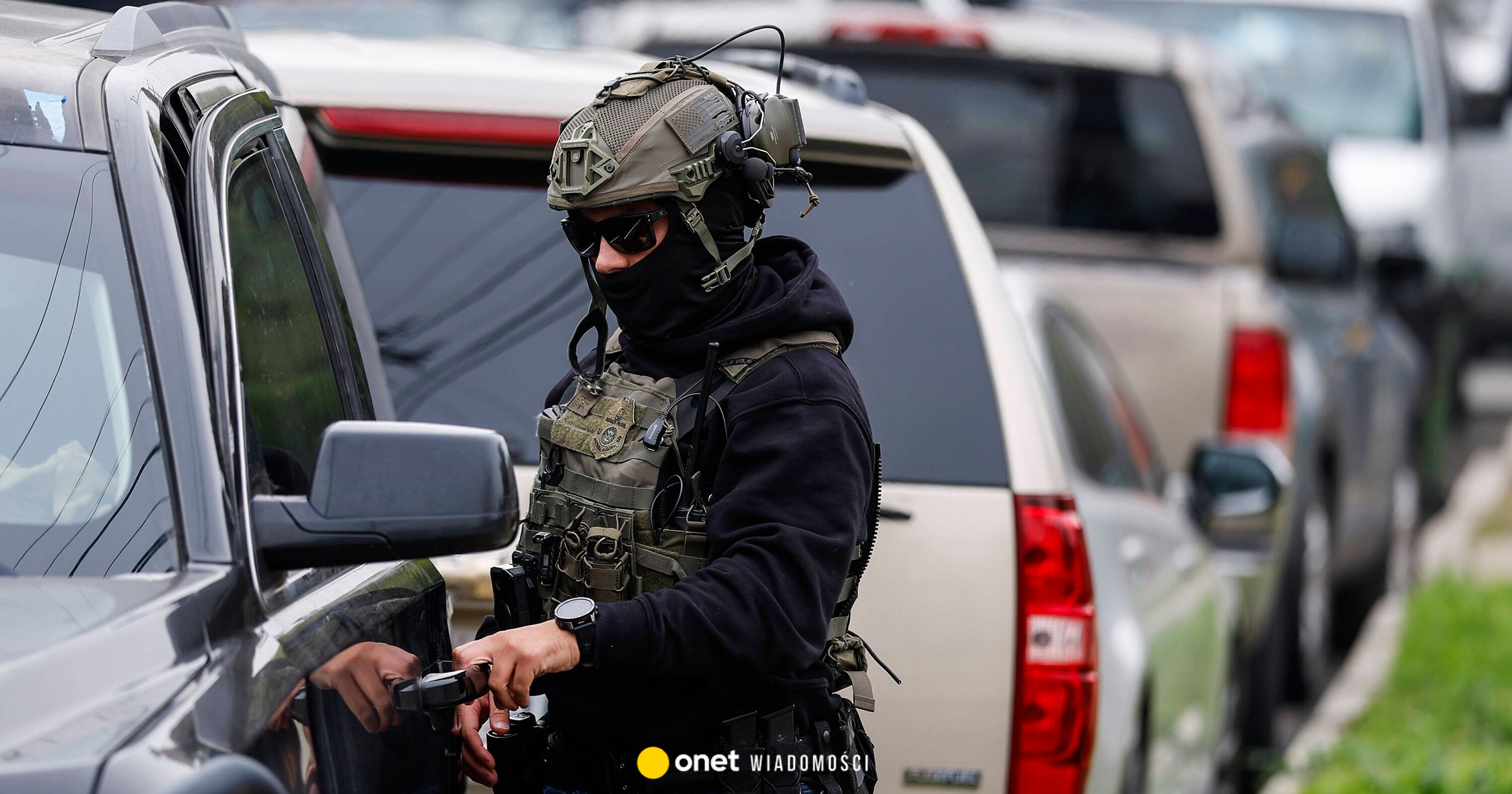
The mysteries of the bronze warriors, the dreaded bounty hunters who spread terror. Their origin is still an enigma


On the borders of China, in the Far East, arose one of the most enigmatic civilizations in history. This population of bounty hunters, renowned for their sophisticated bronze armor, left behind a wave of terror and an ethnic origin that remains, to this day, only a partially deciphered mystery.
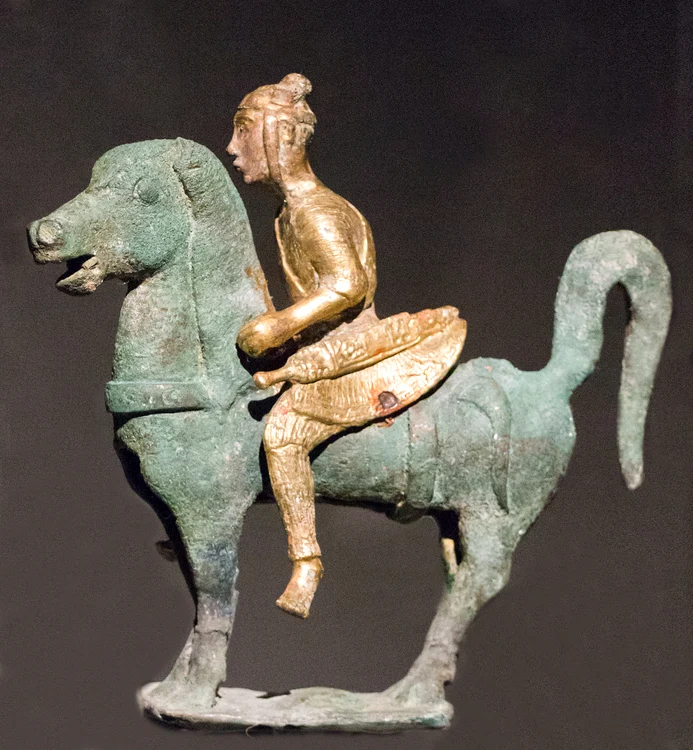
Bronze statuette of the Dian Kingdom PHOTO wikipedia
Throughout history there have been many mysterious civilizations and peoples that have disappeared forever into the mists of time without leaving much of a clue about their story and deeds. Some have disappeared for good without anyone being able to trace them. Only unverified and scientifically unconfirmed legends from the past of humanity remain. This also seemed to be the fate of a mysterious civilization, a kingdom of fierce warriors, on the southwestern border of China, close to the jungles of Vietnam. Chinese chroniclers of the first centuries of the Christian era called them “Dia” and stated that they had formed a kingdom.
Until half a century ago, scholars believed that this Dia kingdom was just a figment of the imagination of Sima Qian, the official historian of the Han Dynasty, one of the ruling elites of Ancient China. In the year 1965, a single object, unique and extremely valuable, proved to scientists that the Kingdom of Dia is not a phantasmagoria and the powerful fiefdom of bounty hunters in the Far East really existed. Further research revealed a vanished world of incredible artifacts, among the most valuable in ancient human history. All this managed to outline a sketchy portrait, with many unknowns, of a mysterious civilization of cruel warriors, who took human trophies and at the same time practiced bloody rituals.
The people no one thought existed
In the 3rd century BC, the official historian of the Han Dynasty, one of the most powerful of Ancient China, named Sima Qian wrote that on the great plateau around Dian Lake, in today's Yunnan Province in southwestern China, there was a powerful kingdom called Dian. According to the same historian, this kingdom, famous for its bronze metallurgy and skilled craftsmen, was established in 279 BC when King Qingxiang of the Chu Kingdom sent a military force to the southwest led by general Zhuang Qiao. Arriving in the Dian Lake area, General Zhuang Qiao decided to settle there, especially since the Chu Kingdom, his homeland, had been invaded by the Qin Dynasty and annihilated. A Chu general arrived at Dian Lake as part of the Chu military campaign. Zhuang Qiao decided to stay in Yunnan and adopt the native customs, establishing the kingdom of Dian.
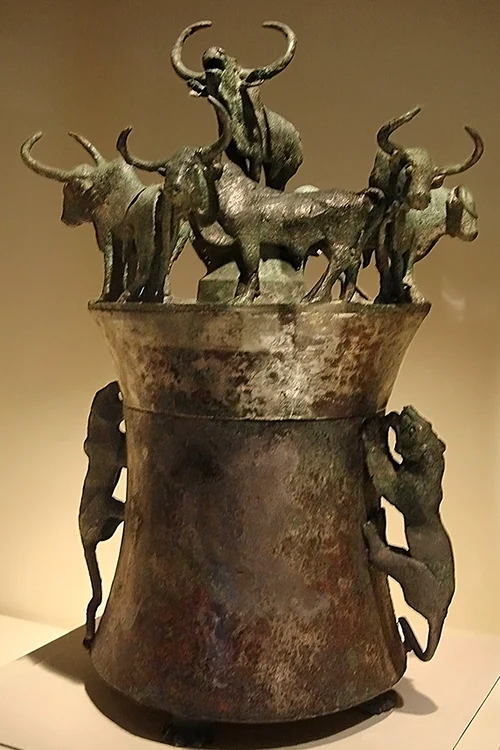
Bronze object Dian kingdom PHOTO wikipedia
The Qin dynasty was later overthrown by the Han, and the Dian kingdom, founded by the great Chinese general, became a vassal and later integrated into one of the prefectures of the Chinese empire of the Han dynasty. Sima Qian also wrote in his famous work Shiji that this kingdom was in a territory inhabited by barbarian tribes, including nomadic shepherds, of which Dian was the most powerful.
The Chinese historian said that the people of this kingdom wore their hair long and tied it on the top of their heads in a bun, similar to the Chinese. At the same time, they were sedentary, had strong settlements, cultivated the land, but also raised herds of cattle. That is, the culture was a kind of mixture between the Chinese agrarian traditions and the pastoral ones of the surrounding barbarians. Afterwards, the Dian kingdom and its people disappeared from history. Nothing more is known about them and no one has written about their deeds. The mystery remained throughout the centuries.
Until 1965, when a gold seal with a snake-shaped decoration was discovered in ancient tombs at the Shizhaishan site in Kunming, the capital of Yunnan Province. That seal bore the inscription “The Seal of the King of the Dian Kingdom”. It was proof beyond doubt that there was a Dian kingdom. A whole archaeological adventure of exploring the plateau near Lake Dian followed. The discoveries not only confirmed the presence of this kingdom but revealed part of its mysterious history. What Sima Qian had written about was only the final part of his extraordinary story.
A shining civilization dominated by bronze warriors
Systematic excavations took place throughout the Yunnan area, but especially in the Dian Lake area. Numerous tombs from the early period of this civilization have come to light. The peoples who built this civilization buried their dead in vertical necropolises. Basically, the deceased was fixed and was positioned almost standing.
He was impressed by the large number of bronze pieces, made in several techniques, which indicates an extraordinary development of metallurgy. They were very good craftsmen, metal workers. Both tools, but mostly bronze weapons and armor were found, indicating that the people of the Dian Kingdom were a warrior people. Before General Zhuang Qiao settled in these lands, there was a thriving metallurgical and warrior culture here. This civilization is supposed to have dominated the entire region for several centuries. Nor was it surprising because, as shown by specialists in the area, they were among the largest deposits of tin on the Asian continent, necessary for the production of bronze. Researching the graves, archaeologists noticed that there was a clear social differentiation. In the Dian kingdom there was a warrior elite who wore complex bronze armor.
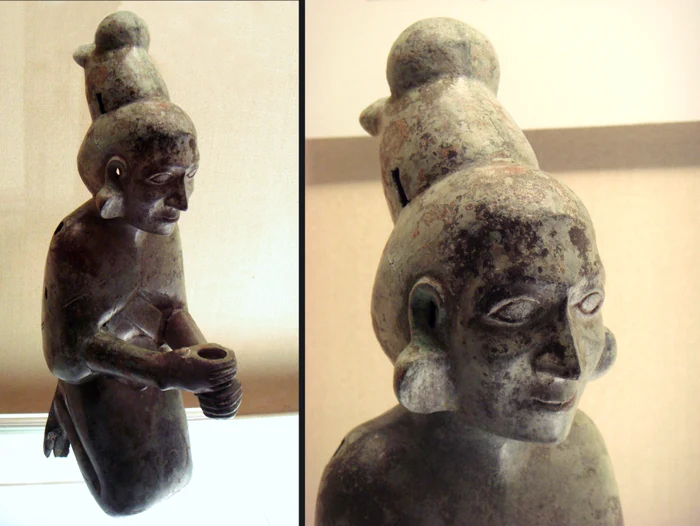
Representation of a woman from the kingdom of Dian PHOTO wikipedia
They had a lamellar structure, made of overlapping bronze strips, equipped with arm and neck protectors. They also had elaborate helmets, as well as shin pads to protect the shins. Their weapons were spectacular and highly decorated. In general, they used a typology of weapons, but also of decorations specific to the Chu kingdom, i.e. Chinese, but also motifs and forms specific to the states of ancient Vietnam.
It was basically a combination of forms and influences. What is certain is that this warrior elite was extremely well equipped and most likely well trained to wield bronze broadswords, spears, halberds, and axes. A characteristic of this civilization were drums of various sizes also made of bronze.
The biggest ones, experts say, were used in war, to instill fear among the enemies but also to mobilize the warriors. Last but not least, numerous artistic, religious and symbolic representations were found in tombs but also in other archaeological sites attributed to the Dian kingdom. All this indicates that part of the population consisted of farmers, cattle breeders, artisans and merchants. They were led by a warrior elite, well-equipped, well-armed and with a well-defined status. The Dian Empire was a brilliant civilization as the artifacts indicate.
They made fine ceramics, spectacular jewelry and extraordinary bronze objects. They lived in settlements, some of them large, they knew and used irrigation systems, and they also had a center of power, where there was probably a king or a war chief.
It is obvious that the aristocracy and the military leaders had a special power over the common people once they could effectively organize the work on the irrigation canals, the production of bronzes and luxury products, but also the trade. “Surface data collection, exposed sections, and the use of wells and irrigation canals allowed the authors to map the settlement pattern of the elusive Dian kingdom before it became a province of the Han empire. These findings show that Dian populations were hierarchically organized, with settlements of varying sizes and a political center where ritual bronzes appeared. The empire redrawn the landscape, with settlements migrating from wetlands to hills, where he could oversee the communication routes to Southeast Asia”wrote Alice Yao and Jiang Zhilong in “Rediscovering the settlement system of the 'Dian' kingdom, in Bronze Age southern China”.
At the same time, the same research shows that this Dian civilization began in the 8th century BC, that is, more than 2800 years ago.
Figurative representations also show how common people dressed. They wore tunics over trousers that reached to the knees and had their hair tied in a bun, at first glance similar to the Chinese. One of the most impressive artifacts is an intricate carving depicting a hunting scene. More precisely, a buffalo is attacked by a tiger. The buffalo protects a calf under its abdomen. The sculpture was first discovered during an excavation in 1972 and has since been ranked as one of China's most valuable cultural relics.
It weighs almost 13 kilograms, is 43 centimeters tall and about 80 centimeters long. Specialists believe that it is a symbol of death and rebirth that characterized the religious beliefs of the Dian populations.
Headhunters of the Far East. A culture of blood and sacrifice
At the same time, based on the art and the representations on the artifacts found in the area of the Dian civilization, as well as the large number of weapons and armor, the specialists came to the conclusion that war was an important component of the kingdom. Dian warriors are represented with the heads of enemies in their hands or on their belts. They were real bounty hunters. They savagely attacked their rivals and took their heads as trophies. Like the Celts who went into battle with the severed heads of their enemies on their belts, the Dian warriors instilled terror in the attacked. Enemies' heads have long hair braided into tails, a fashion of the surrounding barbarian tribes. In addition, bullfighting and hunting wild, extremely dangerous beasts such as tigers or panthers were the most frequently represented sports. It was the activity of peoples with a developed martial culture like the Assyrians or the Scythians.
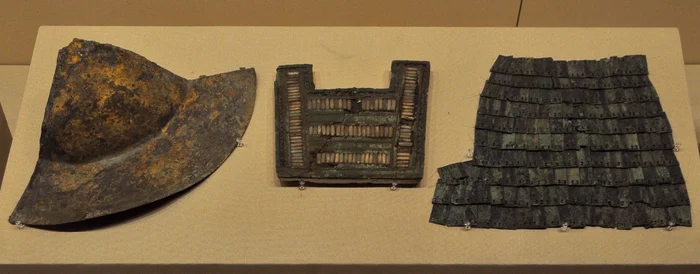
Pieces of armor and helmet of Dian warriors PHOTO wikipedia
There were also representations of slave cohorts, tribes enslaved by these ferocious warriors.
Last but not least, there are representations with bloody religious rituals, i.e. with sacrifices. Evidence suggests that these peoples practiced shamanism and ancestor worship. Elaborate sacrificial ceremonies and rituals were performed to propitiate spirits and seek divine favor. Worth mentioning is the fact that some of the Dian warriors appear on horseback. In other words, these peoples practiced the domestication of the horse and used it in war. The buffalo was an important symbol of this civilization, again a sign of virility and warrior strength.
The mysteries that remain in the wake of a vanished kingdom
Who were the Dian people really? It is a question that even today specialists find it difficult to answer. And this in the conditions in which the artistic representations indicate a rather large cultural and ethnic diversity. Based on their martial culture, headhunting tradition, mounted warfare, and elaborate bronze armor, scholars such as Iaroslav Lebedynsky and Victor H. Mair suspect that the peoples who raised the Dian kingdom were actually Scythians from the Saka branch and may have migrated as far as the Yunnan area of southern China. Excavations unearthing artefacts specific to the Dian civilization in Yunnan have revealed hunting scenes similar to those in Indo-European art depicting horsemen from Central Asia.
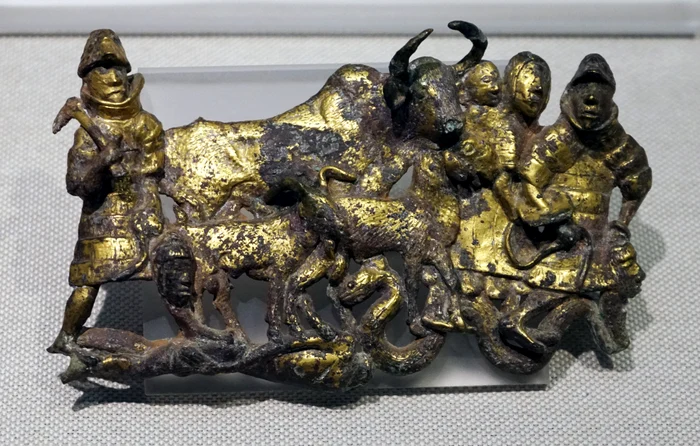
Dian warriors with the heads of their enemies in their hands PHOTO wikipedia
Horsemen on the hunt are depicted in a circular arrangement above drums, a pattern often found in Scythian art. At the same time, the common people of the Dian civilization have the appearance and characteristics of the Chinese of the Chu kingdom. It is possible that the native population was of Chinese origin, over which a warrior elite from among the steppe peoples was superimposed by migration.