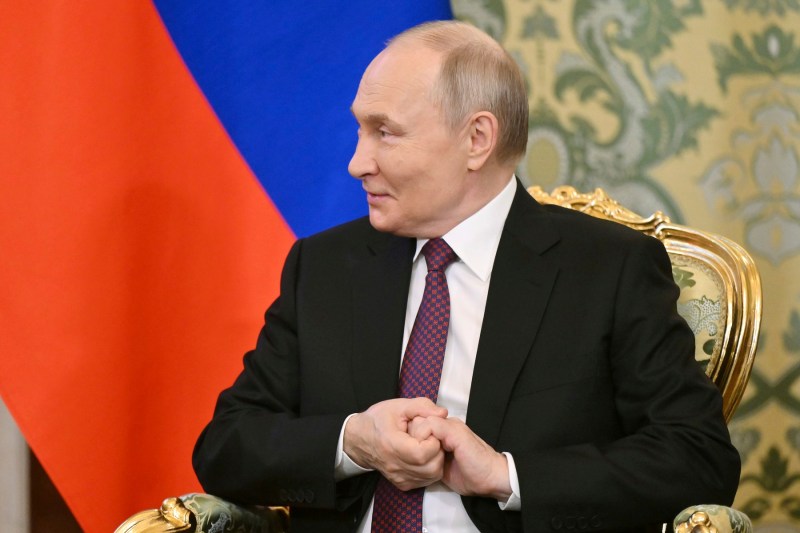
Russian President Vladimir Putin in Kremlin, Moscow, Russia, April 22, 2025. Photo: Kristina Kormilitsyna / AP / Profimedia
EU trade with Russia has been strongly affected since the beginning of Ukraine's invasion. The EU has imposed various restrictions on import and export for several products, which led to a 58% decrease to exports to Russia and to a 86% decrease in Russia imports between the first quarters of 2022 and 2025. In the first quarter of 2025, compared to the previous quarter, the imports from Russia have decreased, when it has been increasing, which has increased to Russia.
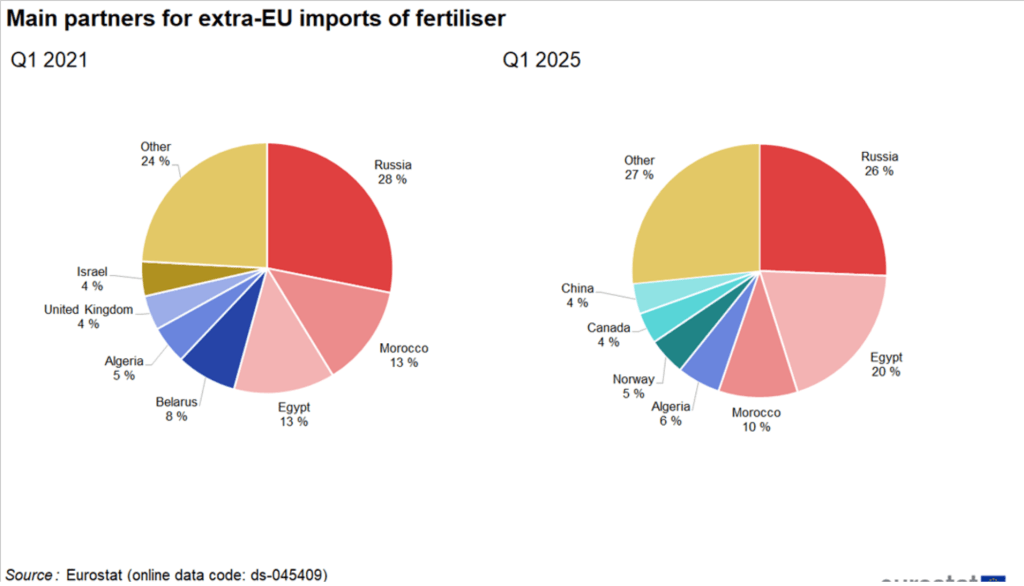
In the first quarter of 2025, Russia remained the largest supplier of fertilizers – a category of goods that is not yet affected by restrictions or import fees. Russia's share in imports of fertilizers outside the EU decreased slightly, from 28% in the first quarter of 2021 to 26% in the first quarter of 2025. During the same period of 2025, Egypt (20%) and Moroccus (10%) were the following great sources of fertilizer import.
EU imports of liquefied natural gas
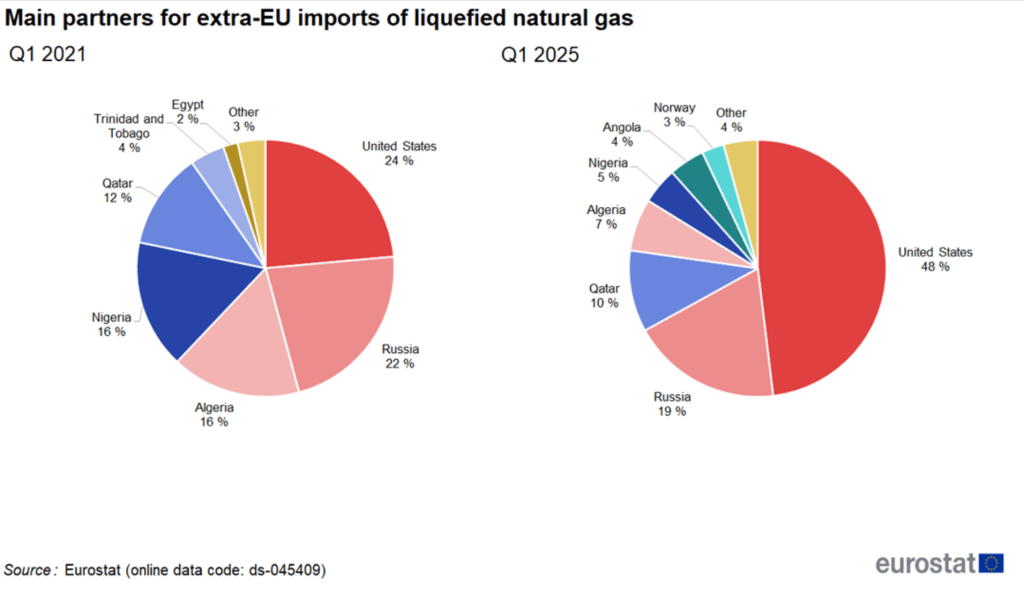
The value of EU imports of natural liquefied natural gas increased considerably between the first quarter of 2021 and the second quarter of 2022, as the prices increased suddenly. Russia's share in EU imports of liquefied natural gas decreased from 22% in the first quarter of 2021 to 19% in the first quarter of 2025. The highest weight in the first quarter of 2025 was observed in the United States (48%).
EU Imports of Iron and Steel
The value of EU Iron and Steel imports from Russia increased strongly in 2021, mainly due to price increase. Subsequently, decreases were observed in volume and value due to the sanctions imposed on several products. Russia's share in extra iron and steel imports decreased by 10 percentage points in the first quarter of 2021 compared to the first quarter of 2025. South Korea and China were the largest suppliers of the EU iron and steel, both with a 10% weight in the first quarter of 2025.
EU nickel imports
Even though nickel was not on the list of products directly sanctioned, the EU has begun to diversify its dependence on Russia by increasing nickel imports from other countries. Between the first quarter of 2021 and the first quarter of 2025, the EU share in Nichel imports from Russia decreased from 41.2% to 18.9% (a decrease of 22 percentage points), while the weights of imports from the United States (+12 percentage points), Norway (+4 percentage points) and the United Kingdom (+4).
EU imports of oil
In the first quarter of 2021, Russia was the largest oil supplier to the EU. Following the invasion of Ukraine by Russia, there was a major change in EU oil trade. The EU prohibition on the maritime imports of Russian crude oil, which entered into force on December 5, 2022, together with the subsequent embargo on refined oil products, contributed to a significant decrease in the imports of these goods from Russia.
As a result, the share of oil imports from Russia decreased from 29% in the first quarter of 2021 to only 2% in the first quarter of 2025 (see Figure 6). During the same period, the share of imports from the United States (+6 percentage points), Norway (+4 percentage points) and Kazakhstan (+3 percentage points) have increased.
The main product groups from EU exports to Russia
The EU also exported a wide range of products to Russia (Table 1). Between the first quarters of 2021 and 2025, exports for 4 of the 5 largest product groups (cars, vehicles, electric cars and plastics) decreased considerably, the exception being pharmaceutical products. The pharmaceutical products amounted to 2,351 million EUR in the first quarter of 2025, after previously reached a peak of 2,484 million EUR in the first quarter of 2023. 2021.