

publication
2025-05-21 22:01
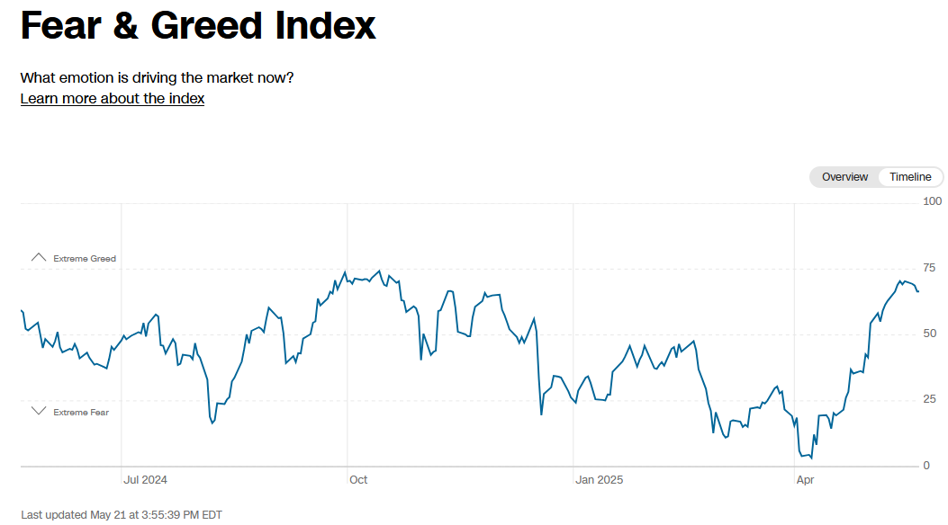
New York indexes recorded a second inheritance session in a row, continuing the retreat from local peaks. The mood meter popular on Wall Street came again in the “Greed” field, although investors were disturbed by the situation on the US debt market.

The S & P500 index ended a Wednesday session of 5,844.51 points, which meant a 1.61%decrease. Nasdaq Composite lowered by 1.41%, ending at 18 872.64 points. Dow Jones gave 1.91% and went down to a height of 41 860.44 points.
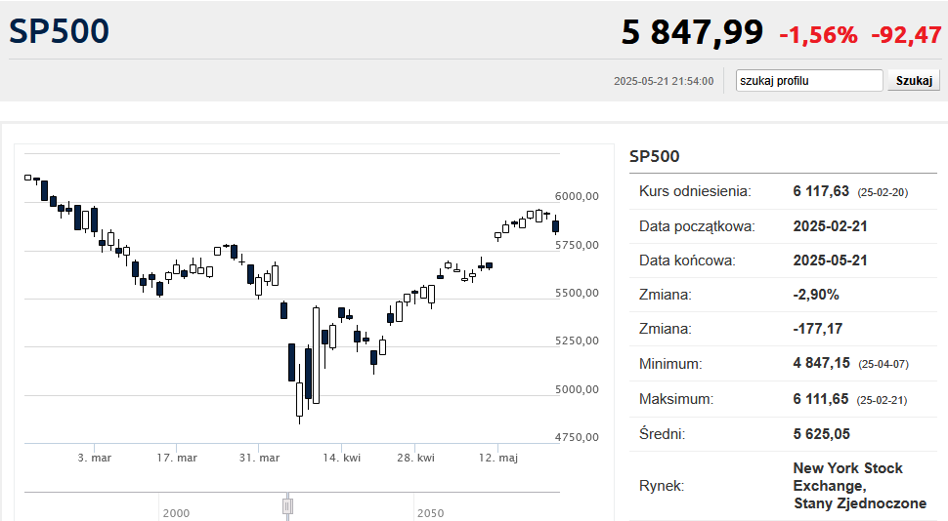
At Wall Street it was the second inheritance day in a row, deepening Tuesday's departure from nearly three -month olds. The day before, this meant the interruption of six upward sessions in a row and a local solstice as part of the relief of previous, violent declines from April 9.
As a result, the April-Maji Relaxation Index of fear and greed calculated by the CNN in just a few weeks moved from the territory of “extreme fear” to “greed” (but not yet extreme), while achieving the highest point value from October. This would suggest that the market may and is no longer as paralyzed by fear as in April, but also did not reach the state of euphoria. For now, this is the first warning signal for stock bulls.
The second is the situation on the Treasuries market, where from the beginning of May we are observing the rapidly growing profitability of Uncle Sam. In the case of 10-year papers, they rose from nearly 4.1% to almost 4.6%. This is a 50 pb movement. Made in just three weeks. The US government bonds are even more worrying, whose profitability for purchase (YTM) increased from less than 4.4% in April to nearly 5.1% during Wednesday's session. It was the highest level from October 2023 and not very distant from the then maximum of 5.17%.
Wall Street is increasingly talking about the terrible fiscal situation of the United States government, indebted to over 120% of GDP and the third year in a row reporting fiscal deficits exceeding 6% of GDP. In addition, President Donald Trump presses the Republican majority in the Congress to extend his tax reliefs adopted in 2017.
Analysts estimate that they would reduce revenues to the state coffers by 3-5 trillion dollars in the coming years. This would mean the need to increase the supply of treasury bonds, for which the debt market may demand a higher bonus (which is just doing). With this level of debt (USD 36.2 trillion) and powerful amounts absorbed in interest (it has already passed a trillion of dollars per year), lowering taxes without at least equally strong cutting of expenses is balancing on a thin line hung over the financial abyss.
The first warning was Wednesday's 20-year bond auction for $ 16 billion. To find buyers for the entire pot, the treasury department had to agree on profitability in some cases exceeding 5%. It was as much as 24 pb. more than during the April auction. And not much less than the profitability of 30-year-old papers, i.e. with a much longer incidence.