More than eleven months since the last known mission, the United States has resumed high altitude surveillance flights in the Black Sea region, signaling a possible strategic recalibration in relation to the aggressive policy of the Russian Federation in south-east Europe.
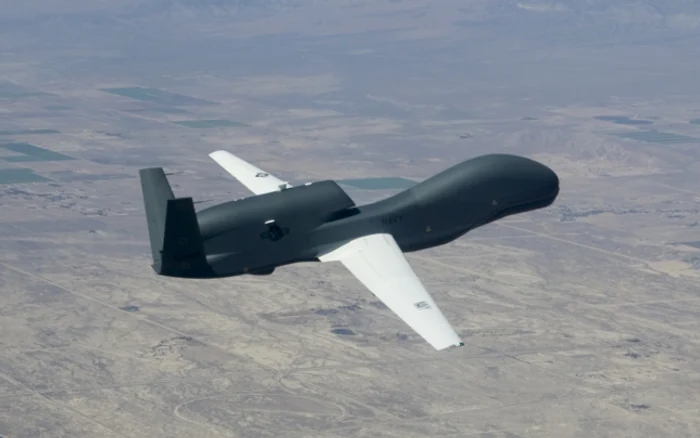
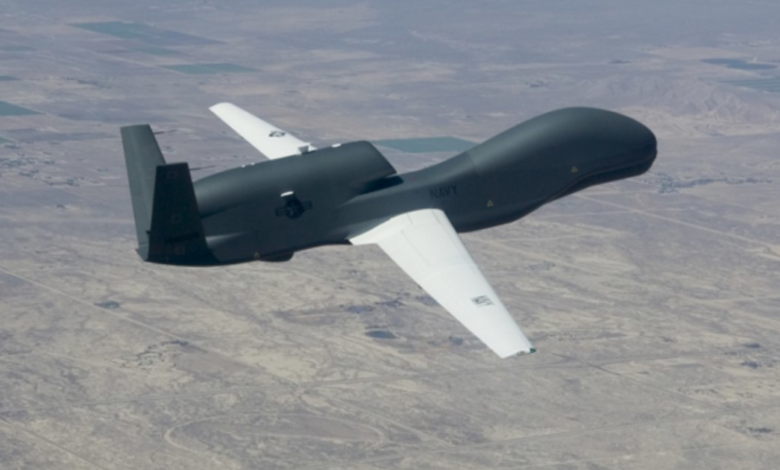
American drone RQ-4B Global Hawk/Photo: Archive
According to the data published by the Swedish platform for monitoring Flightradar24 air traffic, an American aircraft of RQ-4B Global Hawk, identified with the “Forte10” indicative, made a recognition mission near Romania's coasts on Saturday. The plane had taken off from the NATO aircraft in Sigonella (Sicily) and flew at an altitude of about 15,500 meters, about 130 km from the Crimea Peninsula – Ukrainian territory annexed by Russia in 2014.
It is the first flight of this type officially registered in the extended space of the Black Sea in June last year, a detail not meaningless in a geopolitical context marked by the stagnation of diplomatic efforts and the intense resumption of military hostilities.
Global Hawk: The eyes of the stratosphere of the Pentagon
RQ-4B Global Hawk, produced by the American giant Northrop Grumman, is the largest operational surveillance drone globally. With a large wings of almost 40 meters and flight autonomy of over 30 hours, the aircraft is equipped with high resolution radars, electro-optical and infrared sensors, allowing real-time mapping-on the order of 100,000 square kilometers in a single day.
Among the typical objectives of such missions are the monitoring of anti -aircraft defense systems, naval and air movements, as well as collecting information with strategic value for NATO allies on the eastern flank.
A resumption with political message: the failure of the Russian-Ukrainian negotiations, followed by an aerial signal
The mission above the Black Sea takes place immediately after the failure of the Direct Russian-Ukrainian discussions in Istanbul, mediated by Turkey on May 16. The first face -to -face meeting between Moscow and Kiev after more than three years ended without concrete progress, except for a punctual understanding of 1,000 prisoners of war on each side.
According to the international press, the Russian Federation has reiterated unacceptable requirements for the Ukrainian side: the recognition of Crimea annexation, the renunciation of Donetk, Lagansk, Herson and Zaporojie regions, as well as the constitutional commitment of neutrality and the prohibition of foreign military bases on the territory of Ukraine.
Following the diplomatic blockage, the special envoy of the US President for Russia, Steven Witkoff, canceled the planned visit to Moscow. In parallel, British Prime Minister Keir Starmer has called for the redemption of sanctions against the Kremlin and accelerating military support for Ukraine.
Moscow's response: The largest drone attack so far
Just a few hours after the end of the negotiations in Istanbul, Russia has launched a massive attack on Ukraine, using, according to Kiev authorities, 273 shahed Kamikaze drones-most in one day from the beginning of the war. The affected regions included the Kiev area, as well as the provinces of Dnipropetrovsk and Doneţk, where civil victims and significant destruction were reported.
Temporal analysis of events-the failure of diplomatic discussions, followed by the resumption of American surveillance flights and climbing the Russian attacks-indicates a new tense episode in the indirect confrontation between the Euro-Atlantic Bloc and the Russian Federation, with the potential to bring the Black Sea to the foreground.