Pressure car market: customs tariffs, Chinese producers offensive and decreased sales of electric vehicles. What is happening in Romania

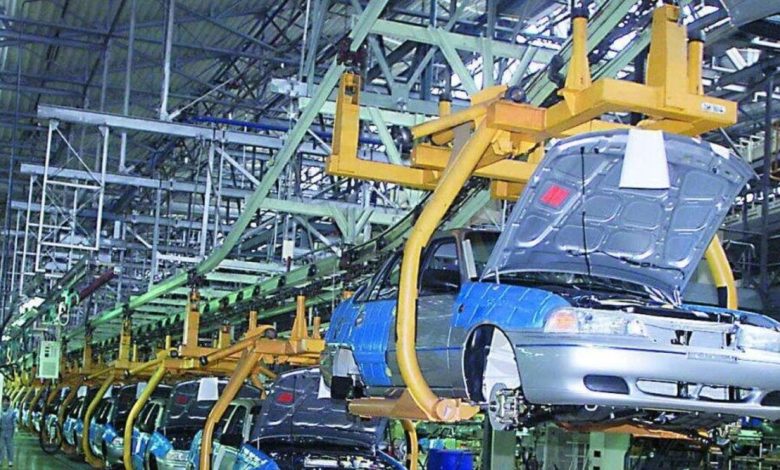
The global car industry is currently experiencing a complex landscape, characterized by numerous challenges, including customs tariffs in the United States, aggressive marketing from Chinese car manufacturers and a slowing of battery vehicles.
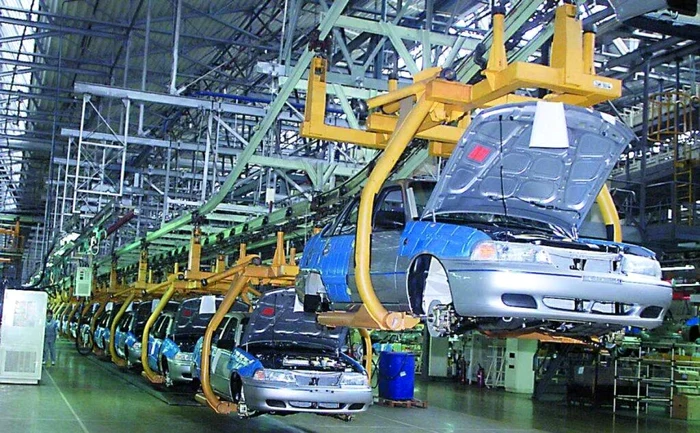
The global car industry is currently experiencing many challenges. Photo archive
These pressures require that car manufacturers effectively balance production, correctly dimension capacity and manage costs to remain competitive. An essential metric in this environment is the cost of the per vehicle, which includes salaries and productivity and provides information on the efficiency, competitiveness and general profitability of a car manufacturer.
“Harbour Report” has performed a comprehensive analysis of the costs of labor per vehicle in over 250 vehicle assembly factories, including an analysis and incorporation of supply strategies. The labor force usually constitutes 65% up to 70% of the total conversion costs, which requires this to be a key area of interest for car manufacturers. The report also emphasizes the need to understand the general conversion costs, which include the direct and indirect workforce, the general expenses (rent, energy and maintenance) and depreciation.
The most important conclusion of the study is that Germany is by far the most expensive country in the field of car manufactured in the world, the study being analyzed by car factories that produce a significant volume of cars, not just no small volume producers, writes the car citing one of the most reputed consulting companies in Germany, Oliver Wyman.
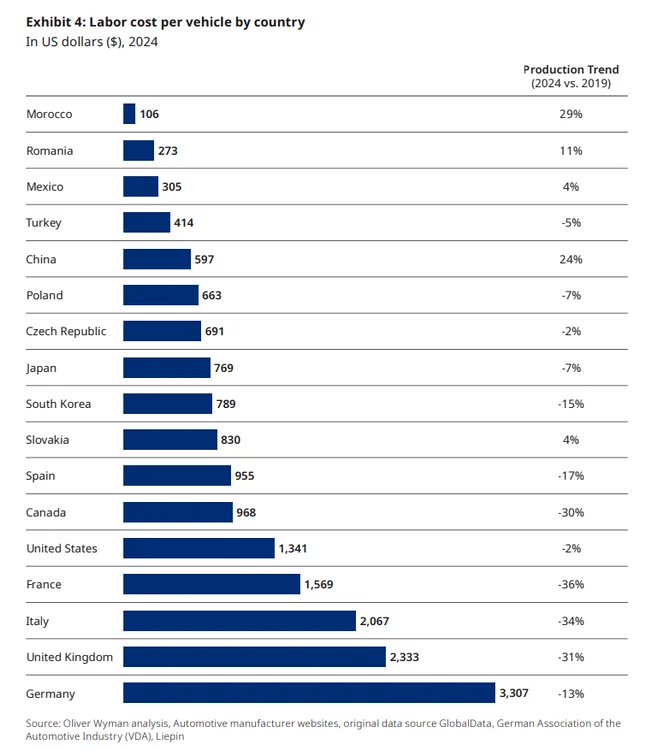
In Germany, in the average costs of employees in a car are $ 3,307, the calculations being made for a better international comparison.
The authors of the study say that this high cost is determined by the highest wages in Germany, by the stricter and unions regulations, but also by the lower productivity of several factories, which have reduced their production in the meantime, but have remained to a relatively large number of employees.
The German factories are automated on the body production side and many other components, but on the assembly line still involves a large number of people, unlike China, where there are many factories that have minimized the presence of people at almost all the assembly stages.
The same study also says that electric cars, if manufactured in high volume, can generate significantly lower costs is a car pay, starting at $ 1,660. But the manufacturers of electric car operating with low production volumes have huge costs that sometimes pass $ 10 thousand per car.
However, speaking of large volume production, the study confirms what car suppliers said – that electric cars need fewer components, less R&D from suppliers, and involves less workforce in final production.
Costs of pay per machine
The analysis shows that Germany has the highest payroll cost of $ 3,307/car. It is followed by the United Kingdom, a country also considered expensive, with a cost of $ 2,333/car, and on the 3rd place among the most expensive countries is Italy, at a cost of $ 2,067. France is on the 4th place, with $ 1,569/car.
So, on the first 4 positions are European countries, which generate the highest costs. The US is on the 5th place and generates costs of only $ 1,341, so 2.5 times less than Germany.
Japan is much more competitive than Germany and the US in the cost of pay per car, the study shows, only $ 769/car, and this is due to the large volume of production in relation to the number of employees and efficient assembly lines, built according to the principle of accurate synchronized production.
The big surprise of the German conclusions comes to the countries with the lowest payroll cost. China is no longer the country with the lowest cost of labor, with $ 597/car, with 4 other countries where pay costs are lower than in China, including Romania. Turkey is the country that ranks 4th in the ranking of the lowest costs, above China, with $ 414/car. And in the 3rd place it is ranked Mexico, with $ 305/car.
Romania has a large production with few employees
On the second place is surprisingly placed Romania. The Germans indicated that in Romania the cost of pay per car is only $ 273, 12 times less than in Germany and 2 times less than in China. Therefore, the cost of pay in Romania is lower than in China, but that does not mean that an employee in a car plant in Romania receives a salary 12 times lower than one in Germany, but that the volume of production in Romania, compared to the number of employees in the plant and those involved in development, results in a cost 12 times lower than in Germany per car produced and 2 times lower. The country with the lowest payroll cost was designated Morocco, only $ 106/car, where Dacia has two factories in Morocco