“How else should we do this?” – Asks Politico one of the EU officials, of course via WhatsApp. “By secretaries? God, no.”
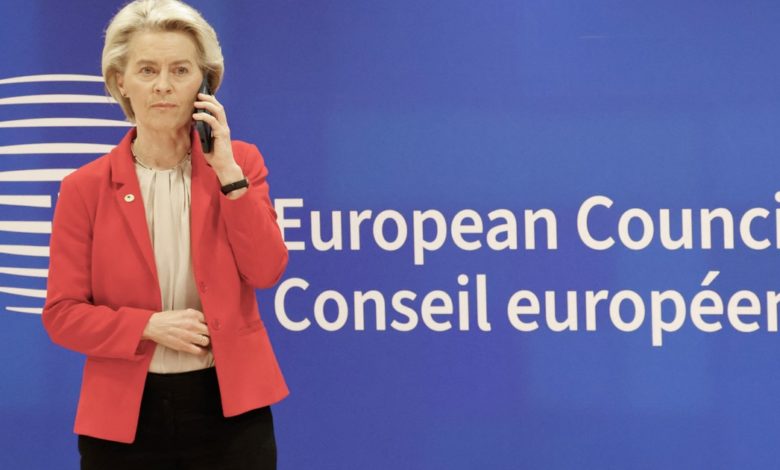
The Court of Justice of the EU ruled that The Commission wrongly refused to access the news to journalists Chairwoman of the European Commission Ursula von der Leyen and general director of Pfizer Albert Bourla at the peak of the Covid-19 pandemic. The messages were mentioned just before the agreement of the multi -billion contract for vaccines – the largest in the history of the EU.
Commission's lawyers claimed that these messages They were not important enough to make them available in public – because They were too boring to be considered documents, considering that they largely concerned the reconciliation of dates and meeting places. However, public opinion does not know if this is true.
Although the verdict suggests that text messages should be treated now just like any other written communicationit will not be easy to get used to it. “The ruling cannot change the fact that messages for sending messages are the fastest and easiest way to make contact,” another EU official writes to Whatsapp.
Continuation of the material under the video
It is possible that even the most trivial messages mentioned between EU officials and industry, non -governmental organizations or among themselves may become made available after submitting the application for access to documents.
While officials themselves do not think that this will lead to major changes, lawyers believe that this may be necessary.
“This decision may encourage selected European representatives and state officials to prefer oral exchange instead of messages,” says Vincent Couronne, a European law researcher at the Paris-Sacplay University. -In today's business communication ecosystem, the border between SMSs, e-mails, WhatsApp, Slack, etc. has become very thin.
Examples from Great Britain
Although this ruling may not like some European diplomats, it actually adapts the EU to the transparency rules in many countries.
In Great Britain, the Covid-19 inquiry commission showed that the former adviser to former Prime Minister Boris Johnson, Dominic Cummings, was the enthusiast of Whatsapp and during the pandemic he happened to describe the members of the office as “useless pigs”.
EPA / Andy Rain / PAP
Dominic Cummings, former adviser to Prime Minister Boris Johnson, after testifying during the Covid-19 Pandemic Investigation Commission. London, October 31, 2023
Clever committee officials can always follow the example of the former Prime Minister of Scotland Nicola Sturgeon, who said her news from WhatsApp They were not available to be checked because they were removed.
One of the officials of the previous Great Britain said that about half of the then office used the function of disappearing messageswhich removes conversations after a certain time, unless one of the participants decides to keep them.
During the November court hearing in the Pfizergate case in Luxembourg, it was suggested that This is also a standard practice in Brussels.
The commission official speaking at the beginning of this week said “it is recommended to use the function of disappearance.” There is a “general recommendation” for employees so as not to use text messages or applications such as Signal for “important exchanges”. Texts containing relevant content should be classified as documents and properly archivedsaid the clerk.
“It won't change anything”
However, the question arises who decides to do so. As is often the case in EU institutions, it is those officials who decide to archive documents, record their meetings and make them available for public insight, they are The most exposed to control.
– Access to the message as a result of submitting an application for disclosure of documents will not change anything if the persons themselves do not declare the exchange and do not register them as official documents – says one of the officials in an interview with Politico.
Everyone who has applied for access to documents also knows that the medium itself is not the only obstacle to rejecting these demands. Of the over 7,000 applications, the Commission rejects a lot a year, justifying it by the fact that Giving an answer would be too bothersome, too time -consuming or too politically sensitive.
So maybe nothing will change. Or maybe officials and diplomats will return to face to face conversations – risking that they will be overheated by hundreds of Brussels spies.
I’m Ashley Davis as an editor, I’m committed to upholding the highest standards of integrity and accuracy in every piece we publish. My work is driven by curiosity, a passion for truth, and a belief that journalism plays a crucial role in shaping public discourse. I strive to tell stories that not only inform but also inspire action and conversation.