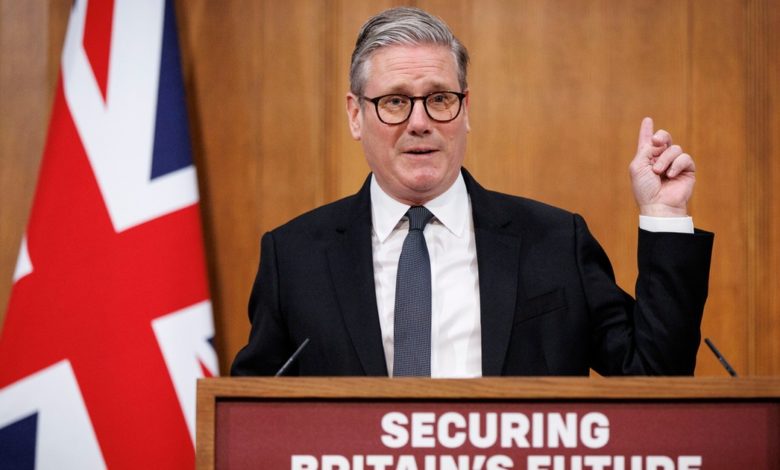
Despite Brexit, immigration to Great Britain is growing. In connection with the growing criticism of the open border policy of the previous government, Prime Minister Keir Starmer announced on Monday: “The experiment is over“. The British government intends to exacerbate immigration regulations.
Instead of five years, ten are needed to apply for citizenship. In turn, an employee visa will only be issued to people with higher education or for a strictly defined time. In addition, better knowledge of English will be required. This applies to “all important immigration paths” – announced Starmer on Platform X.
Other European countries have already taken decisive actions to tighten the migration policy. The Blick portal analyzes how the governments of Germany, Austria, Poland, Italy, Denmark and Sweden approached the issue of migration.
Germany
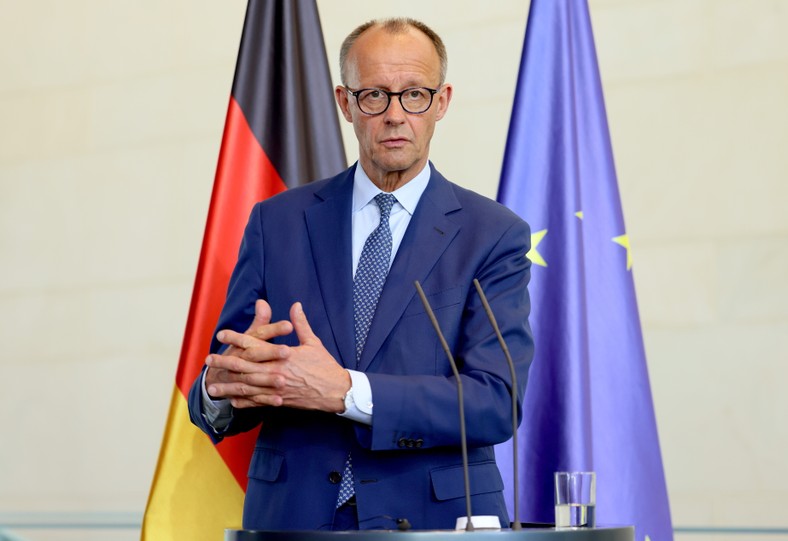
Sending people for asylum on German borders and sharpened inspections: this was the main election promise of Chancellor Friedrich Merz. Alexander Dobrindt announced this on the first day of the Minister of the Interior.
Already a few months ago, Merz announced that a “actual entry ban” would be introduced for people without valid documents. It is also to “concern people who have the right to protect”. Dobrindt explained that the decision to reject will be made individually for each case. In neighboring countries, this caused a stir – Switzerland referred to the applicable law and expressed regret due to the lack of previous arrangements.
PAP/EPA/HANNIBAL HANSCHKE/PAP
German Chancellor Friedrich Merz in Berlin, Germany, May 13, 2025.
Austria
In March, the Austria government decided to suspend the connection of families. This measure must still be approved by parliament. In a letter to the European Commission, the Austrian Interior Minister Gerhard Karner argued that The country is overloaded with receiving refugees and there is a “threat to public order”.
The exceptional clause in EU law enables a deviation from the provisions of EU law in extraordinary situations. On Monday, Austria extended border controls with Hungary and Slovenia for another six months. Already in April controls on the border with the Czech Republic and Slovakia were extended.
Poland
The presidential election in Poland will take place on May 18. Also here, migration has become an important topic. At the end of March, President Andrzej Duda signed a law that suspends the right to apply for asylum on the border with Belarus for 60 days. Poland considered an extraordinary situation that thousands of migrants cross this border, and She accused Belarus and Russia of using migrants for EU destabilization.
Marcin Obara / PAP
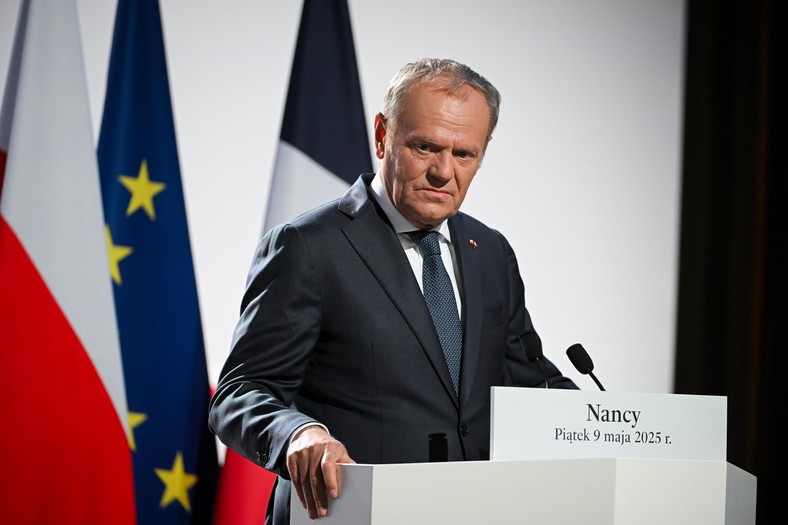
Prime Minister Donald Tusk during a press conference with French President Emmanuel Macron in Nancy, France, May 9, 2025.
Already in December, the European Commission allowed countries bordering with Belarus to limit the right to asylum in such cases. The hard migration policy of Prime Minister Donald Tusk may be of key importance for the upcoming election campaign and his own future.
Italy
Since Giorgia took the position of the Italian Prime Minister at the end of 2022, it seems that Italy is less and less interested in cooperation in the field of migration policy. The transfer of migrants, even in cases covered by the Dublin convention, ends with failure. Italy complains about excessive overload.
Therefore, in October, the Meloni government opened refugee centers in Albania. They were to serve faster to send refugees without the right to asylum to their countries of origin. However, this approach has repeatedly disappointed. At the end of March, the Italian government decided to use one of the camps as a arrest for people waiting for deportation.
Denmark
For many years, Denmark's position was very liberal. However, in the early 2000s and after the “refugee crisis” from 2015. Denmark has changed the course and has been conducting a restrictive migration policy since then.
Continuation of the material under the video
Deportation centers, restrictions on families and time stays. More and more emphasis is placed on the refugees to ensure their maintenance and return to their countries of origin as soon as possible. The Prime Minister of Denmark Mette Frederiksen described “Mass migration to Europe as a threat to everyday life in Europe.”
Sweden
In 2015, Sweden was one of the countries that adopted the most refugees. In the meantime, however, the Swedish government has tightened the migration policy. The growing threat of organized crime further strengthened the restrictive position.
At the beginning of April, Sweden under the rule of Prime Minister Ulf Kristersson announced a tightening of migrants' regulations: who will not behave “in accordance with the law” will be deported. This includes not only crimes, but also fraud related to social benefits, debt, glorifying terrorism or disturbing public order, for example by taking drugs – explained minister for migration on migration Johan Forssell.
I’m Ashley Davis as an editor, I’m committed to upholding the highest standards of integrity and accuracy in every piece we publish. My work is driven by curiosity, a passion for truth, and a belief that journalism plays a crucial role in shaping public discourse. I strive to tell stories that not only inform but also inspire action and conversation.